Crypto Regulation in 2026: What Traders Should Actually Care About
Estimated Reading Time: 17 minutes
Don’t invest unless you’re prepared to lose all the money you invest. This is a high-risk investment and you are unlikely to be protected if something goes wrong. Take 2 minutes to learn more
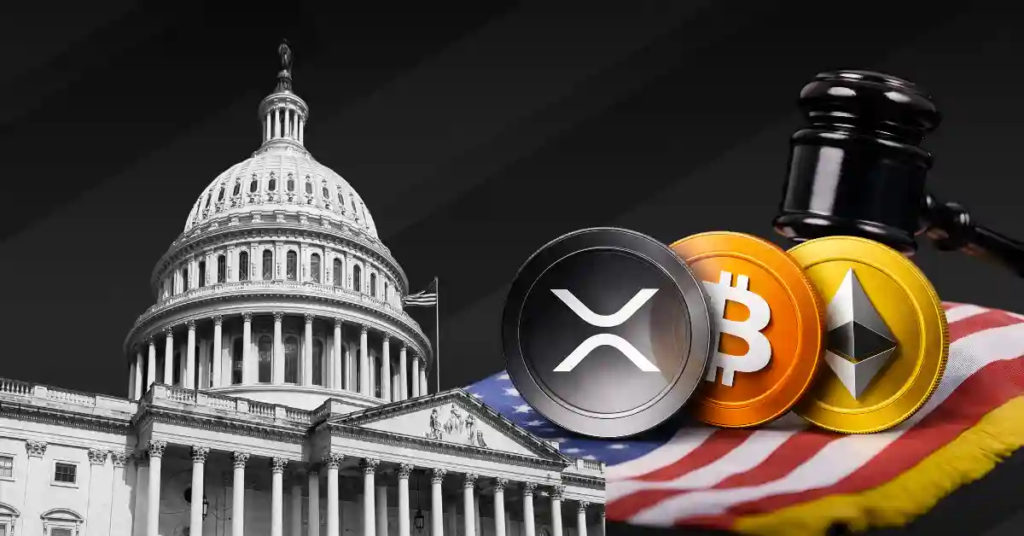
Regulation is the topic most crypto traders love to complain about and almost none actually understand. The headlines are easy: “SEC sues XYZ exchange,” “Congress proposes new crypto bill,” “EU passes MiCA framework.” The stuff that actually affects your trading — where you can trade, what you can trade, how you’re taxed, and what happens to your funds if an exchange goes under — is buried in 200-page documents that nobody reads. This article is about the regulation that matters to traders in 2026. Not the political theater. Not the Twitter outrage. The practical, boots-on-the-ground reality of what’s changing, what already changed, and what you need to do about it. If you’re trading crypto in the US, EU, or touching any regulated on-ramp, this affects your PnL whether you care about politics or not.
Key Takeaways
- The US regulatory landscape in 2026 is shaped by FIT21 and stablecoin legislation that finally passed in 2025, creating a dual-agency framework between the CFTC and SEC.
- EU’s MiCA is fully live and every trader interacting with EU-based exchanges or stablecoins is affected — whether they realize it or not.
- Tax reporting requirements for crypto have tightened dramatically across jurisdictions, and the IRS now receives automated exchange reporting on par with stock brokerages.
- DeFi is the new regulatory frontier — the rules coming for decentralized protocols could reshape how you access leverage, swaps, and yield.
The US Framework: FIT21 and the Dual-Agency Split
For years, the biggest problem in US crypto regulation was jurisdictional ambiguity. The SEC claimed most tokens were securities. The CFTC said Bitcoin and Ether were commodities. Courts disagreed with both agencies at different times. Projects couldn’t get clarity. Exchanges operated in a gray zone. That changed with the Financial Innovation and Technology for the 21st Century Act, which finally passed in 2025 and has been phasing in through 2026.
Here’s the practical breakdown. FIT21 divides crypto assets into three buckets: digital commodities, digital securities, and payment stablecoins. The CFTC gets primary oversight of digital commodities — which includes Bitcoin and any sufficiently decentralized token. The SEC keeps jurisdiction over digital securities — tokens that meet the Howey test because they have a centralized issuer that marketed them as investments with an expectation of profit from others’ efforts. Stablecoins get their own framework under a new federal charter system, though existing state-level trust charters (like the ones Circle and Paxos hold) are grandfathered in.
For traders, the immediate impact is on what’s listed where. Exchanges that register with the CFTC as digital commodity exchanges can list any token classified as a commodity. This created a rush of token reclassifications through 2025-2026 as projects demonstrated sufficient decentralization to move from the SEC bucket to the CFTC bucket. If a token you trade transitions from “maybe a security” to “definitely a commodity,” it typically gets broader exchange support, deeper liquidity, and — importantly — legal clarity for the exchanges holding it. That reduces the risk of sudden delistings and frozen withdrawals, which used to be a constant background anxiety for altcoin traders.
The other big change: exchanges now have clear registration paths. A US-based exchange can register as a national digital commodity exchange with the CFTC, an alternative trading system (ATS) with the SEC for security tokens, or both. Coinbase, Kraken, and others have completed their CFTC registrations. This means the days of exchanges “operating in the gray” are largely over. If you’re trading on a major US exchange in 2026, it’s regulated — and that comes with both protections (segregation of customer funds, regular audits) and restrictions (KYC is mandatory, certain tokens still can’t be listed).
Stablecoin Legislation: The Silent Game-Changer
Stablecoins might be the least exciting topic in crypto until you realize they’re the plumbing for 90% of trading volume. USDT and USDC handle more daily settlement volume than Visa. The question of whether that plumbing gets regulated — and how — is a bigger deal for traders than any single token lawsuit.
The Clarity for Payment Stablecoins Act, passed alongside FIT21, created a federal framework for stablecoin issuers. The key provisions: issuers must hold 1:1 reserves in approved assets (cash, short-term Treasuries, repos), undergo regular audits, and obtain a federal or state charter. Tether, historically the most opaque of the major stablecoin issuers, has faced the hardest adjustment. USDC, already compliant through Circle’s state trust charter, was largely unaffected.
Why does this matter for your trading? Two reasons. First, the reserves question is existential. If Tether’s reserves were ever found to be significantly under-collateralized, USDT could de-peg, and because most crypto trading pairs are denominated in USDT, that would be a systemic event. The stablecoin bill reduces (but doesn’t eliminate) this tail risk by forcing transparency and attestation. Second, and more subtly, stablecoin regulation affects liquidity dynamics. When issuers have to hold more reserves in cash and short-term paper, they’re less profitable, which means they’re less willing to subsidize exchange integrations and market making. This could widen spreads on USDT pairs over time, especially on smaller exchanges that Tether may deprioritize.
For trading purposes, the practical move is diversification. Don’t keep your entire stablecoin balance in one issuer. Split between USDC and USDT at minimum. If you’re on-chain, consider DAI or other decentralized alternatives for the portion of your portfolio that’s sitting idle. The risk of a major stablecoin failure drops with regulation, but it doesn’t go to zero.

Free Crypto Signals Channel
 Free Telegram Channel
Tax Reporting: The IRS Knows What You Traded
Here’s the part that actually costs you money if you ignore it. Starting with the 2025 tax year, US crypto exchanges are required to report customer transactions to the IRS on Form 1099-DA, the crypto equivalent of the 1099-B that stock brokerages file. Every trade you made on Coinbase, Kraken, Gemini, or any other KYC exchange is now reported directly to the IRS with cost basis and proceeds information.
This eliminates the “they probably don’t know about my crypto” assumption that a shocking number of traders operated under. The IRS now receives an automated feed of your trading activity, and their systems cross-reference it against what you report on your return. Discrepancies trigger automated CP2000 notices. If you sold crypto at a gain and didn’t report it, you will receive a letter. If you don’t respond, you’ll receive a bill with penalties and interest.
A few specific things to know. Wash sale rules — the rule that says you can’t sell a stock at a loss, buy it back within 30 days, and claim the loss — applied only to securities historically, not commodities. But under post-FIT21 guidance, tokens classified as securities are now subject to wash sale rules. Bitcoin and Ether, as commodities, technically aren’t — but this is a gray area that the IRS hasn’t fully clarified, and aggressive loss-harvesting strategies that look like wash sales may still draw scrutiny even if they’re technically legal. The safest approach: treat all your crypto trades as subject to wash sale rules and don’t try to game the commodity/security distinction at tax time unless your CPA signs off.
For non-US traders, the reporting picture varies by jurisdiction, but the trend is universal: governments are building the infrastructure to track crypto transactions automatically. The EU’s DAC8 directive, which takes effect in 2026, requires crypto-asset service providers to report customer data to tax authorities across all member states. The UK’s HMRC now requires exchanges to report transaction data under the same framework as traditional financial institutions. If you’re trading on a KYC exchange anywhere in the developed world, assume the tax authority knows about it.
MiCA: What The European Framework Actually Means
The Markets in Crypto-Assets regulation — MiCA — is the EU’s comprehensive crypto framework, and it’s now fully live. If you trade on any EU-based exchange or interact with any EU-based crypto service, MiCA applies to you as a customer, even if you’re not an EU resident in some cases.
The headline provisions for traders: all crypto-asset service providers (CASPs) must be licensed and authorized. This includes exchanges, custodians, and trading platforms. They must maintain capital reserves, segregate customer funds, and provide clear risk disclosures. Stablecoin issuers must hold reserves and limit certain types of algorithmic stablecoins. And — this one matters for active traders — CASPs must implement transaction monitoring and market abuse detection, which means your trading patterns are being surveilled for wash trading, spoofing, and layering just like in traditional equity markets.
The practical impact is an overall improvement in consumer protection for EU-based trading. Exchange collapses like FTX are harder to pull off when the exchange has to maintain segregated customer accounts audited by a national regulator. But there’s a trade-off: compliance costs are higher, and some smaller exchanges and DeFi protocols have pulled out of the EU market rather than deal with the regulatory burden. Fewer venues means less competition, which can mean wider spreads and higher fees over time.
For traders using leverage, MiCA also imposes position limits and margin requirements. The specific limits vary by asset and venue, but the general principle is that CASPs must ensure retail clients can’t blow themselves up with excessive leverage. If you’ve been used to 100x leverage on a platform that accepts EU customers, that’s likely gone or severely restricted. This is actually a net positive for most traders, even if it feels like a restriction — the data on retail leverage is unambiguous: high leverage is wealth destruction for the vast majority of users.
DeFi Regulation: The Next Frontier
If centralized exchange regulation is largely settled in 2026, decentralized finance is where the fight is now. The core question: when does a DeFi protocol cross the line from “decentralized software” to “regulated financial service”?
The US Treasury’s Financial Crimes Enforcement Network (FinCEN) has been the most aggressive, issuing guidance that DeFi protocols with significant centralized control points — multi-sig wallets controlled by a core team, upgradeable smart contracts, or front-end websites that the team operates — may qualify as money services businesses subject to Bank Secrecy Act requirements. This would mean KYC on users, transaction reporting, and suspicious activity monitoring. Several DeFi front-ends have already responded by geo-blocking US users, and more are expected to follow.
The SEC has taken a similar approach: if the protocol has a governance token and a team that marketed that token as an investment, the token may be a security. Uniswap’s UNI token and similar governance tokens from major DeFi protocols have been the subject of enforcement actions and settlement negotiations throughout 2025-2026. The outcomes are still being shaped, but the direction of travel is clear: if you raised money and your token grants rights to protocol fees or governance, the SEC considers it a security.
What does this mean for traders? In the near term, DeFi protocols are bifurcating. Some are pursuing compliance — registering with FinCEN, implementing KYC on their front-ends, delisting from jurisdictions they can’t serve. Others are doubling down on decentralization — removing admin keys, decentralizing their front-ends through IPFS hosting, and essentially saying “we’re code, not a company — regulate that.” Both paths have trade-offs. The compliant protocols gain institutional access but lose the permissionless ethos that attracted early users. The maximalist protocols keep the ethos but risk enforcement actions that could disrupt service or tank their token price.
As a trader, your exposure to this risk depends on how much of your activity happens on-chain versus on centralized exchanges. If you’re providing liquidity in Uniswap pools, lending on Aave, or using perpetual DEXes like dYdX or Hyperliquid, you have direct DeFi regulatory exposure. If a protocol you’re using gets hit with an enforcement action, your funds could potentially be frozen at the front-end level (even if the smart contracts remain accessible, most users rely on the front-end to interact). The mitigation: learn to interact with smart contracts directly through Etherscan or a block explorer. It’s a technical hurdle, but in a world where DeFi front-ends are the regulatory choke point, it’s the difference between access and exclusion.
The Global Patchwork and How to Navigate It
Crypto regulation in 2026 is not a single framework — it’s a patchwork. The US has FIT21 and state-level money transmitter licenses. The EU has MiCA. The UK has its own framework through the FCA, similar to MiCA but with some differences. Singapore, Hong Kong, and Dubai have courted crypto businesses with different regulatory models. Japan has had a licensing regime since 2017 that’s proven relatively stable. And large markets like India and Brazil are somewhere in between.
For the individual trader, the practical impact of this patchwork is on exchange access and product availability. An exchange available in one jurisdiction may not be available in another. A token listed in Singapore may be delisted in the EU. A leverage product offered in Dubai may be restricted in the UK. The solution for most traders is straightforward: use a major global exchange that has secured licensing in multiple jurisdictions and plan for the possibility that your favorite altcoin or DeFi protocol gets geo-restricted.
One concrete suggestion: have accounts on at least two exchanges in different jurisdictions. If one exchange gets sued, delists a token you hold, or restricts your country, you have a backup. It’s annoying to manage multiple accounts, but it’s less annoying than being locked out of your positions during a volatile market. This is basic operational resilience, and it’s more important in 2026 than it was when every exchange was operating in the global gray zone.
 Most Popular
- 2-5 Signals Daily
- 82% Success Rate
- Entry, Take Profit & Stop Loss
- Amount To Risk Per Trade
- Risk Reward Ratio


What to Do About All of This
Regulation is a headwind for some parts of crypto and a tailwind for others. Your job as a trader isn’t to fight it — it’s to understand it and position accordingly. Here’s the practical checklist:
First, know your exchange’s regulatory status. If you’re trading on a major US or EU exchange, your funds have significant legal protections. If you’re trading on an unregulated offshore exchange, the trade-off is access to more exotic products and leverage in exchange for zero protections. Make that trade-off consciously, not by default.
Second, get your taxes right. The automated reporting infrastructure is in place. The IRS and other tax authorities receive your trading data. Under-reporting isn’t a strategy — it’s a future liability on your balance sheet. Use a crypto tax tool like Koinly, TokenTax, or CoinTracker. Spend the money. The alternative is an audit and a bill you can’t afford.
Third, prepare for DeFi friction. The era of “everything is permissionless and untouchable” is fading. Expect KYC on major DeFi front-ends, geo-restrictions on certain protocols, and potential disruptions if a protocol you use gets caught in a regulatory crossfire. Learn to use block explorers. Have a self-custody wallet. Don’t keep all your on-chain activity in one protocol.
Fourth, and most importantly, regulation is net bullish for crypto in the long run. The frameworks being built in the US and EU are what enable pension funds, sovereign wealth funds, and corporate treasuries to allocate. Every dollar of institutional capital that enters crypto comes through regulated on-ramps requiring the legal infrastructure that’s being built right now. The short-term friction — delistings, leverage limits, KYC requirements — is the price of admission for the long-term inflows.
Conclusion
Crypto regulation in 2026 is a reality, not a debate. FIT21 and MiCA have created legal frameworks where none existed. Tax reporting is automated and enforceable. Stablecoins have reserve requirements. DeFi is the next frontier of regulatory attention, and the outcomes are still being shaped. For traders, none of this is optional to understand. The rules affect which exchanges you can use, which tokens you can trade, how much leverage you can take, and what happens to your funds in a worst-case scenario.
The traders who thrive through this transition aren’t the ones who ignore regulation or rage against it. They’re the ones who adapt: they diversify their exchange accounts, they handle their taxes properly, they learn the self-custody and blockchain interaction skills that make them resilient to front-end shutdowns, and they understand that regulation is the bridge between crypto’s retail past and its institutional future. The bridge is being built. Cross it, don’t burn it.
Educational content only. Not financial advice. Always do your own research.