Support and Resistance in Crypto: How to Find Key Levels
Estimated Reading Time: 3 minutes
Don’t invest unless you’re prepared to lose all the money you invest. This is a high-risk investment and you are unlikely to be protected if something goes wrong. Take 2 minutes to learn more
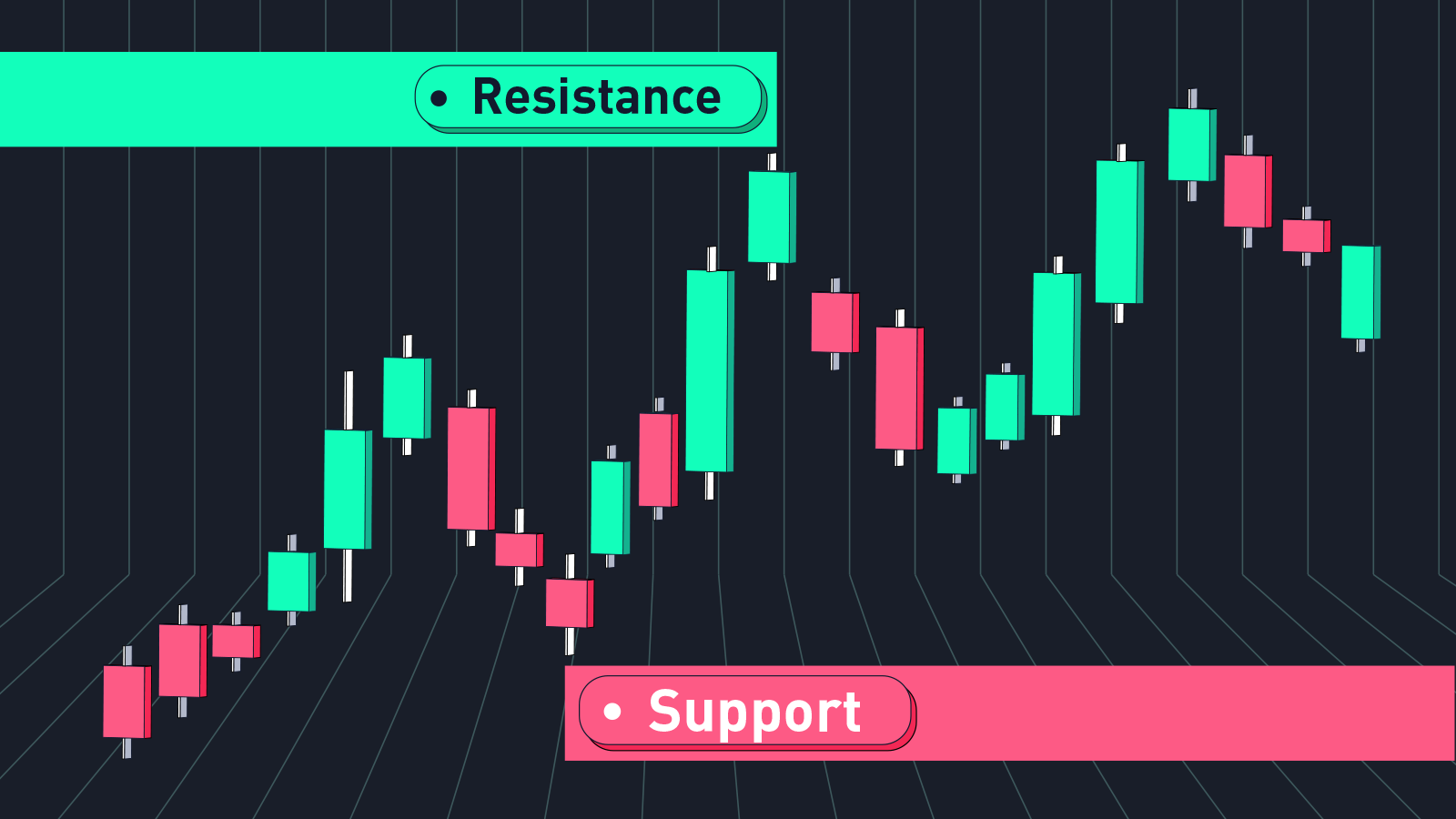
Support and resistance are two of the most useful ideas in technical analysis. They help traders understand where price has reacted before and where it may react again.
In crypto, where volatility is high, key levels can make the difference between a planned trade and a random entry.
What Is Support?
Support is an area where buyers have previously stepped in. Price falls into the zone, demand increases and the market bounces.
Support does not have to be a perfect line. It is often better to think of it as an area. Crypto wicks can be aggressive, so exact levels may get briefly pierced before price recovers.
 Most Popular
- 2-5 Signals Daily
- 82% Success Rate
- Entry, Take Profit & Stop Loss
- Amount To Risk Per Trade
- Risk Reward Ratio


What Is Resistance?
Resistance is an area where sellers have previously appeared. Price rallies into the zone, supply increases and the market struggles to move higher.
When resistance breaks with strength, it can become support later. This is called a support-resistance flip.
How to Find Key Levels
Start with higher timeframes such as the daily or 4-hour chart. Mark obvious swing highs, swing lows, consolidation zones and areas where price reacted multiple times.
The more times a level has mattered, the more traders are likely watching it.
Do not clutter the chart with too many lines. If every price is a level, no level is useful.
Using Levels for Entries
Traders often use support for long entries and resistance for short entries. But the level alone is not enough. It helps to wait for confirmation.
Confirmation might include a strong candle reaction, increased volume, a reclaim of the level, or a failed breakdown.
For example, if ETH pulls into support and prints a strong bullish reaction, that may offer a cleaner setup than buying randomly in the middle of a range.

Free Crypto Signals Channel
 Free Telegram Channel
Using Levels for Stops
Support and resistance also help with stop placement.
If you enter long at support, your invalidation may sit below that support zone. If price breaks and holds below it, the original trade idea may no longer be valid.
This gives the trade structure. You are not just hoping. You know where you are wrong.
Beware of Fakeouts
Crypto loves fakeouts. Price may break above resistance, attract breakout buyers, then reverse back below the level. The same can happen below support.
This is why volume, candle close and market context matter. A clean close above a level is stronger than a quick wick through it.
The Bottom Line
Support and resistance help crypto traders identify important zones on the chart.
Use them to plan entries, stops and targets. Treat them as areas, not magic lines. And always remember: levels are useful, but confirmation makes them stronger.
Need help applying this to live market conditions? Get instant access to our VIP trading signals here.