


Weekly Insights: Developing Blockchains to Aid Business Growth
Estimated Reading Time: 4 minutes
Don’t invest unless you’re prepared to lose all the money you invest. This is a high-risk investment and you are unlikely to be protected if something goes wrong. Take 2 minutes to learn more

In this article, we will delve into how Layer 2 (L2) blockchains are rapidly developing. We’ll take a step back to examine the origins of this sector, trace its evolution over the past four years, and spotlight several emerging trends currently shaping the market.
The Ethereum L1’s Capacity and the Need for Vertical Scaling
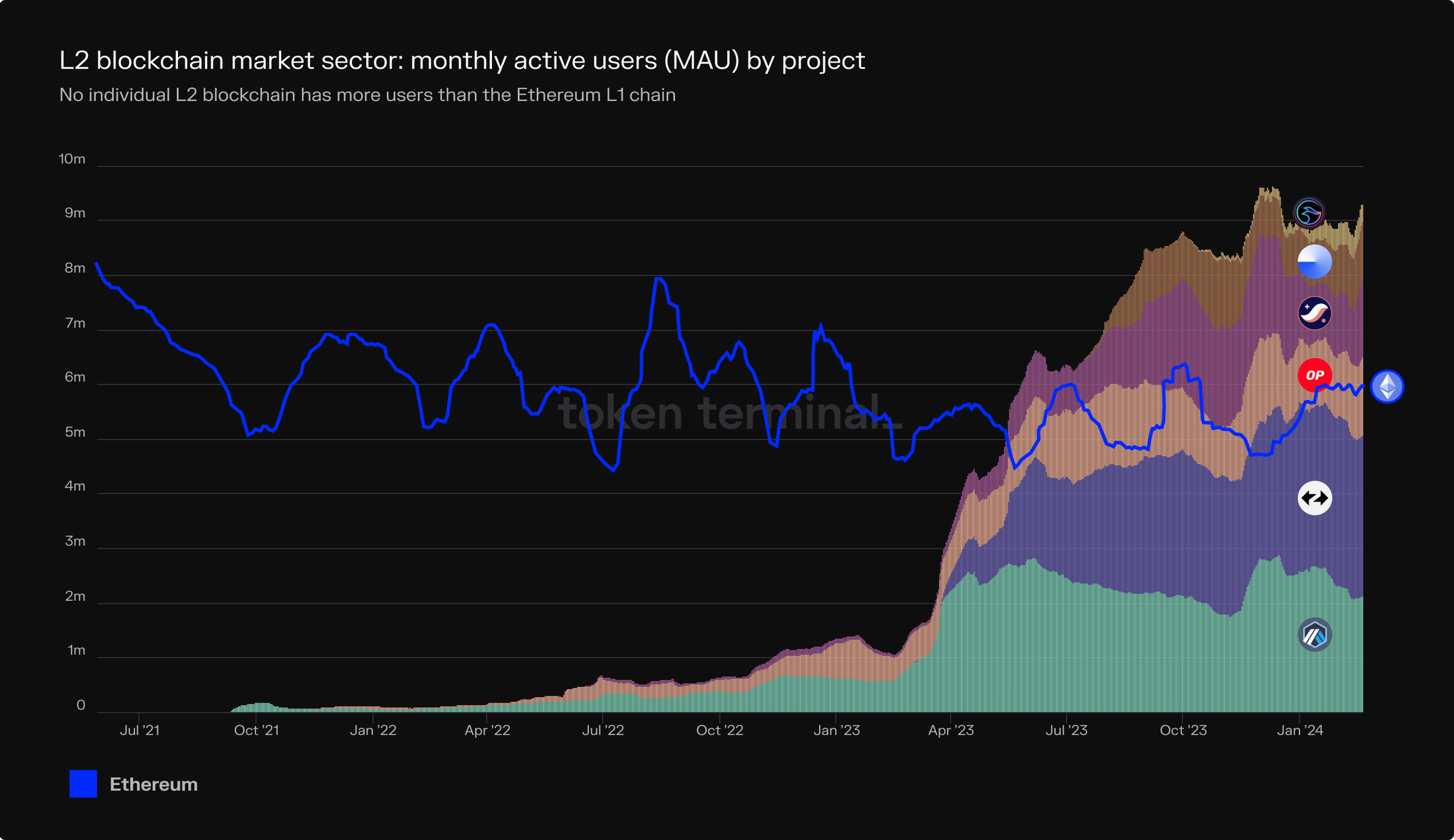
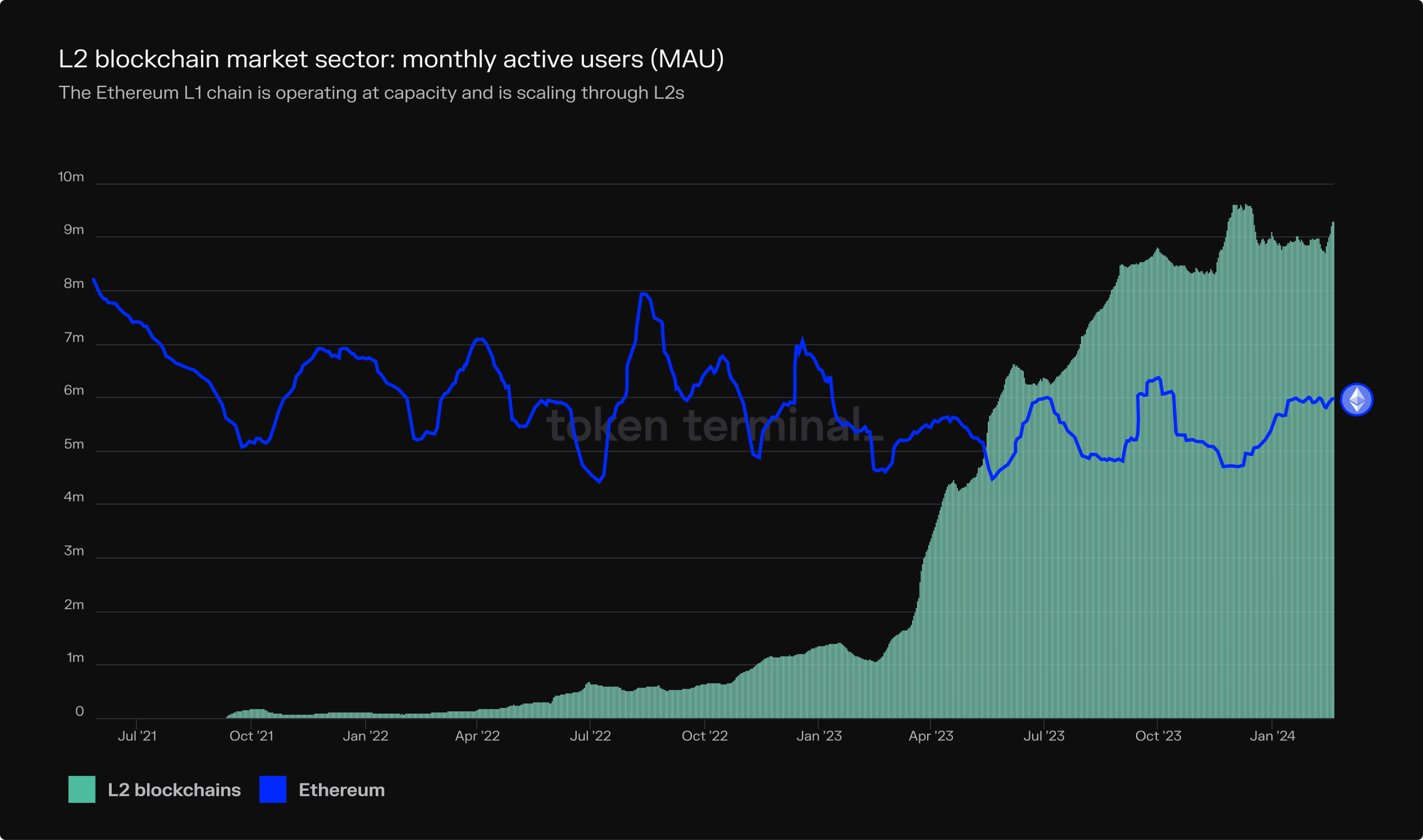
The Ethereum Layer 1 (L1) has reached its capacity limit, necessitating vertical scaling. It was evident from the outset that a single chain, specifically Ethereum L1, could not scale sufficiently to support the global economy. Consequently, Vitalik Buterin proposed an L2-centric scaling roadmap, outlining a strategy for Ethereum to scale vertically through thousands of L2 blockchains, each connected technically and/or brand-wise to the main L1 chain. Over the past four years, this vision has transitioned from research and development to reality, with Ethereum L2s now hosting approximately 10 million monthly active users (MAUs) compared to Ethereum L1’s 6 million MAUs.
With the commoditization of infrastructure, the emphasis is now on developing sustainable on-chain businesses.
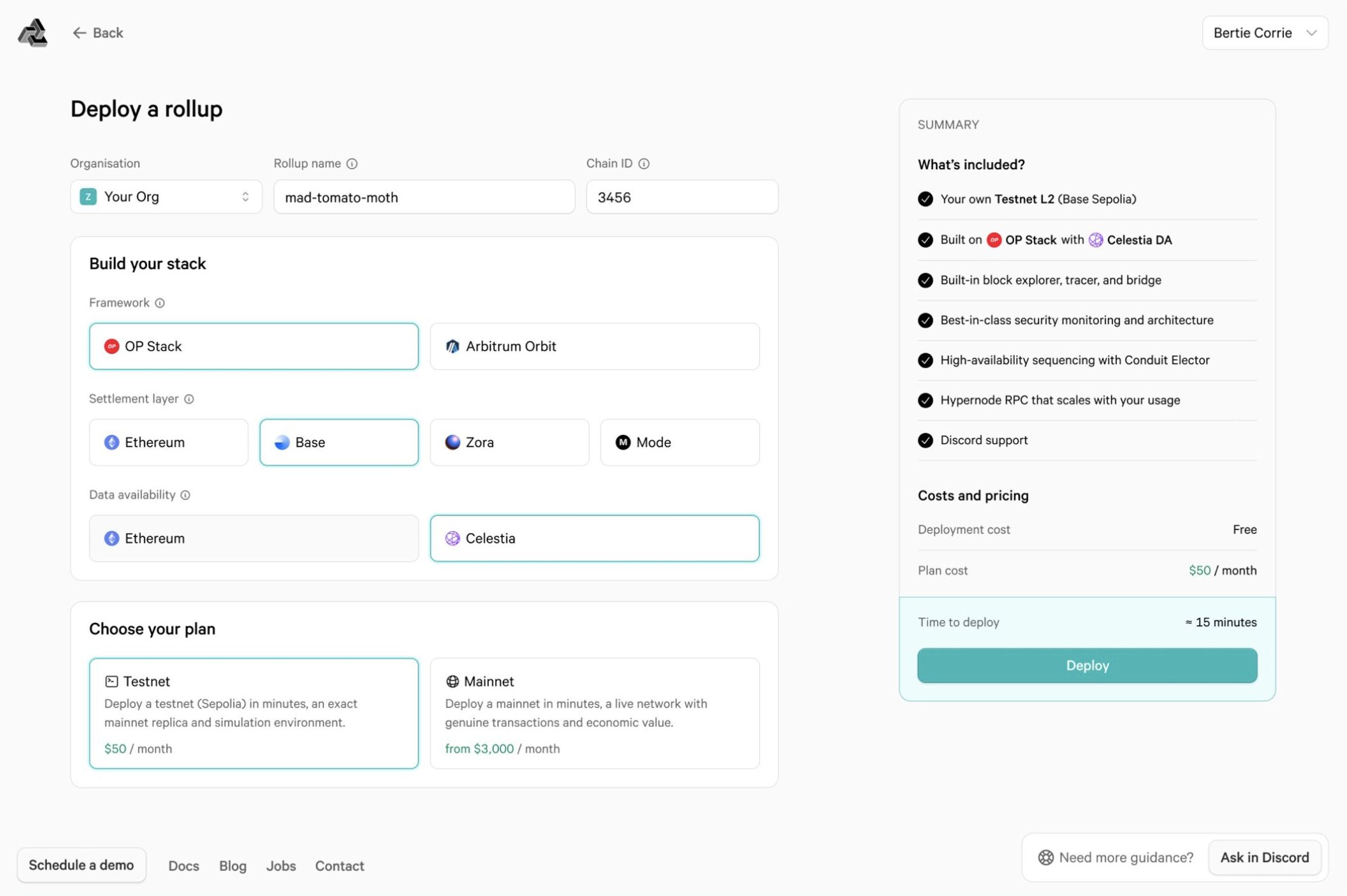
Given the simplicity with which application developers can now deploy an L2 blockchain, the market is shifting its focus to entrepreneurs who are creating high-growth, sustainable on-chain businesses rather than just blockchains. The most successful L2 projects regard themselves as startups rather than just innovative data structures designed to overcome L1 scalability issues. These ventures prioritize (i) growth, (ii) monetization strategies, and (iii) cost-saving measures.
Due to the high fees on Ethereum L1, the L2 stack is (at least temporarily) unbundled.
The initial wave of Ethereum L2s, such as Optimism and Arbitrum, were tightly integrated with Ethereum L1. This alignment, however, proved to be very costly, with both platforms spending millions of dollars monthly in ETH to settle their transactions on the main blockchain. Entrepreneurs identified the high costs of Ethereum L1 as an opportunity. Protocols like Celestia and EigenLayer are working to “unbundle the L2 stack,” offering services to L2s at prices that are approximately 100–1,000 times cheaper than Ethereum L1. This competition is expected to accelerate core development on Ethereum L1.
General-purpose blockchains create “movements,” while application-specific blockchains develop user-centric products.
From a business perspective, L2 blockchains can be categorized as either general-purpose or application-specific. Technically, L2 blockchains are divided into optimistic and ZK types. General-purpose L2s aim to create a new asset hub for the internet, while application-specific L2s focus on delivering the best user experience for specific use cases. In both instances, the L2 architecture serves as an extension of the core team’s original product vision.
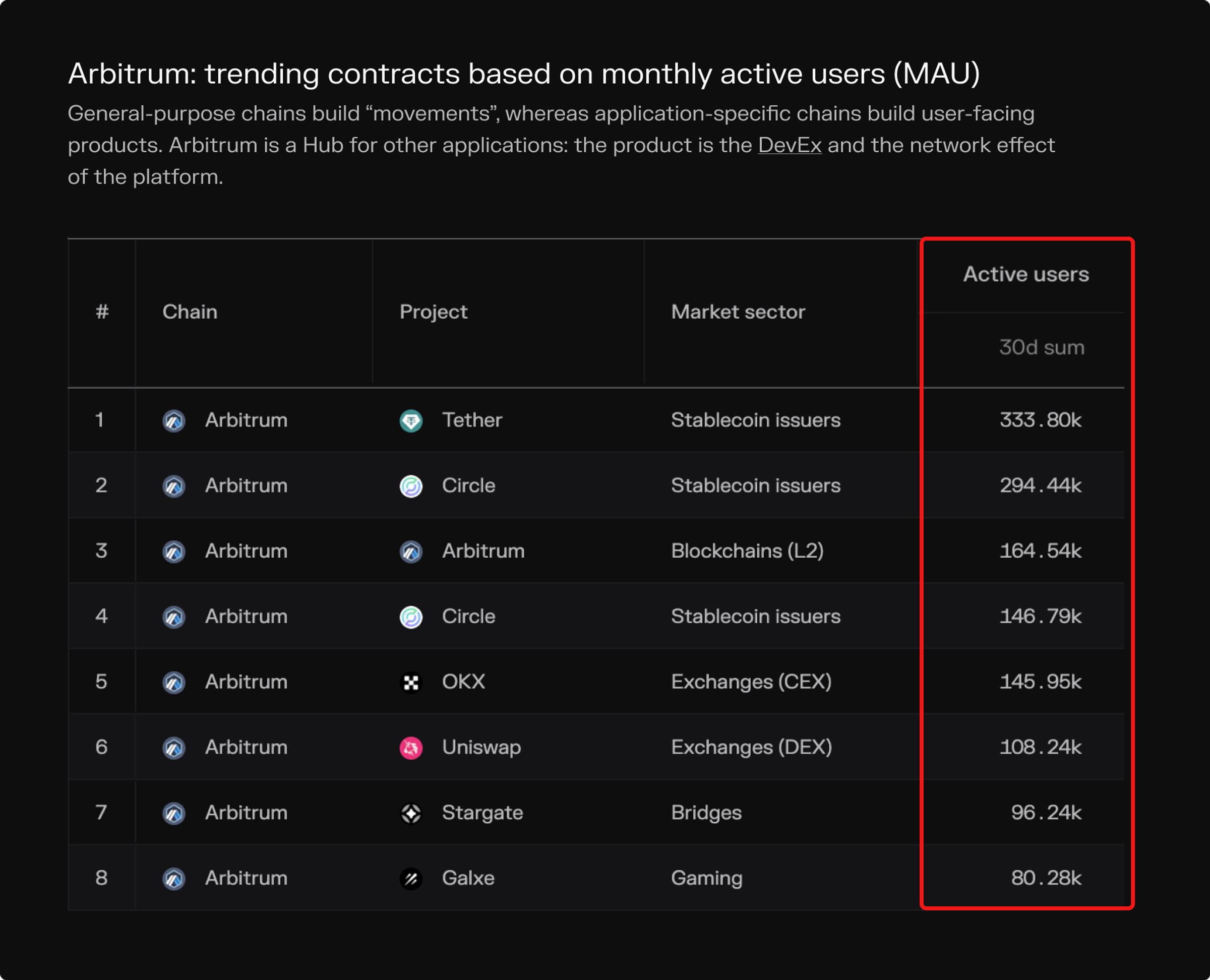
The L2 market, with its broad applications, tends to favor a “most-wins” dynamic due to the comparable technical frameworks across competing projects.
Similar to many other markets, the general-purpose L2 sector follows a power law distribution where a handful of successful L2s dominate user attention and financial activity. The screenshot below showcases the leading contenders among general-purpose Ethereum L2s.