Understanding Crypto Market Cycles: Bull Runs and Bear Markets
Estimated Reading Time: 4 minutes
Don’t invest unless you’re prepared to lose all the money you invest. This is a high-risk investment and you are unlikely to be protected if something goes wrong. Take 2 minutes to learn more

Markets move in cycles. Up, down, up, down. It happens in stocks, bonds, real estate, and especially in crypto. Understanding these cycles helps you make better decisions and avoid costly mistakes.
Let’s break down what actually happens.
The Four Phases
Most market cycles have four phases. Here’s how they typically play out in crypto:
- Accumulation – The boring phase. Smart money is buying, but most people aren’t paying attention. Prices are low but not crashing. This is when you want to be accumulating.
- markup – The exciting phase. Prices start going up. More people notice. FOMO kicks in. Everyone is making money. This is when the general public starts buying.
- Distribution – The tricky phase. Smart money starts selling. Prices might still go up, but it’s getting shaky. People are irrationally optimistic. This is when you want to start taking profits.
- markdown – The painful phase. Prices fall. Panic sets in. People sell at the bottom. This is when fear rules. But it’s also when new opportunities start to form.
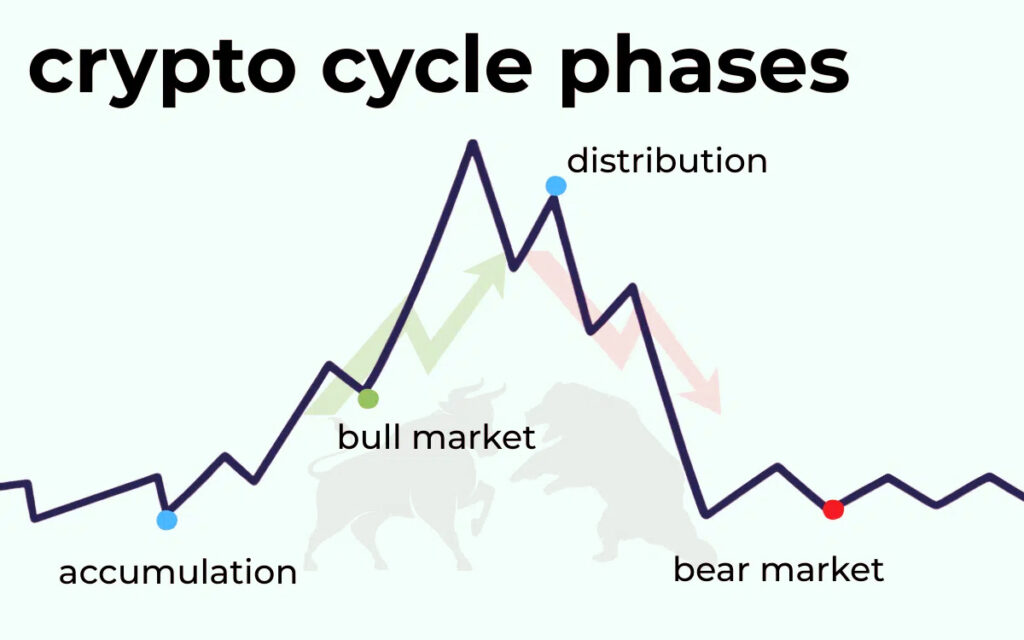
And then the cycle starts again.
What Triggers Each Phase?
In crypto, cycles are often driven by:
- Halving events – Bitcoin’s halving typically kicks off a new cycle
- Macroeconomic factors – Interest rates, inflation, global events
- Narratives – New use cases, DeFi summer, NFT mania
- Institutional adoption – When big money starts paying attention
These factors combine to create the boom-bust patterns we’ve seen repeatedly.

Free Crypto Signals Channel
 Free Telegram Channel
How Long Do Cycles Last?
Here’s the honest answer: they vary. Some last months, others last years.
Bitcoin’s typical cycle is about four years (tied to the halving). But this isn’t a hard rule. Each cycle has its own personality based on what’s driving it.
The key is to not get caught up in thinking “this time is different.” It’s never different. Prices go up, people get greedy, prices crash, people get scared, and then the process starts again.
What This Means For You
Understanding cycles helps you:
- Avoid buying at the top – when everyone is bullish and prices are making new highs, that’s usually not the best time to invest.
- Avoid selling at the bottom – when everything looks hopeless and prices are crashing, that’s usually not the time to panic sell.
- Take profits systematically – as prices go up during the markup phase, having a plan to take some profits helps you actually keep your gains.
- Be patient – cycles take time. The accumulation phase can feel endless. But patience is rewarded.
 Most Popular
- 2-5 Signals Daily
- 82% Success Rate
- Entry, Take Profit & Stop Loss
- Amount To Risk Per Trade
- Risk Reward Ratio


The Danger of Timing
Here’s the hard truth: timing the exact top and bottom is nearly impossible. People who try usually miss.
What you can do is understand where you likely are in the cycle and adjust accordingly. If everything is mooning and your Uber driver is giving you crypto tips, you’re probably late in the markup phase. If everyone you know has given up on crypto, you might be near the bottom of the markdown phase.
The Bottom Line
Market cycles are inevitable. They will continue as long as markets exist. Understanding them won’t make you perfect, but it will help you make better decisions.
The best approach is having a plan before the cycle turns. Know your entry points, your exit points, and your risk tolerance. Stick to the plan when emotions run high.
Want help navigating market cycles? Get instant access to our VIP trading signals here.