



a16z Report: Stablecoin Market Now Control More Transactions Than PayPal
Estimated Reading Time: 5 minutes
Don’t invest unless you’re prepared to lose all the money you invest. This is a high-risk investment and you are unlikely to be protected if something goes wrong. Take 2 minutes to learn more

The stablecoin market just hit a major milestone that most people missed. These digital dollars now handle $9 trillion in annual transactions, according to the latest a16z report.
This transaction volume was more than five times what PayPal processes. That’s not a typo. The same tokens that started as a simple way to trade crypto are now competing with traditional payment giants.
Stablecoin Market Records Tremendous Growth
Per the report, September 2025 alone saw $1.25 trillion in stablecoin volume. That’s a single month. The total supply sitting across blockchains reached $300 billion, setting a new record.
What’s interesting is that this growth happened while crypto trading volume stayed relatively flat. People aren’t just using stablecoins to swap between different coins anymore—they’re actually moving money.
The raw transaction volume hits $46 trillion annually, though that includes some automated activity. Even after filtering out bots and high-frequency trading, the adjusted figure of $9 trillion puts stablecoins ahead of PayPal and at roughly half of Visa’s throughput.
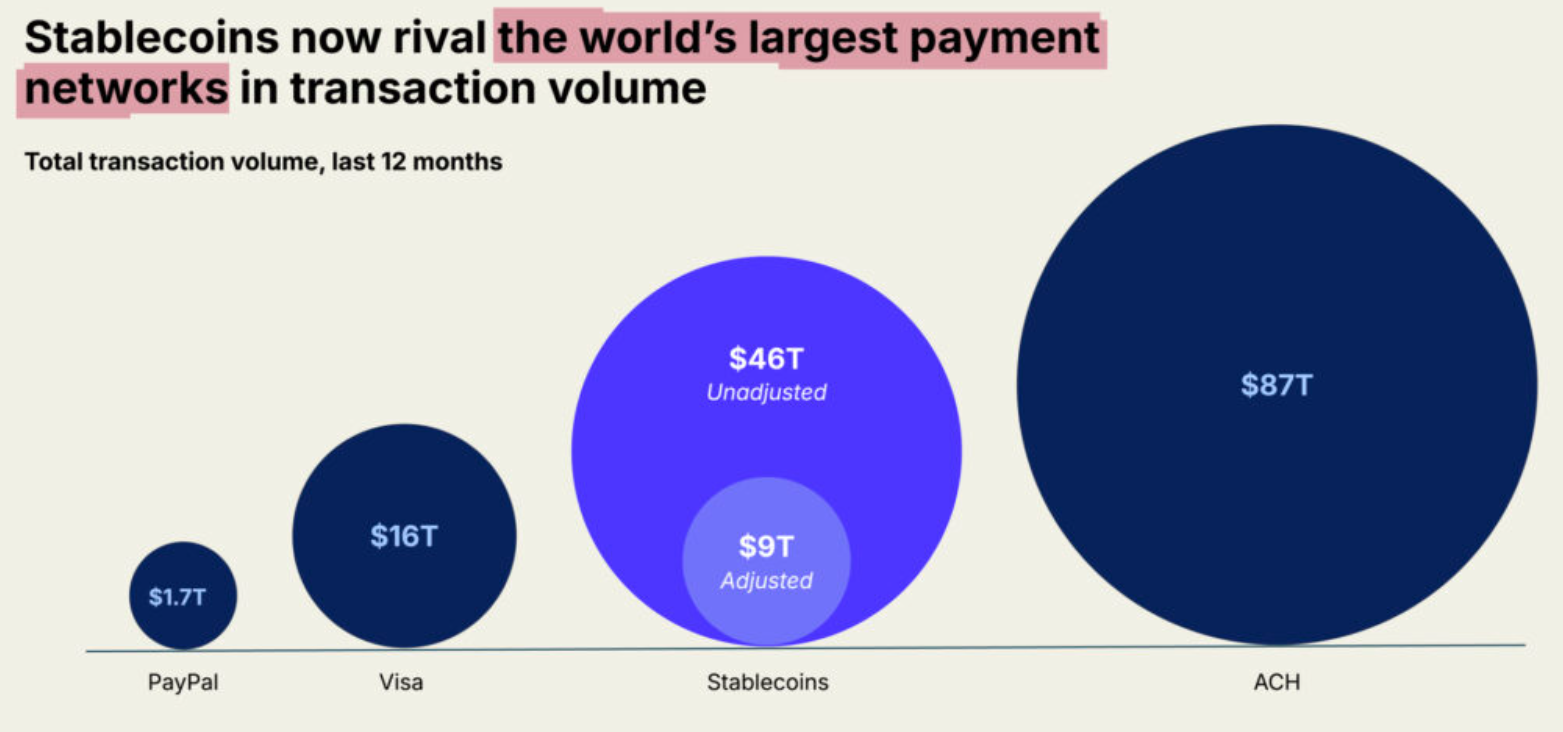
Keep in mind these aren’t perfect comparisons since the numbers measure different types of transactions, but the scale is still striking.
Why This Matters for Your Portfolio
Two issuers control most of the market. Tether and USDC account for 87% of all stablecoins in circulation. If you’re holding or using stablecoins, you’re probably dealing with one of these two.
They’ve also become major buyers of U.S. Treasury bonds, holding over $150 billion worth—more than several countries.
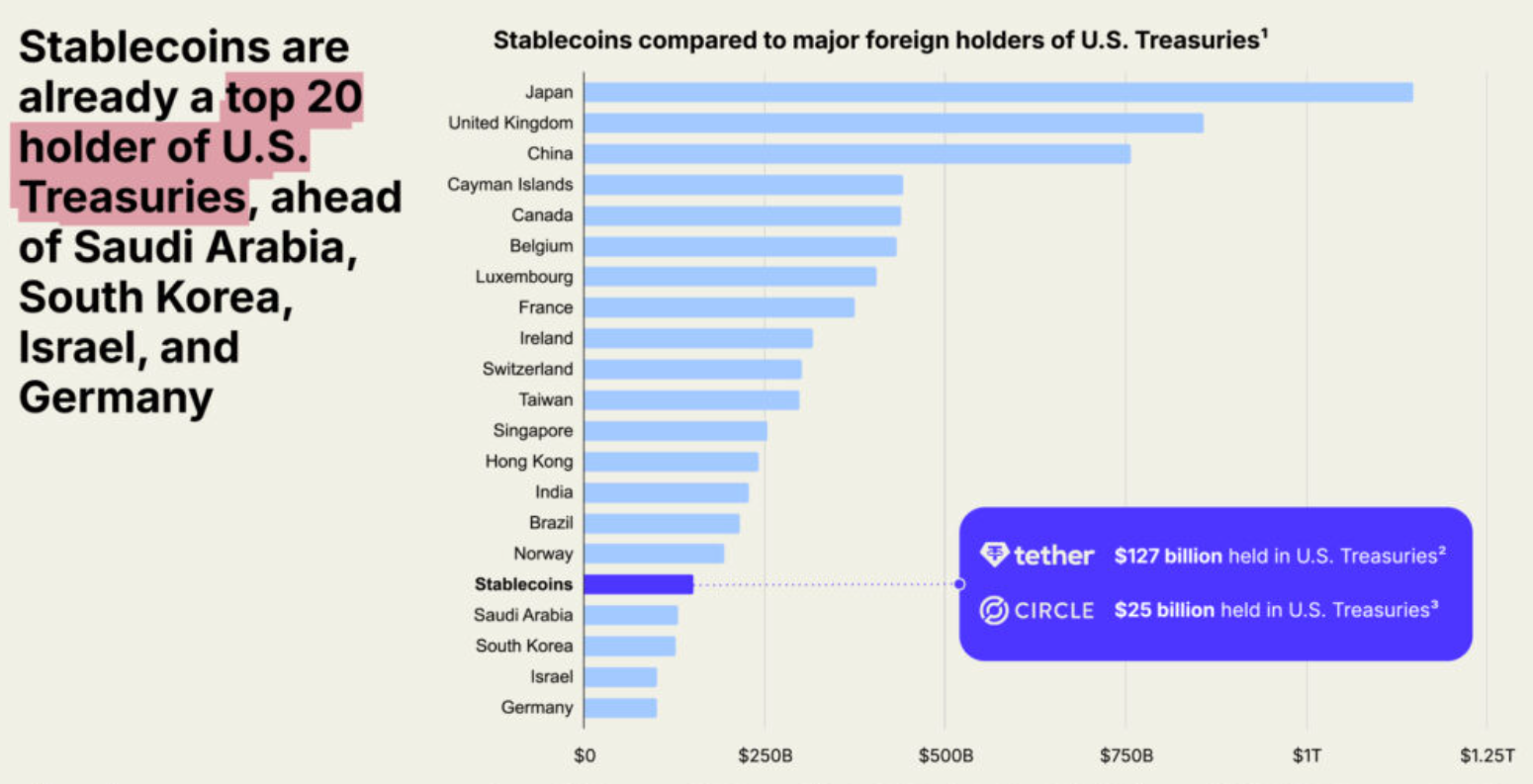
Here’s something that caught attention: over 99% of stablecoins are pegged to the U.S. dollar. While foreign central banks have been reducing their Treasury holdings, stablecoin issuers keep buying more.
By 2030, projections suggest the market could grow to $3 trillion, which would make stablecoins one of the largest sources of demand for U.S. government debt.
Where the Action Is Happening
Ethereum and Tron handle most of the heavy lifting. In September 2025, these two blockchains settled $772 billion in stablecoin transactions. That’s 64% of all volume. But newer chains are starting to pick up steam too.
The geographic split is notable. Emerging markets show the fastest growth in mobile wallet adoption—Argentina saw usage increase 16 times over three years as their currency crisis deepened. Countries like Colombia, India, and Nigeria are following similar patterns.
Meanwhile, developed nations like Australia and South Korea focus more on trading rather than using stablecoins for everyday payments.
What Changed This Year for the Stablecoin Market?
Two things happened that shifted how institutions view this space. First, Circle went public in a billion-dollar IPO. That legitimized stablecoin issuers as real financial companies.
Second, the GENIUS Act passed with bipartisan support, giving builders and banks the regulatory clarity they’d been waiting for. Within months, mentions of stablecoins in SEC filings jumped 64%.
Now traditional banks want in. Citigroup, JPMorgan, and Visa are rolling out crypto products. PayPal and Stripe are building payment infrastructure. These companies reach billions of customers, which could bring stablecoins into mainstream financial services faster than most people expect.
Practical Applications Beyond Trading
Sending money across borders used to mean waiting days and paying high fees. Stablecoins move value in under a second for less than a penny. That’s why they’ve become popular in countries with unstable currencies or expensive remittance costs.
For traders, stablecoins provide a stable base between positions without converting back to traditional currency. For businesses, they offer a way to accept payments globally without dealing with multiple banking relationships.
The infrastructure finally works at scale. Blockchains now process 3,400 transactions per second across major networks—a 100-fold increase in five years. Transaction costs on some networks dropped from $24 to less than a cent.
Looking Forward
The gap between people who own crypto (716 million) and those actively using it on-chain (40-70 million) represents the next growth phase. Most crypto holders haven’t explored what they can do with their assets beyond holding them on exchanges.
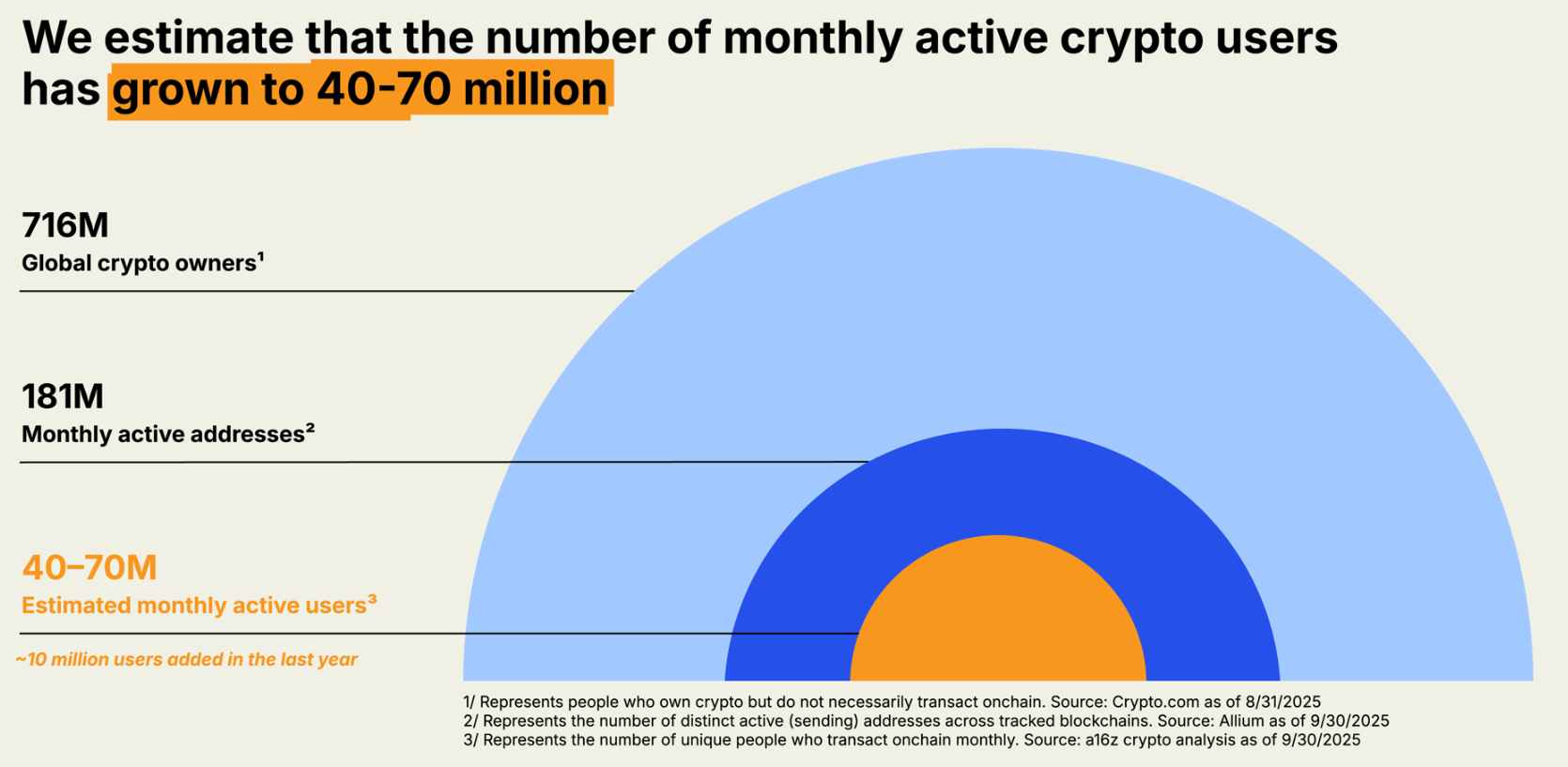
With regulatory frameworks taking shape and major financial institutions committing resources, stablecoins are moving from experimental technology to core financial infrastructure.
Whether that leads to a complete overhaul of payment systems or just adds another option alongside existing rails remains to be seen.
Interested in learning how to day-trade crypto? Get all the information you’ll need here.