


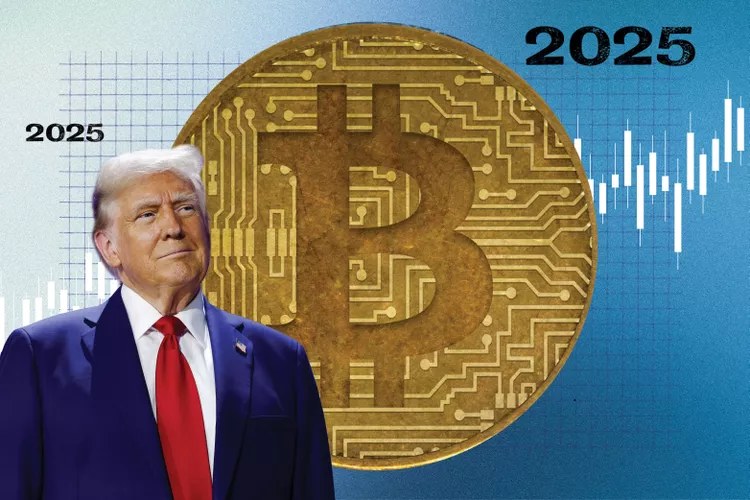
America’s Bitcoin Takeover: The Digital Gold Rush of the Bald Eagle
Estimated Reading Time: 4 minutes
Don’t invest unless you’re prepared to lose all the money you invest. This is a high-risk investment and you are unlikely to be protected if something goes wrong. Take 2 minutes to learn more

A striking new report from River Financial reveals a jaw-dropping reality: Americans now hold 40% of the world’s entire Bitcoin supply.
How did the U.S. become the epicenter of Bitcoin ownership?
River’s analysis points to a perfect storm of accessibility, culture, and regulation that made the U.S. the token’s breeding ground.
Open Access:
“Bitcoin is readily accessible to most Americans,” says the report, crediting a supportive regulatory framework and the lack of gatekeeping investment rules.
Translation: No need to be a Wall Street shark or a Silicon Valley coder—just a Wi-Fi signal and a few spare dollars can get you started.
Cultural Fit:
The U.S. ethos of risk-taking, investing, and financial independence made it fertile soil for Bitcoin adoption. A DIY investing culture met decentralized money, and sparks flew.
The Outcome?
Close to 50 million Americans now own the coin —more than any other developed country. Ownership spans across demographics, defying divisions of race, income, education, or ideology. Bitcoin in the U.S. isn’t just a niche—it’s mainstream.

Bitcoin Goes to Washington—and Wins
Fast forward to 2025, and Congress is so pro-Bitcoin it might as well be sponsored by Satoshi himself. Currently, 66% of the House and 59% of the Senate back pro-Bitcoin legislation—more bipartisan unity than most infrastructure bills get.
Meanwhile, 36 states have proposed or passed crypto-friendly laws, with some going as far as authorizing Bitcoin holdings in their state reserves. We’re one bald eagle short of putting a cold wallet in the Capitol vault.
Mining Glory: America’s Hashrate Takeover
When China slammed the brakes on mining in 2021, the U.S. floored the accelerator. As rigs powered down in the East, the West lit up.
Texas brought the infrastructure, North Dakota brought the cheap power, and suddenly, the U.S. became the global HQ of Bitcoin mining. Since then, 38% of all new Bitcoin has been mined in the U.S., with over $30 billion in investments and 20,000+ mining jobs created.
It’s not just a tech trend—it’s the digital-era equivalent of an industrial boom. Call it the token Belt, where the only thing hotter than the miners is the hash rate.
Wall Street’s Gone Full Bitcoin—and They’re All In
Since the landmark launch of Bitcoin ETFs in 2024, Wall Street hasn’t just warmed up to crypto—it’s throwing a party. Titans like BlackRock, Fidelity, and TIAA are now elbow-deep in Bitcoin exposure.
U.S. institutions currently hold $31 billion in Bitcoin ETF assets, commanding 79% of the global market share. That’s not just dominance—it’s a financial power grab.
Even Ivy League giants have joined the digital gold rush. Yes, Harvard and Stanford are reportedly stacking sats behind the scenes, while undergrads debate Keynesian economics just floors above the endowment’s cold storage.
Silicon Valley’s New Favorite Toy
Venture capital has followed suit. The same country that once backed sock puppets and Webvan now accounts for 70% of all Bitcoin venture capital funding, and 79% of the VC firms in the space are U.S.-based.
Firms with edgy names like Ego Death Capital and Lightning Ventures are writing checks like it’s 1999—only this time, the bet is on decentralized money, not dog food delivery.
Meanwhile, U.S.-born startups like Strike, Swan, River, and Fold are turning the digital asset into a daily American experience. The result? A digital asset with no borders is starting to feel… oddly domestic.
Because while Bitcoin is decentralized, the infrastructure, money, laws, and momentum are all wearing stars and stripes.
America’s Bitcoin Empire—With a Target on Its Back
Between the ETFs, miners, VC billions, and tens of millions of holders, one thing is undeniable: the Bitcoin revolution may be global, but it talks with an American accent.
But here’s the twist— with great adoption comes great vulnerability.
No, it’s not the Fed, CBDCs, or overregulation that pose the biggest threat. It’s exposure. The U.S. now has a massive digital treasure chest—and hackers know it.
The recent Coinbase breach only underscores the stakes. When Bitcoin becomes this centralized in one country—even unintentionally—it turns into a glowing target for every cybercriminal on the planet.