


Ethereum ETFs Fail to Spark Market Excitement, Record 3-Day Outflows
Estimated Reading Time: 3 minutes
Don’t invest unless you’re prepared to lose all the money you invest. This is a high-risk investment and you are unlikely to be protected if something goes wrong. Take 2 minutes to learn more
The launch of U.S.-spot Ethereum ETFs has not lived up to expectations. Despite initial buzz, these new investment products have struggled to gain traction.
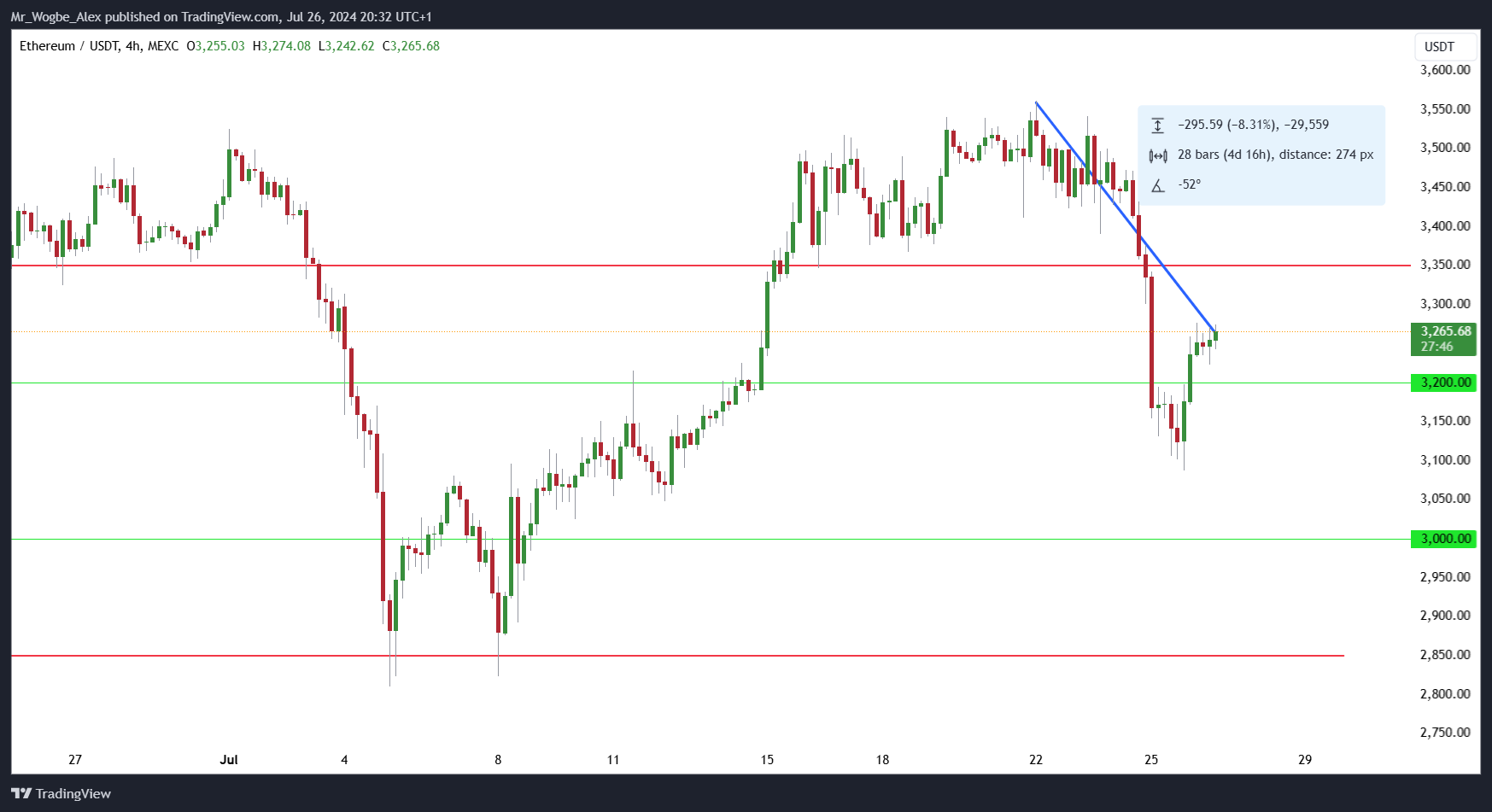
Ethereum’s price has dropped since the ETFs began trading. It now sits at $3,267, down by about 8% from its pre-ETF level. This decline comes as a surprise to many who thought Ethereum ETFs would boost the cryptocurrency’s value.
Investors are pulling money out of Ethereum-related products. In just three days, nearly $179 million left the market. The Grayscale Ethereum Trust (ETHE) lost a whopping $1.16 billion.
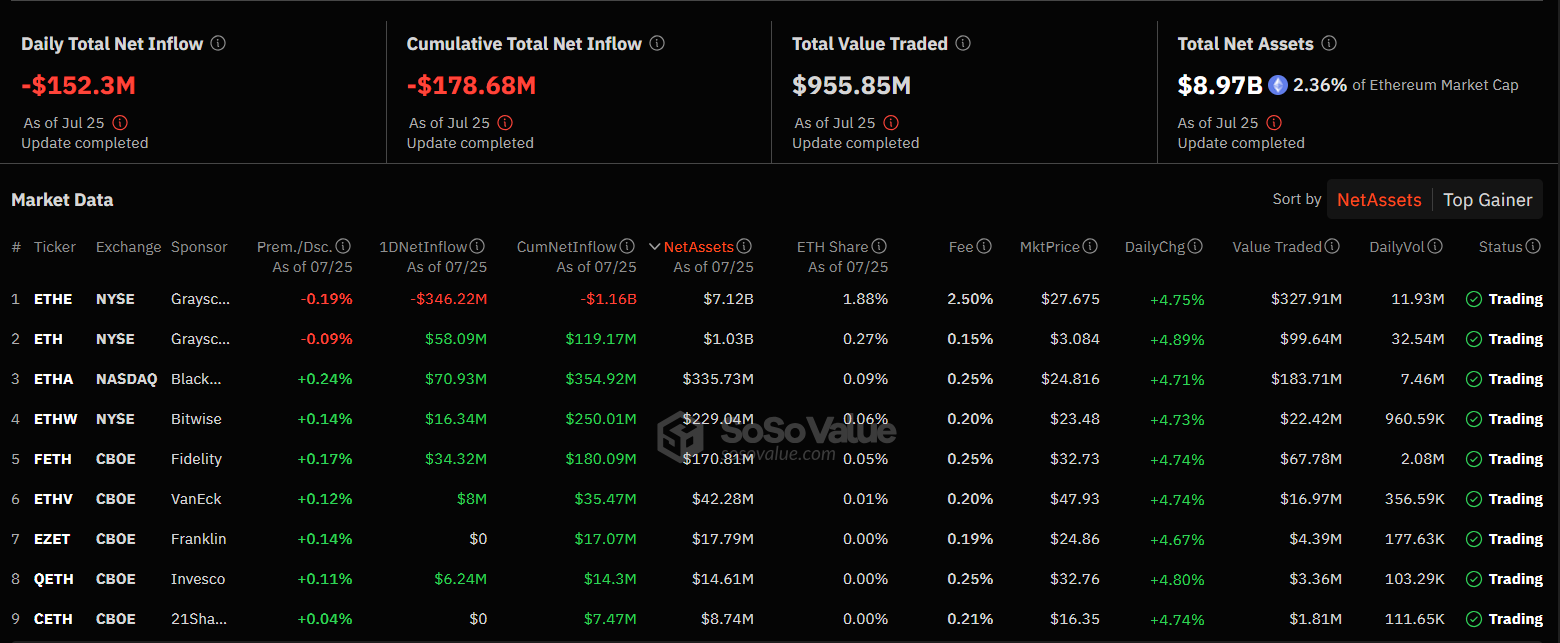
Why are investors leaving ETHE? Its fees are about 10 times higher than those of its competitors. This has pushed many to seek cheaper options.
The lukewarm response to Ethereum ETFs stands in stark contrast to Bitcoin ETFs. When Bitcoin ETFs launched, they created a lot of excitement and demand. Ethereum hasn’t seen the same enthusiasm.
One crypto expert, Ignas, said Ethereum is “in limbo.” He pointed out that Ethereum hasn’t improved its main network fast enough. Meanwhile, rival blockchain Solana has grown quickly.
$ETH is in limbo:
• Ethereum failed to scale the L1 while Solana rapidly gains ground
• L2 scaling isn’t adding value to Ethereum (low ETH burn, fragmented liquidity, worse UX)
• Airdrop farming isn’t enticing anymore (low rewards)Even ETFs couldn’t ignite FOMO for $ETH pic.twitter.com/lCf7CpfbP4
— Ignas | DeFi (@DefiIgnas) July 25, 2024
What’s Causing the Outflows in Ethereum ETFs?
So, why aren’t people more excited about Ethereum ETFs? There are a few reasons:
1. No staking rewards: ETF investors can’t earn extra money through staking like direct Ethereum holders can. This makes ETFs less attractive.
2. Complex technology: Many people don’t understand how Ethereum works. It’s harder to grasp than Bitcoin, which is often called “digital gold.”
3. Changing supply: Ethereum’s total supply changes over time. This makes it tough for regular investors to understand its value.
4. Low trading volume: Ethereum ETFs aren’t seeing enough daily trades to really impact the market price.
Despite these challenges, Ethereum ETFs could still play a big role in the long run. They might help make crypto more mainstream in the finance world.
The story isn’t over yet. On their third day of trading, the nine U.S.-spot Ethereum ETFs saw $152.3 million leave the funds. This continues the trend from the day before.
It’s not all bad news, though. Some ETH ETFs are gaining investors. BlackRock’s ETHA brought in about $71 million on the third day. Fidelity and Bitwise also saw people add money to their funds.