


Silver, Uranium, Lithium.. What’s Next?
Estimated Reading Time: 5 minutes
Don’t invest unless you’re prepared to lose all the money you invest. This is a high-risk investment and you are unlikely to be protected if something goes wrong. Take 2 minutes to learn more

Silver just got promoted from a side player to a starring role.
For the first time ever, the U.S. Department of the Interior has proposed adding silver to its Critical Minerals List in the draft 2025 update.
Translation: in the eyes of the U.S. government, the economy becomes exposed if silver supplies are disrupted.
It’s not official yet—there’s a 30-day public comment period before the list is finalized—but the signal has already been sent.
The largest economy in the world just hinted that silver may no longer be just an industrial metal. It’s now on Washington’s radar as a matter of strategic importance.
Why It Matters
If silver makes the final cut, history suggests the market impact could be enormous.
We’ve seen this movie before. When the U.S. designated uranium and lithium as critical, the policy spotlight triggered massive rallies. Supply chains were secured, subsidies flowed, and investor capital piled in.
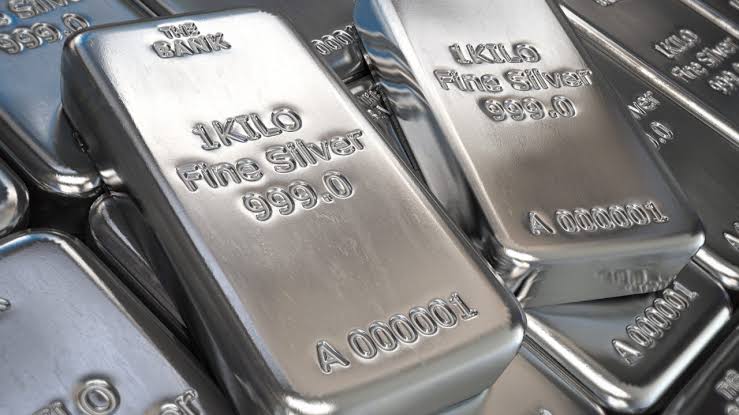
Now silver—sometimes called the “moon metal” for its role in solar panels and high-tech applications—might be next in line.
From Forgotten to Frontline
Take uranium.
After the Fukushima disaster in 2011, the sector was left for dead. Prices plunged from $70 per pound to around $25 and stayed depressed through most of the 2010s. Utilities bought on the spot market, mines shut down, and investors stopped caring.
Then came a quiet policy shift.
In 2018, the U.S. added uranium to its Critical Minerals List. That small move cracked open the door.
By 2020, the Department of Energy was recommending the creation of a national uranium reserve. In 2021, Congress funded it with $75 million. A year later, the Defense Production Act was invoked to secure the entire nuclear fuel supply chain.
The narrative flipped. “Cheap supply” gave way to “secure supply.” By 2020 uranium was trading near $30 per pound—by 2024 it had surged past $100.
Lithium’s Even Wilder Ride
Lithium’s transformation was even more dramatic.
In the mid-2010s, battery-grade lithium carbonate traded at about $7,000 a ton. Outside of chemists and a few Tesla fanatics, no one paid attention.
Then, in 2018, the U.S. declared lithium a critical mineral. That designation was the spark.
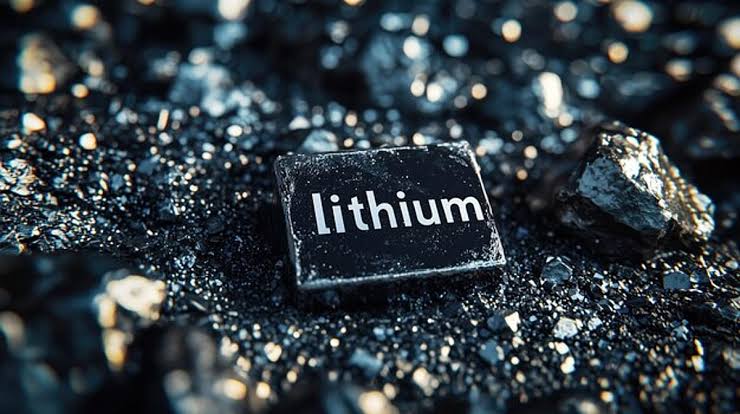
Capital poured in. Automakers signed long-term supply agreements. The Department of Energy rolled out loans. The Inflation Reduction Act piled on with billions in subsidies for domestic battery chains.
By late 2022, lithium carbonate wasn’t $7,000 anymore—it was $80,000 a ton. A more than tenfold explosion.
Albemarle and SQM, once seen as staid chemical companies, suddenly became market stars. Junior miners with little more than claims and a press release raised cash overnight.
Even after prices cooled, lithium still trades at multiples of its pre-designation level. And more importantly, the impact went beyond price—it rewired the entire supply chain.
Apples to Oranges? Silver’s Unique Setup
Now let’s turn to silver.
On sheer scale, silver dwarfs uranium and lithium combined. But size doesn’t mean security. In fact, silver’s supply chain is far more fragmented—and critically, it has been running at a chronic deficit.
In 2024, global demand hit 1.16 billion ounces, while miners produced only about 820 million. That’s the fourth straight year of shortages, with the gap widening rather than narrowing.
Above-ground inventories are thin—just two to three years of demand at best—and much of that metal is tied up in ETFs and private vaults. Unlike gold, silver doesn’t sit idle; it gets consumed in solar panels, EVs, semiconductors, and medical equipment. Once used, much of it is gone for good.
What Happens If Washington Steps In?
If the U.S. finalizes silver’s inclusion on the Critical Minerals List, history suggests we’ll see the same chain reaction we saw with uranium and lithium:
- Governments begin stockpiling.
- Subsidies flow into supply chains.
- Investors pile in.
Demand responds instantly, but supply takes years to catch up. That mismatch is what drove uranium to triple and lithium to soar tenfold.
With silver’s dual identity—as both an industrial workhorse and a monetary hedge—the move could be even more explosive.
Silver Already Has Attention
Washington doesn’t slap “critical” status on commodities casually. It runs disruption models across defense, energy, healthcare, and tech, only elevating resources where shortages could threaten the system itself.
And the smart money is already circling. Tech billionaire David Baitman recently took delivery of 12.7 million ounces—roughly 1.5% of annual global output—while Saudi Arabia’s central bank revealed a $40 million ETF position.
In most commodities, those are rounding errors. In silver, they’re meaningful.
The truth is, silver doesn’t need Washington’s blessing to be scarce. It already is.