
Crypto Mining Explained: How It Works and Is It Worth It?
Estimated Reading Time: 6 minutes
Don’t invest unless you’re prepared to lose all the money you invest. This is a high-risk investment and you are unlikely to be protected if something goes wrong. Take 2 minutes to learn more
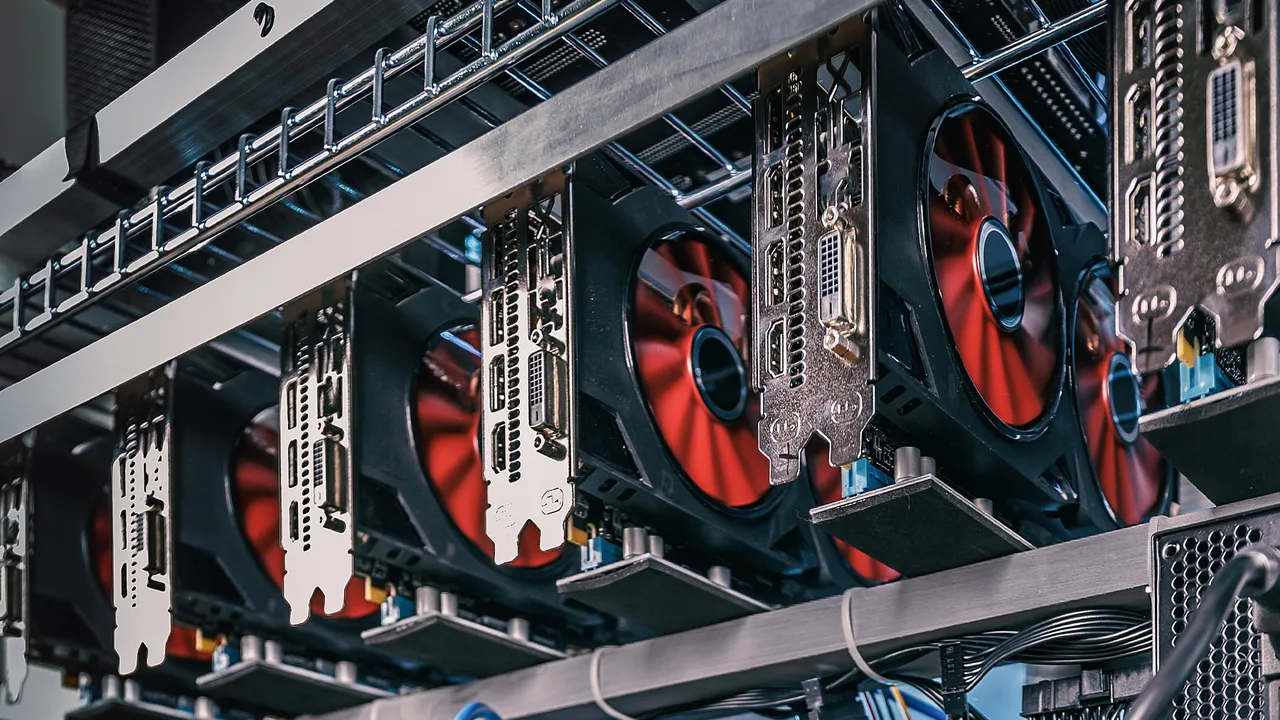
The Engine Behind Bitcoin
Before staking, before DeFi, before NFTs — there was mining. It’s the original mechanism that keeps the Bitcoin network secure, and it remains one of the most fascinating aspects of cryptocurrency.
But is mining something you can realistically do? And is it profitable? Let’s break it down.
What Is Crypto Mining?
Crypto mining is the process of using computational power to verify transactions and add them to the blockchain — in exchange for newly created cryptocurrency as a reward.
Miners are the backbone of Proof of Work blockchains like Bitcoin. Without them, the network doesn’t function.

Free Crypto Signals Channel
 Free Telegram Channel
How Does Mining Work?
The Mining Process:
- Transactions are broadcast to the network when people send Bitcoin
- Miners collect these pending transactions into a “block”
- Miners race to solve a complex mathematical puzzle — finding a specific number called a “nonce”
- The winner broadcasts their completed block to the network
- Other nodes verify the solution — this takes milliseconds
- The winner earns the block reward + transaction fees
- The process repeats approximately every 10 minutes
The Puzzle:
Mining is essentially a guessing game. Miners hash the block data millions of times per second, trying to find a result that meets the network’s “difficulty” requirement.
It’s like rolling a dice millions of times looking for a specific combination. More computing power = more rolls per second = better chance of winning.
What Is Hash Rate?
Hash rate measures a miner’s (or the entire network’s) computational power — how many calculations they can perform per second.
– 1 Hash = one calculation
– 1 TH/s = 1 trillion hashes per second
The Bitcoin network’s total hash rate has grown from a few KH/s in 2009 to hundreds of Exahashes per second today — one of the most impressive computational achievements in history.
Mining Difficulty
The Bitcoin network automatically adjusts its difficulty every 2,016 blocks (approximately every two weeks).
– More miners join → difficulty increases → harder to find a valid block
– Miners leave → difficulty decreases → easier to find a valid block
This ensures blocks are found approximately every 10 minutes, regardless of how much computing power is on the network.
Types of Mining
Solo Mining
One miner competing against the entire network alone. Extremely unlikely to win any rewards unless you have massive hardware. Like buying one lottery ticket.
Pool Mining
Miners combine their hash power and share rewards proportionally. Much more consistent income — like buying many lottery tickets together.
Most individual miners join pools. Popular pools: Foundry USA, AntPool, F2Pool.
Cloud Mining
Pay a company to mine on your behalf using their hardware. Almost always unprofitable for the customer — the company takes most of the reward. Frequently a scam. Approach with extreme caution.
Mining Hardware
The evolution of Bitcoin mining hardware:
| Era | Hardware | Timeline |
|---|---|---|
| CPU Mining | Regular computer processors | 2009–2010 |
| GPU Mining | Graphics cards | 2010–2012 |
| FPGA Mining | Programmable chips | 2011–2013 |
| ASIC Mining | Specialised mining chips | 2013–Present |
Today, Bitcoin can only be profitably mined with ASICs (Application-Specific Integrated Circuits) — hardware built specifically for Bitcoin mining.
Popular ASICs:
– Antminer S21 Pro (Bitmain): ~234 TH/s
– Whatsminer M60 (MicroBT): ~172 TH/s
– Cost: £2,000–£10,000+ per unit
 Most Popular
- 2-5 Signals Daily
- 82% Success Rate
- Entry, Take Profit & Stop Loss
- Amount To Risk Per Trade
- Risk Reward Ratio


Is Mining Profitable?
Mining profitability depends on several factors:
1. Electricity Cost
This is the single biggest factor. Mining is energy-intensive. Profitability is essentially:
Revenue (BTC price × rewards) – Electricity cost = Profit
Countries with cheap electricity (Iceland, Kazakhstan, parts of the US) have a massive advantage.
Average electricity cost needed to be profitable: Under £0.05–0.07 per kWh
2. Bitcoin Price
Higher BTC price = more revenue. Mining becomes more profitable in bull markets.
3. Network Difficulty
More miners = higher difficulty = fewer rewards for each miner.
4. Hardware Efficiency
Newer ASICs produce more hashes per unit of electricity. Efficiency measured in J/TH (joules per terahash).
5. Halving Events
Every 4 years, block rewards halve. After the 2024 halving: 3.125 BTC per block. This cuts miner revenue in half overnight.
Mining Calculators
Use these tools to estimate profitability:
– WhatToMine
– NiceHash Profitability Calculator
– ASICminervalue.com
Input your hardware, electricity cost, and pool fees for a realistic estimate.
Environmental Considerations
Bitcoin mining uses significant electricity — roughly equivalent to a medium-sized country annually.
However:
– An increasing share uses renewable energy (estimated 50%+ as of 2024)
– Miners are incentivised to find the cheapest electricity — which is often excess renewable capacity
– Mining can help fund renewable energy infrastructure
– Miners provide demand flexibility for power grids
The environmental debate is ongoing and nuanced.
Key Takeaways
– Mining verifies Bitcoin transactions and earns newly created BTC as a reward
– Modern Bitcoin mining requires specialised ASIC hardware
– Profitability depends primarily on electricity cost, BTC price, and network difficulty
– Pool mining provides more consistent income than solo mining
– Cloud mining is almost always unprofitable and frequently a scam
– The 2024 halving reduced block rewards to 3.125 BTC
The Bottom Line
For most people, mining Bitcoin at home is not profitable — electricity costs and hardware investment make it extremely challenging unless you have access to very cheap power.
But understanding how mining works is fundamental to understanding Bitcoin itself. The proof-of-work system, with its real-world costs and competitive dynamics, is what gives Bitcoin its unique security and scarcity properties.
NOT FINANCIAL ADVICE. Mining profitability varies widely. Always calculate costs carefully before investing in mining hardware. Always do your own research (DYOR).