



The Hidden Barrier to Trading Success: Self-Sabotage in the Markets
Estimated Reading Time: 3 minutes
Don’t invest unless you’re prepared to lose all the money you invest. This is a high-risk investment and you are unlikely to be protected if something goes wrong. Take 2 minutes to learn more

Many traders find it difficult to generate steady profits, but the true cause of their failure isn’t what most people believe. It has nothing to do with poor risk management, a poor strategy, or a lack of market expertise.
The real problem often comes from within: psychological misalignment.
While traders focus a lot on developing their trading systems, they often overlook the psychological barriers that can lead to failed strategies. Even with a strong desire to succeed, subconscious habits can lead to self-destructive behaviors that prevent long-term success.
Psychological Misalignment and Self-Sabotage in Trading
Sometimes, traders act in ways that hurt their own goals. At some point in time, traders might ignore a stop-loss, hesitate to take a trade, or take unnecessary risks to try to regain losses. However, these are not just mistakes, but they represent signs of a deeper mental conflict.
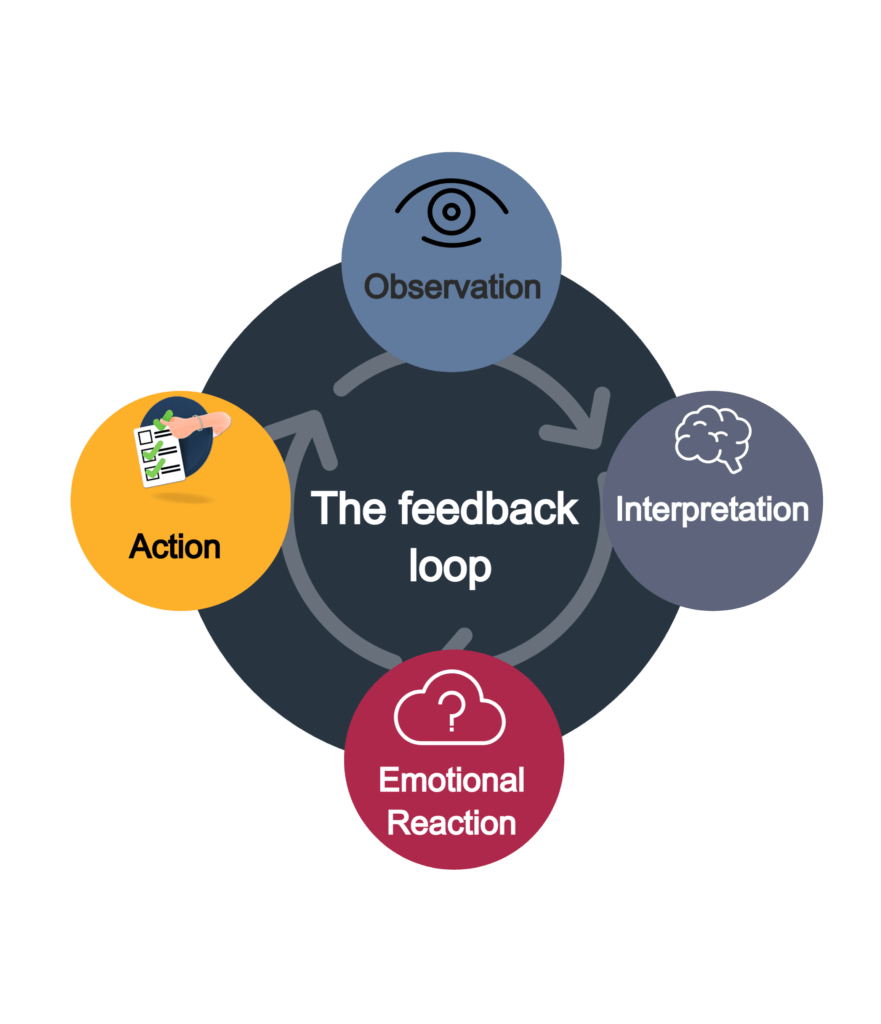
Meanwhile, this happens when emotions like fear or the need to protect their ego override the trader’s better judgment. For instance, “revenge trading” happens when a trader, after losing, immediately tries to recoup losses by opening more risky positions. To this end, this emotional reaction only makes the situation worse.
The Psychological Feedback Loop and Its Impact on Performance
The market constantly gives feedback through gains and losses, and this can create an emotional roller coaster. Moreover, losing, most times, can feel like a personal failure, which brings down confidence. Likewise, winning a position can make traders overconfident, leading to the opening of unnecessary risky positions.
To this end, these emotional reactions can cloud a trader’s judgment. Another problem is overtrading—some traders struggle to wait for the right opportunities because they can’t stand the uncertainty of doing nothing. From another angle, perfectionism can get in the way. This can cause traders to be on the lookout for a perfect trade and miss out on good ones.
It is important to note that traders must become more self-aware in order to break these tendencies. They can better match their activities with their long-term objectives by adopting simple techniques like writing, maintaining mindfulness, and critically analyzing their choices.
In the end, a trader’s true advantage comes not from their trading strategy or technical skills, but from their ability to handle their emotions and avoid self-sabotage. The traders who succeed long-term are the ones who can manage their inner pressures and stay focused on their goals.
In order to place winning trades with us via Bybit, you can open an account here.