



Strategy Sells $104 Million in Bitcoin for the First Time in a Month
Estimated Reading Time: 4 minutes
Don’t invest unless you’re prepared to lose all the money you invest. This is a high-risk investment and you are unlikely to be protected if something goes wrong. Take 2 minutes to learn more

Key Takeaways:
- Strategy sold $104M in Bitcoin but retained over 842,000 BTC.
- The proceeds funded dividends and share repurchases, not a strategy shift.
- The sale suggests Bitcoin monetization is becoming a recurring treasury tool.
For a company that built its entire identity around never selling Bitcoin, any sale is news. This one, coming from Michael Saylor’s Strategy for the first time in a month, is worth understanding in the context of what the money actually funded.
Arkham reported on August 3, 2026 that Strategy sold $104 million of Bitcoin and $290 million of MSTR, bringing its USD Reserve to $4 billion and funding an $81 million repurchase of STRC.

The Numbers Behind the Sale
Arkham’s data shows the transaction in specific terms: 1,638 BTC sold between July 27 and August 2 at an average price of $63,957, bringing proceeds to roughly $104.75 million. Despite the sale, Strategy’s aggregate Bitcoin holdings still stand at 842,138 BTC, with an average purchase price of $63.51 per coin across its total position — meaning the company sold at a price almost exactly in line with its overall cost basis, a return-neutral transaction rather than a profit-taking or loss-cutting move in either direction.
Where the Proceeds Actually Went
This wasn’t a shift away from Bitcoin exposure. The BTC sale proceeds were used specifically to fund dividends on Strategy’s preferred stock, while separate proceeds from selling $290 million in MSTR shares went toward repurchasing STRC stock under the company’s Digital Credit Repurchase Program.
That distinction matters: Strategy is using its equity and a small slice of its Bitcoin position to service obligations tied to its capital structure, not to reduce its overall bet on Bitcoin. The move builds on the monetization program the company disclosed just days earlier in its Q2 earnings, when it revealed roughly $218 million in similar BTC-funded proceeds used to cover dividend obligations.
The Chart Behind the Timing
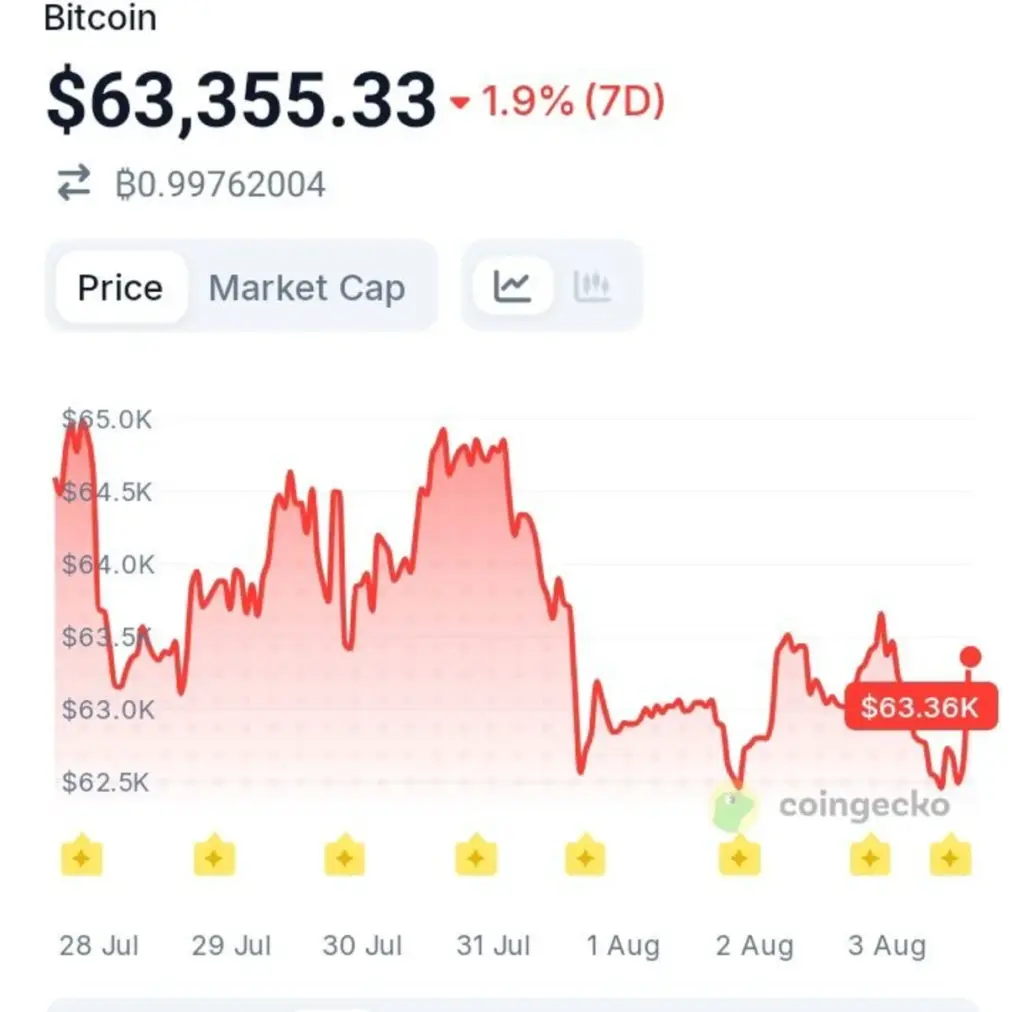
Looking at the seven-day chart, Bitcoin spent late July trading in a choppy range between $63,500 and $65,000, then dropped sharply below $63,000 by August 1 before staging a partial recovery to $63,355.33 as of August 3. Strategy’s sale window, spanning July 27 through August 2, captured price action right through that decline — meaning the average sale price of $63,957 landed closer to the top of the range than the bottom, ahead of the subsequent dip.
Why a Single Sale Doesn’t Change the Bigger Picture
Michael Saylor has built Strategy’s reputation on treating Bitcoin as a permanent treasury asset rather than a trading position, and this sale doesn’t reverse that framework — 1,638 BTC represents a tiny fraction of an 842,138 BTC holding. What it does confirm is that the company’s newly introduced monetization mechanism is now operating as a recurring tool, not a one-off disclosure buried in an earnings report.
Whether Strategy uses this lever again next month, and at what scale, is the detail that will determine whether markets start treating these sales as routine housekeeping or as an early signal of a broader shift in how the company manages its balance sheet.