


Emotion-Driven Trading Mistakes: Emotional Bias and Trading Accounts
Estimated Reading Time: 3 minutes
Don’t invest unless you’re prepared to lose all the money you invest. This is a high-risk investment and you are unlikely to be protected if something goes wrong. Take 2 minutes to learn more

Emotion-driven trading mistakes remain one of the most common reasons retail traders lose money in financial markets.
Market educators with decades of experience have explained that losing trades in most cases are not caused by poor strategies alone. They are of the opinion that this condition is often triggered by unmanaged emotional responses before, during, and after a trade.
According to a veteran trading coach with over 23 years of experience, emotional bias interferes most when traders face uncertainty, Despite the fact that technical setups appear strong. This analysis examines how emotion-driven trading mistakes consistently damage trading accounts and why disciplined professionals respond differently.
Emotion-Driven Trading Mistakes at Key Trade Stages
Market educators have reported that some emotions repeatedly surface at foreseeable points of trade.
Fear, they explained, usually appears before entry. Traders reportedly hesitate when price setups look ideal, imagining potential losses instead of assessing probability. As a result, they often enter too late or miss profitable moves entirely.
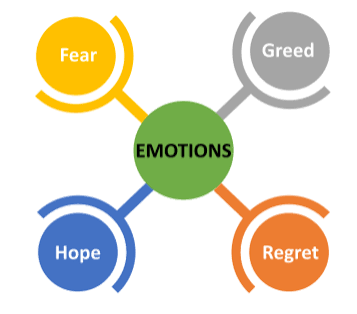
Greed, according to experienced traders, tends to emerge during winning positions. It was stated that traders do overlook calculated profit targets after seeing unrealized gains. One of the reasons behind this is that the price may extend further. Most times, this behavior often leads to reversals, eroding seen profits.
From another angle, hope was described as the most dangerous emotion. To this, educators explained that traders sometimes refuse to respect stop losses when positions move against them. Instead, they reportedly wait for reversals that never come, allowing small losses to grow into account-threatening drawdowns.
Why Professional Traders Control Emotion
Professional traders, according to industry veterans, do not avoid emotions. Instead, they prevent emotions from influencing decisions.
As it stands, they are often seen using strict pre-trade, during-trade, and post-trade processes to guide actions regardless of of where their tilts towards. Consequently, this structure ensures that decisions are based on seen price movement instead of assumed expectations.
Additionally, experts have emphasized that emotion-driven trading mistakes occur when traders focus on what they think should happen instead of what price action shows. Therefore, fear focuses on imagined loss, greed on imagined profit, hope on imagined recovery, and regret on imagined alternative outcomes. Professionals, they explained, treat emotions as signals, not instructions.
To this end, by responding only to confirmed market behavior, disciplined traders reportedly reduce emotional damage and preserve capital over time.
In order to place winning trades with us via Bybit, you can open an account here.