Crypto Stop Loss Guide: Why Every Trade Needs an Exit Plan
Estimated Reading Time: 3 minutes
Don’t invest unless you’re prepared to lose all the money you invest. This is a high-risk investment and you are unlikely to be protected if something goes wrong. Take 2 minutes to learn more
A stop loss is one of the simplest tools in trading, but it is also one of the most ignored. Many beginners enter a crypto trade with a target in mind but no clear exit if the market turns against them.
That is a problem. In crypto, hope is not a strategy.
What Is a Stop Loss?
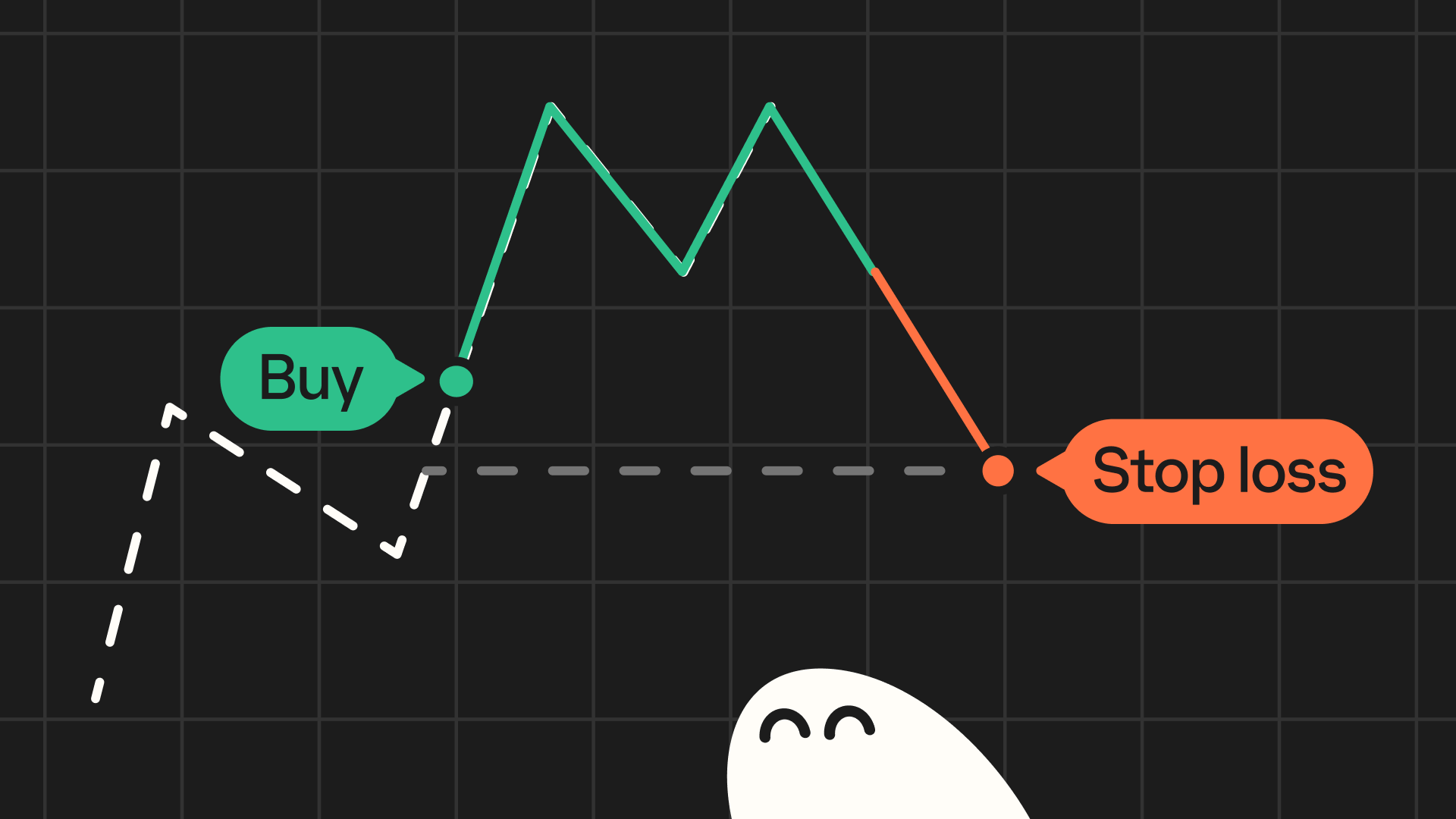
A stop loss is a predefined exit level. It tells you where your trade idea is wrong. If price reaches that level, you close the trade and protect the rest of your capital.
The point is not to predict the market perfectly. The point is to stop a small controlled loss from becoming a large uncontrolled one.
Why Stop Losses Matter in Crypto
Crypto markets are volatile. A normal pullback in one coin can look like a full crash in another. News, liquidations and Bitcoin moves can all create sudden candles that move faster than expected.
Without a stop, you may freeze. You tell yourself it will bounce. Then the loss grows, and the decision becomes even harder.
A stop loss makes the decision before emotions take over.

Free Crypto Signals Channel
 Free Telegram Channel
Where Should You Place a Stop?
A good stop should be based on market structure, not on how much pain you feel comfortable taking.
For a long trade, many traders place stops below a recent swing low, support area or invalidation level. For a short trade, stops often sit above a swing high or resistance area.
The stop should be far enough away to avoid normal market noise, but close enough that the trade still offers a sensible risk-to-reward ratio.
The Biggest Stop Loss Mistake
The worst mistake is moving your stop further away after price moves against you. That turns a planned trade into an emotional bet.
If your original analysis said the trade was invalid below a certain level, that should still be true when price reaches it. Moving the stop usually means you are avoiding the loss rather than managing the trade.
Stops can sometimes be tightened to reduce risk. But widening a stop after entry is usually a red flag.
Stop Losses and Position Size
Your stop distance affects your position size. A wider stop means you need a smaller position if you want to keep the same account risk. A tighter stop allows a larger position, but it may get hit more easily.
This is why stop losses and risk management work together. You should know your entry, stop, target and position size before the trade begins.
 Most Popular
- 2-5 Signals Daily
- 82% Success Rate
- Entry, Take Profit & Stop Loss
- Amount To Risk Per Trade
- Risk Reward Ratio


Mental Stops vs Hard Stops
Some traders use mental stops, meaning they plan to close manually if price hits a level. This can work for experienced traders, but beginners often struggle to act quickly when the moment arrives.
A hard stop placed on the exchange can remove hesitation. The downside is that stop hunts and wicks can trigger it before price reverses. That is why placement matters.
The Bottom Line
A stop loss is not a sign that you expect to lose. It is a sign that you respect risk.
Every crypto trade should have an exit plan before entry. Know where you are wrong, size the position correctly and do not move the stop further away just because the market makes you uncomfortable.
Need help applying this to live market conditions? Get instant access to our VIP trading signals here.