


Bitcoin ETFs See Record $1 Billion Outflow, Raising Market Concerns
Estimated Reading Time: 4 minutes
Don’t invest unless you’re prepared to lose all the money you invest. This is a high-risk investment and you are unlikely to be protected if something goes wrong. Take 2 minutes to learn more

U.S. spot Bitcoin ETFs recorded their biggest single-day outflows ever on Tuesday, totaling $1.1 billion. This marks the sixth straight day of money leaving these funds, with over $2 billion withdrawn during this period, according to data from SoSoValue.
Major Bitcoin ETFs Hit Hard this week
Fidelity’s FBTC led the exodus with $344.65 million in outflows, followed by BlackRock’s IBIT fund with $164.3 million. Other significant withdrawals included Valkyrie’s BRRR with $100 million, Bitwise’s BITB with $88.3 million, and Grayscale’s Mini Bitcoin Trust with $85 million.
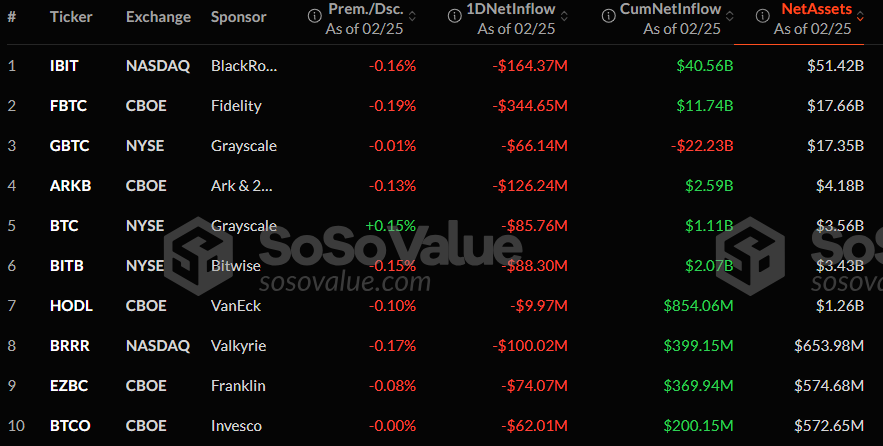
Ten out of twelve spot Bitcoin funds reported outflows, excluding data from Ark Invest’s ARKB, which hasn’t yet disclosed its numbers.
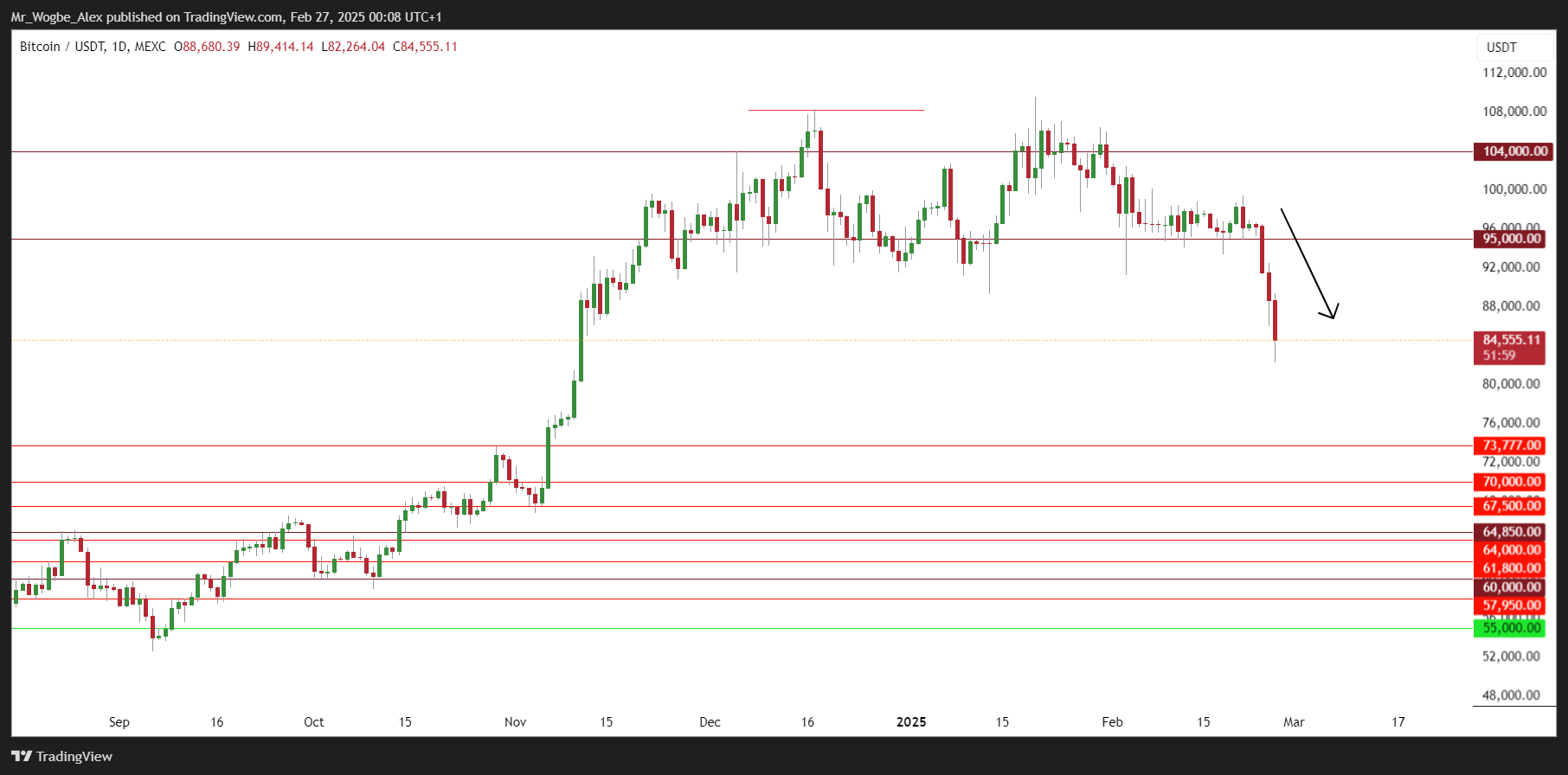
Bitcoin’s price fell to under $85,000 during this sell-off, its lowest point since November 2024. The cryptocurrency was trading at $84,550 as of early Thursday morning in Hong Kong, down 4.5% over 24 hours.
Standard Chartered Makes Bearish ETF Forecast
In related news, Standard Chartered Global Head of Digital Asset Research Geoff Kendrick warned that the sell-off might not be over yet. He estimated that net ETF purchases since the U.S. election are now at a loss of approximately $1.3 billion, with an average purchase price of $97,000.
“I do not think the sell-off is over yet,” Kendrick stated in an email to The Block, suggesting further price drops could be coming.
What’s Behind the Outflows in Bitcoin ETFs?
Several factors appear to be driving this trend:
- Institutional Rebalancing: TradFi hedge funds had been engaging in “basis trade” by buying Bitcoin ETFs and shorting CME futures to capitalize on a roughly 10% yield difference. As this strategy’s yield dropped to around 5%, funds began unwinding these positions.
- Profit-Taking: After Bitcoin’s strong performance in 2024, many investors are locking in gains.
- Macroeconomic Concerns: Worries about U.S.-China trade relations and Federal Reserve interest rate decisions are making investors cautious about risk assets.
- Retail Investors: Despite the ETF outflows, analysts believe much of Tuesday’s selling pressure came from retail traders rather than institutions. Nansen Principal Research Analyst Aurelie Barthere noted that open interest in CME Bitcoin futures showed little change, indicating limited institutional unwinding.
The downturn isn’t limited to Bitcoin though. Spot Ethereum ETFs also saw daily net outflows worth $50 million on Tuesday, excluding data from 21Shares’ CETH. Grayscale’s ETHE led the way with over $27 million in outflows.
Long-Term Outlook
Despite the short-term volatility, some analysts remain optimistic about Bitcoin’s fundamentals. BTC Markets Crypto Analyst Rachael Lucas pointed to the post-halving supply reduction that occurred in April 2024 as a long-term positive factor.
“For long-term investors—those who actually care about fundamentals—this is an incredible time to be in the market,” noted RedStone COO Marcin Kazmierczak, who also observed that Bitcoin’s price has remained relatively stable despite the outflows.
The total cumulative net inflows for U.S. spot Bitcoin ETFs now stand at $38 billion, down from previous highs. They currently hold $101.4 billion worth of Bitcoin in total net assets, according to SoSoValue data.
This week’s developments highlight how institutional investment vehicles like ETFs can create new dynamics in cryptocurrency markets, potentially leading to increased volatility as large funds adjust their positions.
Interested in learning how to day trade crypto? Get all the information you need here