


Crypto ETFs: A Mixed Bag of Flows and Investor Interest
Estimated Reading Time: 3 minutes
Don’t invest unless you’re prepared to lose all the money you invest. This is a high-risk investment and you are unlikely to be protected if something goes wrong. Take 2 minutes to learn more

The world of crypto ETFs is buzzing with activity. Recent data shows a split between Bitcoin and Ethereum ETFs, with investors reacting differently to these two popular cryptocurrencies.
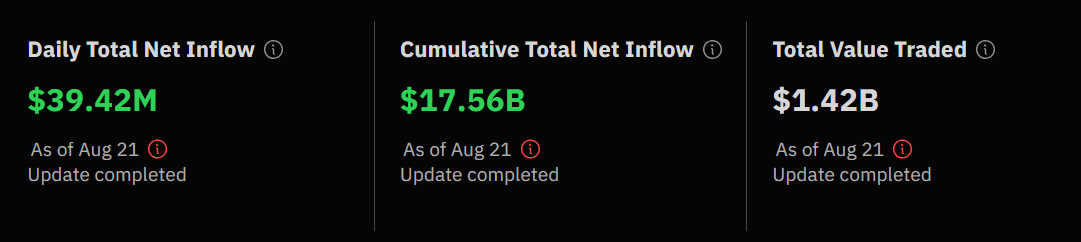
Bitcoin ETFs are on a roll, enjoying their fifth day in a row of positive flows. On Wednesday, these funds pulled in $39.42 million from investors. This brings the total money flowing into Bitcoin ETFs since their launch in January to a whopping $17.56 billion.
Leading the pack is BlackRock’s iShares Bitcoin Trust (IBIT), which has raked in $20.5 billion since its debut. Other funds are also seeing strong interest. Grayscale’s mini bitcoin trust, along with offerings from Fidelity and Bitwise, each attracted around $10 million on Wednesday alone.
The only fund losing money was Grayscale’s converted GBTC, which saw $9.82 million leave. Despite this, the overall picture for Bitcoin ETFs remains bright.
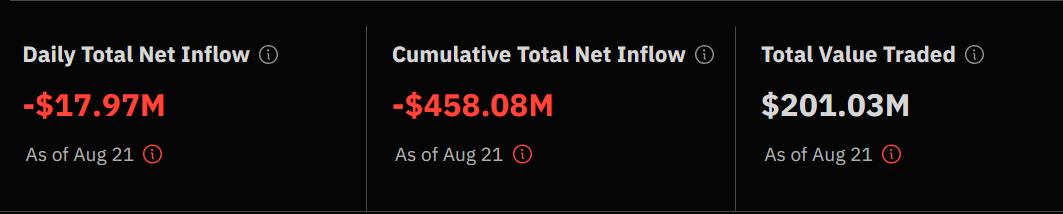
On the flip side, Ethereum ETFs are having a tough time. These newer funds have seen money flowing out for five straight days. On Wednesday, $17.97 million left Ethereum ETFs. The biggest loser was Grayscale’s ETHE fund, which lost $31.14 million.
However, some Ethereum ETFs bucked the trend. Fidelity’s FETH and Grayscale’s Ethereum Mini Trust both saw money coming in.
Since their launch, Ethereum ETFs have lost a total of $458.08 million. This is a stark contrast to the success of Bitcoin ETFs.
Reasons for the Disparate Performance Among Crypto ETFs
Several factors might explain why Bitcoin ETFs are doing well while Ethereum ETFs struggle. Bitcoin is older and better known than Ethereum, which might make investors feel more comfortable.
Bitcoin’s price has been strong lately, trading around $60,500, which could be attracting more investors. Bitcoin ETFs also launched earlier and have had more time to build trust. There’s also more regulatory certainty around Bitcoin, which might make it seem less risky to some investors.
The success of Bitcoin ETFs shows that many investors want exposure to cryptocurrencies through traditional financial products. However, the struggles of Ethereum ETFs suggest that not all crypto assets are viewed equally.
For those considering investing in crypto ETFs, it’s important to do your research and understand the differences between various cryptocurrencies. Consider your risk tolerance, as crypto markets can be very volatile. It’s also crucial to keep an eye on regulatory developments, which can greatly impact these products.