Bitcoin’s Sleeping Giants Are Waking Up — But Who Is Moving the Coins?
Estimated Reading Time: 6 minutes
Don’t invest unless you’re prepared to lose all the money you invest. This is a high-risk investment and you are unlikely to be protected if something goes wrong. Take 2 minutes to learn more

Something strange is happening beneath Bitcoin’s surface.
Wallets that have been silent for more than a decade are suddenly moving again. Some contain coins accumulated when Bitcoin was worth only a few dollars. Now, those same coins are worth millions.
Between August 16 and 26, six Bitcoin wallets that had been inactive since 2011, 2012 and 2014 moved a combined 553.59 BTC, worth roughly $40 million at the time. One of the wallets had not moved its coins for more than 15 years.
That immediately raises a fascinating question:
Who is waking up these sleeping Bitcoin fortunes?
Maybe the Owners Simply Came Back
The simplest explanation may also be the most boring.
Some of these coins could belong to early Bitcoin users who never lost access to their keys. They may have mined Bitcoin in the network’s early years, forgotten about it, deliberately held through multiple market cycles, or simply had no reason to move it.
Consider what these wallets represent.
One recently moved 212 BTC that had been untouched since August 2012. At today’s prices, that represents millions of dollars from coins that were acquired when Bitcoin was trading at around $12. Another 40 BTC stash that had remained untouched since May 2012 was transferred to Boerse Stuttgart Digital, a German custody and trading provider.
That does not necessarily look like someone desperately dumping Bitcoin.
It could instead be an early holder finally deciding that the technology, custody infrastructure and market liquidity have matured enough to move a fortune that had been sitting untouched for years.

But there Is Another Possibility: Security
Old Bitcoin does not necessarily mean lost Bitcoin.
A holder may be moving coins because the security environment has changed.
This possibility is particularly interesting in 2026 because the crypto industry has just experienced a major reminder that old vulnerabilities can suddenly become relevant.
A Coldcard vulnerability has already resulted in the theft of more than 1,000 BTC from affected wallets. The exploit was connected to flawed randomness in certain wallet configurations, allowing attackers to reconstruct vulnerable seed keys.
That incident does not mean the newly awakened ancient wallets were hacked.
There is currently no evidence establishing that connection.
But it demonstrates something important: Bitcoin can be cryptographically secure while individual implementations, devices or key-generation methods are vulnerable.
An owner sitting on an old wallet may therefore have perfectly good reason to move their coins into newer custody infrastructure.
And Then There Is the Quantum Question
This is where the story becomes even more interesting.
Quantum computing represents a theoretical future threat to Bitcoin’s cryptography. A sufficiently powerful quantum computer could potentially break the elliptic-curve cryptography protecting certain Bitcoin addresses.
Researchers and Bitcoin developers are already discussing ways to make the network resistant to such attacks. There have been reports on efforts to prepare Bitcoin for a possible quantum threat, while recent academic research has examined migration toward post-quantum cryptography.
Could someone have already developed a secret quantum machine capable of breaking ancient Bitcoin wallets?
There is no evidence of that.
And that distinction matters.
The recent wallet movements should not be presented as proof that quantum computers have cracked Bitcoin. If such a breakthrough had actually occurred, the implications would extend far beyond a handful of wallets.
But the possibility raises a fascinating question: could sophisticated holders be moving old coins proactively because they believe the security landscape is changing?
That remains speculation.
The Biggest Clue May Be Where the Bitcoin Goes
Perhaps the most revealing part of the investigation is not that the coins moved, but where they moved.
CoinDesk’s analysis found that five of the six recently awakened wallets sent their Bitcoin to addresses without known exchange links. Only one transferred 40 BTC to Boerse Stuttgart Digital.
That weakens the immediate “whale is dumping” theory.
If ancient coins were being aggressively sold, analysts would expect to see more evidence of transfers into exchanges or known trading infrastructure.
Instead, some of the coins appear to be changing custody.
That could mean consolidation, estate management, security upgrades, institutional custody or preparation for a future sale.
The blockchain tells us that the coins moved.
It does not tell us why.
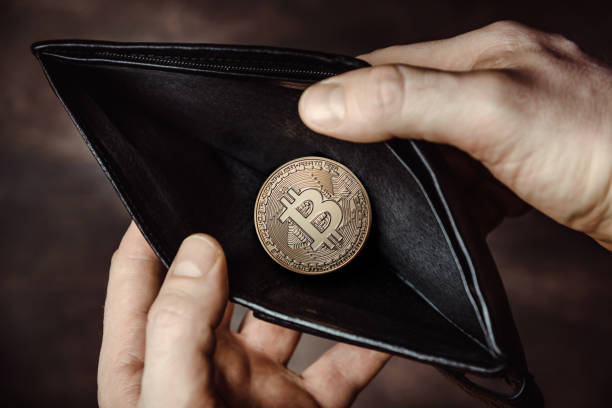
Bitcoin’s Ghosts May Not Be Dead After All
There is another fascinating possibility.
Some of the Bitcoin thought to be permanently lost may not actually be lost.
For years, analysts have treated coins untouched for a decade or more as part of Bitcoin’s effectively dormant supply. But every time one of these wallets wakes up, it reminds the market that “lost” and “inactive” are not the same thing.
And that distinction could become increasingly important as Bitcoin’s price rises.
An address holding 50 BTC in 2011 may have looked insignificant. Today, it represents a fortune.
So perhaps the real mystery isn’t whether Bitcoin’s earliest holders are coming back.
It is how many are still out there—silently holding keys to fortunes that the market has already written off.
For now, the evidence points more strongly toward old holders, custody changes, and security concerns than a mysterious breakthrough attack.
But Bitcoin’s blockchain has one unusual characteristic: it records the movement of the money while keeping the person behind it largely invisible.
And sometimes, the most interesting part of the story is the question the blockchain cannot answer:
Who just woke up?