


Ethereum Network Hits Milestone Amid SEC’s Staking Guidance
Estimated Reading Time: 3 minutes
Don’t invest unless you’re prepared to lose all the money you invest. This is a high-risk investment and you are unlikely to be protected if something goes wrong. Take 2 minutes to learn more

The volume of Ethereum transactions in recent times has seen a new high. Also, more than 36 million Ether staked on the network, approximately 30% of its total supply, have been made. However, this surge was realized due to the new guidance on staking by the U.S. Securities and Exchange Commission (SEC), which has drawn mixed reactions from within the industry.
As it stands, some in the crypto world have celebrated the SEC’s clarification, while others are concerned about its potential legal complexities concerning the growth of decentralized finance (DeFi).
SEC’s Staking Guidance: What It Means for Ethereum
According to the SEC, liquid staking tokens do not count as securities under the 1933 Securities Act, as long as they are not investment contracts. The SEC’s new statement focuses on liquid staking, where users stake Ether in return for tokens that are usable for DeFi applications. To this end, this decision is seen as a positive news for Ethereum user, allowing institutions to integrate liquid staking tokens (LSTs) into their financial products. However, the update is expected to open up new revenue streams and create secondary markets for staked assets.
At the moment, not all SEC members agree with the decision. Commissioner Caroline Crenshaw expressed concerns that the SEC’s stance may be based on assumptions not grounded in industry reality. She warned that liquid staking activities outside the scope of the SEC’s definition could still face regulatory challenges. Despite contrary opinions, the broader crypto community remains optimistic, including that of prominent figures like “Crypto Mom” Hester Peirce.
Ethereum’s Growth Amid Legal Uncertainty in DeFi
Recently, the Ethereum network has experienced a record-high activity, with more than $1.8 billion in Ether staked in just June. As it stands, this shows a sign of growing confidence in Ethereum, as token holders prefer locking up their assets for staking rewards rather than selling them.
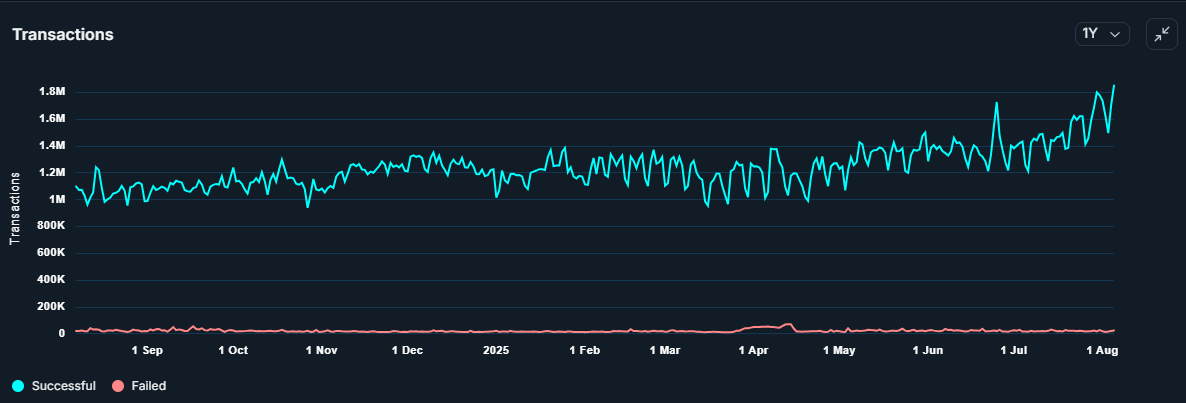
Source: Nansen
However, in Europe, DeFi regulation is not yet a priority but could become one by 2026. To this end, these developments indicate that while Ethereum’s network is thriving, the future of DeFi remains tangled in legal challenges.
At the moment, the U.S. is grappling with the CLARITY Act, which could set clearer guidelines for the industry, but it is still moving slowly through Congress.
In order to place winning trades with us via Bybit, you can open an account here.