


Gold Streaming Model Powers Wheaton’s $3B Expansion Strategy
Estimated Reading Time: 3 minutes
Don’t invest unless you’re prepared to lose all the money you invest. This is a high-risk investment and you are unlikely to be protected if something goes wrong. Take 2 minutes to learn more

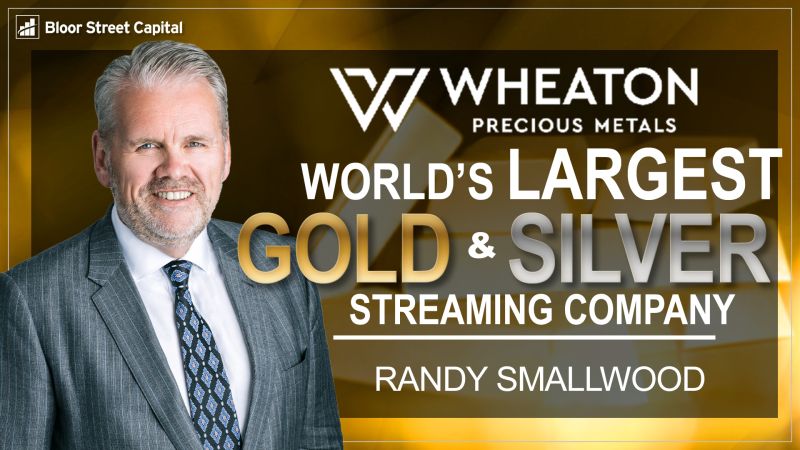
Wheaton Precious Metals is positioning itself for long-term growth as rising gold prices reshape the mining industry. Speaking with Kitco News at the Vancouver Resource Investment Conference (VRIC) 2026, Wheaton CEO Randy Smallwood explained that the gold streaming model allows the company to remain protected from rising production costs that are increasingly affecting traditional miners.
He stated that while higher gold prices improve revenues, they also force miners to process lower-quality ore, which raises costs and compresses margins. According to Smallwood, Wheaton avoids this pressure by locking in metal purchase prices through long-term streaming contracts.
Gold Streaming Model Shields Wheaton From Rising Costs
Smallwood said that Wheaton’s contracts fix the price it pays for gold in advance, which removes exposure to inflation in labor, fuel, and processing. As of Jan. 27, gold was trading above $5,000 per ounce, a level that has encouraged miners to extract material that was previously uneconomic.
He noted that this trend increases operational costs for producers but does not affect streaming companies. In reported remarks, Smallwood explained that this cost gap between miners and streamers is expected to widen over the next two to three years, strengthening Wheaton’s margins in a high-price gold environment.
Gold-Focused Capital Strategy and Growth Outlook
Smallwood highlighted Wheaton’s recently secured Helo gold stream as an example of the company’s approach. He described the project as a historic Canadian asset that lacked investment under previous owners. Wheaton provided $300 million in development funding in exchange for a gold stream, valuing the metal rather than taking an equity stake. He said this structure avoids shareholder dilution and pays full net asset value for gold production.
Looking ahead, Smallwood reported that Wheaton expects to generate over $3 billion in cash flow in 2026. He stated that this capital will be directed toward late-stage gold projects with completed feasibility studies and permits. He added that gold is increasingly behaving like a currency rather than a typical commodity, supported by central bank demand and its role as a neutral store of value. This shift, he said, reinforces the long-term case for gold-focused streaming agreements.
In order to place winning trades with us via Bybit, you can open an account here.