Reading the Crypto Market: 7 Signals Investors Should Understand Before Making a Move
Estimated Reading Time: 6 minutes
Don’t invest unless you’re prepared to lose all the money you invest. This is a high-risk investment and you are unlikely to be protected if something goes wrong. Take 2 minutes to learn more

A cryptocurrency can rally 15% in a day and still be a poor investment. Another can fall sharply despite having strong fundamentals. The difference between reacting to price movements and understanding the market lies in knowing what drives those movements, whether the trend is sustainable, and what the available evidence reveals about investor behavior.
For crypto investors, reading the market is not about predicting every price swing. It is about combining different signals to make better-informed decisions, manage risk, and recognize when market conditions are changing.
1. Look Beyond Price Movements
Price is the most visible market signal, but it rarely tells the whole story. A rising Bitcoin price, for example, does not automatically mean that demand is strengthening across the market.
Investors should examine trading volume alongside price. A breakout supported by increasing volume may indicate stronger participation, while a sharp price increase on weak volume could be less convincing. However, volume varies across exchanges and trading pairs, so it should be interpreted in context.
The key question is not simply whether an asset is rising or falling, but whether the activity behind the move supports the trend.

Source: create.vista.com / cryptosignals
2. Understand Market Trends
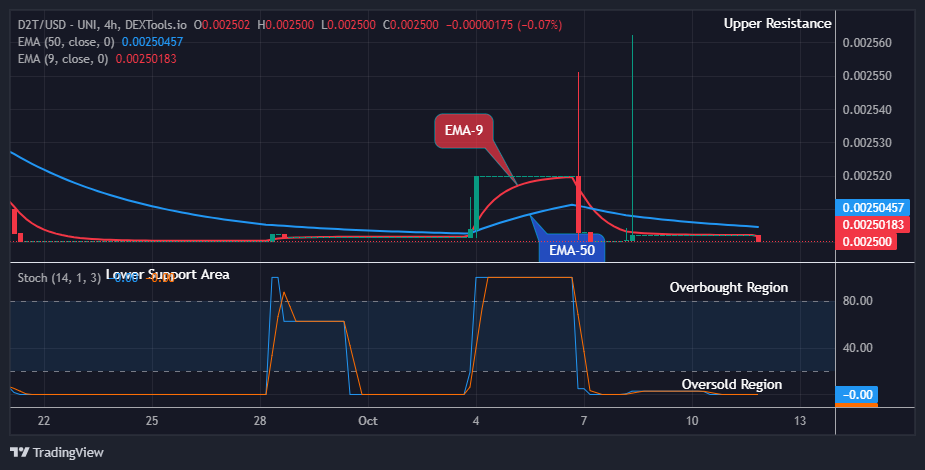
Technical analysis helps investors identify trends, momentum, and important price levels. Moving averages can help reveal the broader direction of prices, while support and resistance levels highlight areas where buying or selling pressure has previously emerged.
For instance, if Bitcoin breaks above a resistance level and maintains that level during a subsequent pullback, it may indicate improving market strength. If the price quickly falls back below it, the breakout may have failed.
These indicators are not guarantees. Their value comes from helping investors develop scenarios, identify potential entry and exit points, and establish clear conditions under which their analysis would be invalidated.
3. Follow the Fundamentals
Market sentiment can change quickly, but fundamental developments help investors assess whether an asset has a sustainable investment case.
Relevant factors include network activity, user adoption, developer contributions, token supply, revenue where applicable, and the practical demand for a project’s services.
Investors should also examine token economics. A project may attract new users, yet substantial token unlocks or continued issuance could increase selling pressure.
The strongest analysis connects a development to its potential financial implications. A partnership announcement, for example, matters more when there is evidence that it could generate meaningful usage or revenue than when it produces only short-lived publicity.
4. Read Investor Sentiment
Fear and greed influence crypto prices because traders often respond emotionally to uncertainty, positive news, and rapid market movements.
Sentiment indicators, social media discussions, news coverage, and funding rates can help investors understand prevailing expectations. Extremely positive sentiment may indicate crowded positioning, while widespread pessimism can create opportunities if prices have fallen further than the fundamentals justify.
However, negative sentiment can persist, and positive attention can reflect genuine demand. Investors should therefore verify claims and compare sentiment with actual market behavior rather than treating emotions as standalone trading signals.
5. Watch Liquidity and Leverage
Two assets can experience similar price movements but carry very different levels of risk.
Liquidity determines how easily an asset can be bought or sold without significantly affecting its price. Thinly traded cryptocurrencies may experience sharp swings when relatively large orders enter the market.
Leverage introduces another risk. When traders borrow funds to increase their exposure, relatively small price movements can trigger liquidations. A wave of forced selling can accelerate a decline, while short liquidations can amplify a rally.
Monitoring open interest, funding rates, and liquidation data can help investors assess whether leverage is building up. These metrics are most useful when considered alongside price, volume, and broader market conditions.
6. Connect Crypto Moves to the Wider Economy
Cryptocurrency markets do not operate in isolation. Interest-rate expectations, inflation data, central bank decisions, the strength of the U.S. dollar, and broader investor appetite for risk can influence digital asset prices.
For example, expectations of lower interest rates may encourage investors to consider riskier assets, although the actual response depends on economic conditions and whether the decision was already reflected in prices.
Investors should pay attention to both the announcement and the market’s reaction. Sometimes, prices fall after seemingly positive news because traders had already anticipated the outcome.
7. Build a Repeatable Decision Process
Successful market analysis requires consistency rather than constant trading.
Before making an investment decision, investors can ask three questions:
- What is driving the current price movement?
- Do technical indicators, fundamentals, and sentiment support the same conclusion?
- What evidence would prove this assessment wrong?
Investors should also determine their acceptable level of risk, avoid excessive concentration, and establish an exit strategy before entering a position. No combination of indicators eliminates uncertainty, and preserving capital matters as much as identifying opportunities.
The Investor’s Takeaway
Reading the crypto market means understanding the relationship between price, demand, fundamentals, sentiment, liquidity, and economic conditions. No single indicator can provide a complete picture.
Investors who examine several independent signals, question popular narratives, and remain willing to revise their views can make more disciplined decisions. The goal is not to predict every move, but to understand the risks and probabilities well enough to act when the evidence supports a decision.