Crypto Sentiment Analysis: How Investor Emotions Can Reveal Market Opportunities
Estimated Reading Time: 5 minutes
Don’t invest unless you’re prepared to lose all the money you invest. This is a high-risk investment and you are unlikely to be protected if something goes wrong. Take 2 minutes to learn more
Crypto prices do not move on fundamentals alone. Sometimes, a promising project loses value because investors become fearful, while a weaker asset rallies as excitement spreads across the market. Understanding these emotional shifts can help investors interpret price movements, identify potential opportunities, and avoid decisions driven by crowd psychology.
This is where sentiment analysis becomes useful. By examining how traders, analysts, and the wider public feel about a cryptocurrency, investors can gain another perspective on market conditions. However, sentiment is most effective when combined with technical and fundamental analysis rather than used as a standalone trading signal.
What Is Sentiment Analysis?
Sentiment analysis involves assessing whether market participants are predominantly optimistic, pessimistic, or uncertain about an asset. In crypto, this can include examining social media discussions, news coverage, search interest, trading behavior, and sentiment indicators.
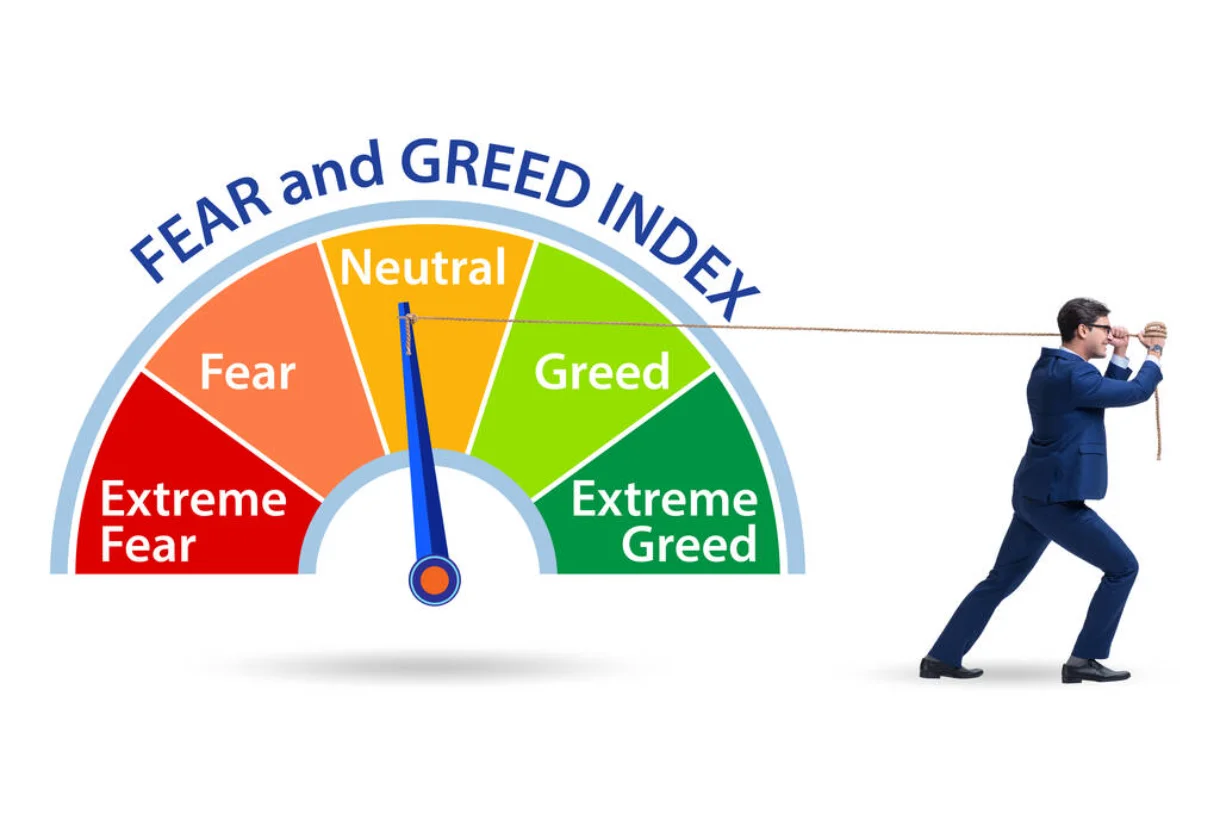
Platforms such as X, Reddit, and crypto analytics services can help investors gauge whether attention toward an asset is increasing or fading. The Crypto Fear and Greed Index also provides a broad snapshot of market emotions, although it primarily reflects Bitcoin-related market conditions.

Positive sentiment may signal growing confidence in a project, particularly when supported by strong developments. Conversely, widespread fear can indicate deteriorating expectations or a potential overreaction to negative news.
Yet popularity is not proof of value. Social media discussions can be manipulated, influencers may have undisclosed interests, and online excitement can rise without any improvement in a project’s fundamentals.
How Investors Can Use Sentiment to Find Opportunities
One practical approach is to monitor changes in sentiment rather than simply counting positive or negative comments.
For example, a cryptocurrency attracting increasingly positive attention alongside rising network activity and stronger demand may be experiencing a meaningful improvement in market interest. Investors can investigate whether the trend has a credible underlying cause.
The opposite situation can also be informative. If negative sentiment becomes extreme despite a project’s fundamentals remaining relatively stable, the market may be overreacting. This can justify further research, although it does not guarantee that a price recovery will follow.
Investors should also watch for divergence between sentiment and price. If enthusiasm surges while prices struggle to advance, buying pressure may be weakening. Similarly, prices that remain resilient despite widespread pessimism could indicate that selling pressure is easing.
These patterns are clues, not automatic buy or sell signals.
Combining Sentiment With Technical and Fundamental Analysis
Sentiment analysis becomes more useful when it answers a different question from the other two major approaches.
Fundamental analysis asks whether the asset has underlying value. Investors examine factors such as network adoption, revenue, token supply, developer activity, partnerships, and the sustainability of demand. Positive sentiment surrounding a project with declining usage may be difficult to justify over the long term.
Technical analysis examines price behavior. Charts, trading volume, support and resistance levels, and momentum indicators help investors assess whether market activity confirms or contradicts the prevailing narrative. For instance, improving sentiment accompanied by a breakout supported by rising volume may provide stronger evidence of growing demand than social media excitement alone.
Sentiment analysis examines market psychology. It helps explain why investors are buying or selling and whether expectations may already be reflected in the price.
Together, the three approaches offer a more complete framework: fundamentals assess the investment case, technicals examine market behavior, and sentiment helps interpret investor expectations.
The Risks of Following Market Emotions
Sentiment can change rapidly, particularly in crypto markets where rumors, regulatory announcements, and influential social media accounts can trigger sharp price movements.
Crowded optimism may precede a correction, while fear can persist longer than expected. Sentiment indicators can also produce false signals when online activity is dominated by bots or coordinated campaigns.
Investors should therefore verify important claims, compare multiple data sources, and establish risk-management rules before entering a trade.
The Investor’s Takeaway
Sentiment analysis provides a useful way to understand the emotional forces behind cryptocurrency price movements. Its greatest value, however, comes from combining it with evidence about an asset’s fundamentals and confirmation from technical indicators.
Investors who distinguish genuine demand from temporary excitement may be better equipped to evaluate opportunities and avoid emotional decisions. In a market shaped by both data and human behavior, understanding what investors feel is useful—but understanding why they feel it is even more important.