XRP Ledger Enters Brazil’s Financial Infrastructure — Why the Development Matters
Estimated Reading Time: 4 minutes
Don’t invest unless you’re prepared to lose all the money you invest. This is a high-risk investment and you are unlikely to be protected if something goes wrong. Take 2 minutes to learn more

XRP is gaining a new fundamental catalyst as Brazil takes another step toward bringing traditional financial assets onto blockchain infrastructure. CSD BR, a Brazilian financial-market infrastructure operator, has partnered with Ripple to use the XRP Ledger (XRPL) as an additional record and audit layer for regulated financial assets, beginning with investment fund shares from BTG Pactual.
The development is significant because it moves the tokenization narrative beyond controlled experiments and into a live financial-market environment. CSD BR manages more than 22 trillion Brazilian reais in registered assets, although the entire amount is not being moved onto XRPL. The initial phase involves selected BTG Pactual fund shares, with CSD BR continuing to maintain the legally authoritative ownership records.
XRPL Will Complement, Not Replace, Existing Systems
Under the arrangement, the fund shares will be represented on XRPL using its Multi-Purpose Token standard. The blockchain will provide an additional layer where authorized institutions can verify and audit ownership information in near real time.
For investors, this distinction is important. The development does not mean Brazil has transferred trillions of dollars of financial assets onto the XRP Ledger. Instead, it demonstrates how a public blockchain can be integrated into existing regulated infrastructure without immediately replacing the systems already responsible for custody, registration and settlement.
That could nevertheless become an important use case for XRPL.
Traditional financial markets often rely on multiple institutions maintaining and reconciling their own records. A blockchain-based secondary record could potentially improve transparency and reduce some of the friction involved in checking whether different databases contain matching information. CSD BR and Ripple are effectively testing whether that benefit can work under real operating conditions rather than only in a laboratory environment.
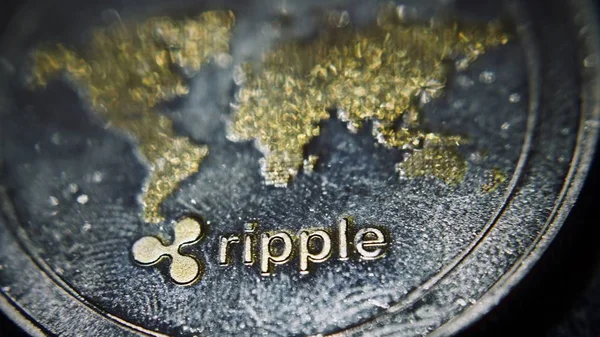
Source: create.vista.com / cryptosignals
The next phase could be even more significant.
Tokenization Could Become the Bigger Opportunity
According to Ripple, once the initial mirroring system is validated, the partnership could expand toward native issuance and trading of assets directly on XRPL. Real-estate receivables and agribusiness receivables are among the asset classes being considered.
This creates a broader fundamental story for XRP. The cryptocurrency itself is different from the tokenized securities being represented on XRPL, so increased tokenization activity does not automatically mean equivalent demand for XRP. However, greater institutional usage of the network could strengthen the ecosystem surrounding XRP and create additional opportunities for the asset’s underlying infrastructure to be used in financial applications.
The market will therefore be watching whether this initiative develops beyond record mirroring.
What Investors Should Watch Next
From an investment perspective, the most important signals will be whether CSD BR expands the number of assets involved, whether other Brazilian institutions join the network and whether tokenized assets eventually move from being represented on XRPL to being issued and traded directly on the ledger.
XRP’s price performance will remain important, but the Brazil development provides investors with another metric to monitor: whether XRPL is gradually becoming part of real-world financial infrastructure.
If that transition continues, XRP’s fundamental narrative could increasingly shift from payments and speculation toward the broader institutional tokenization economy.