Crypto Position Sizing: How Much Should You Put Into a Trade?
Estimated Reading Time: 3 minutes
Don’t invest unless you’re prepared to lose all the money you invest. This is a high-risk investment and you are unlikely to be protected if something goes wrong. Take 2 minutes to learn more
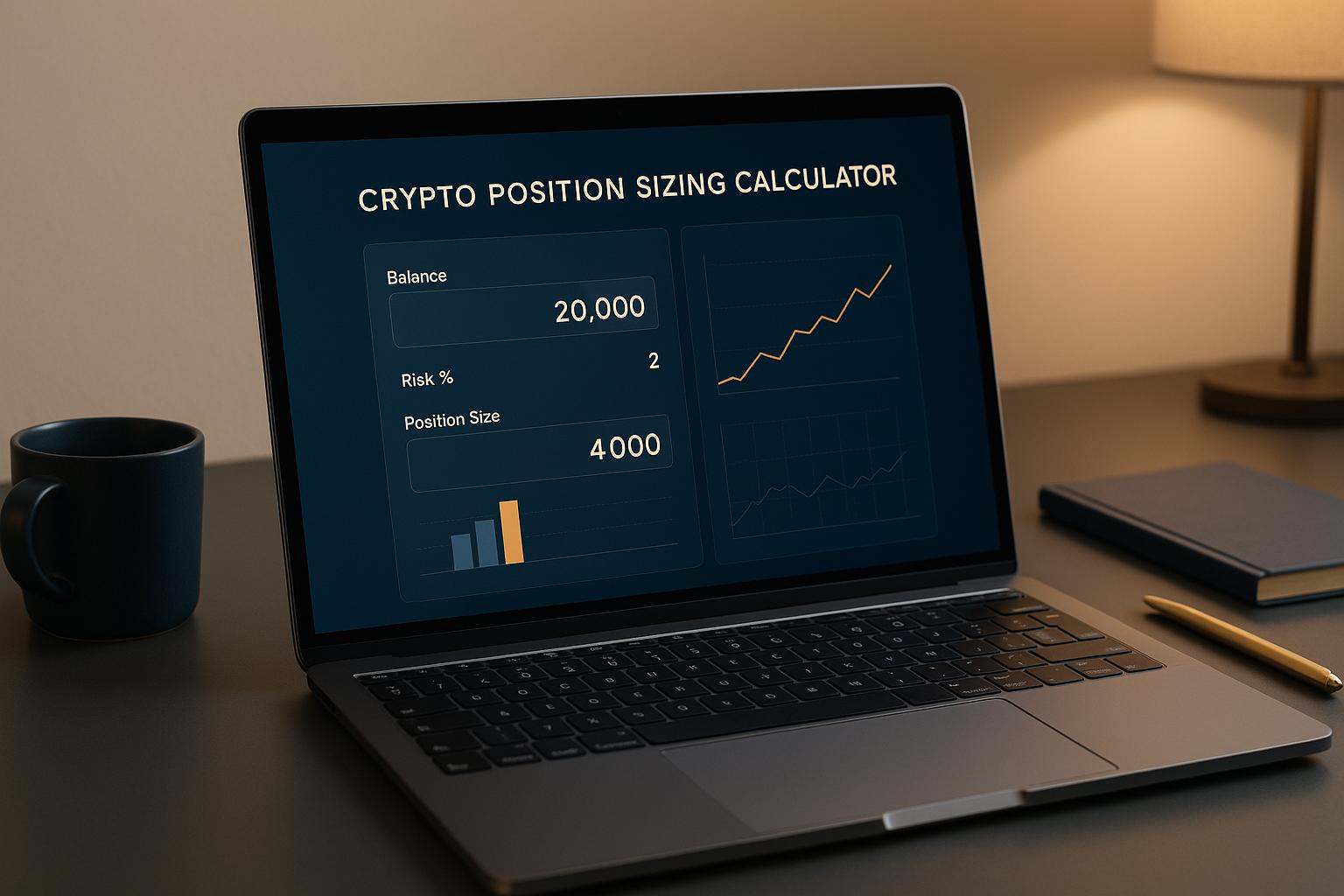
Position sizing is one of the most important skills in crypto trading. It decides how much money you put into a trade and how much you can lose if the trade fails.
Most beginners do this backwards. They choose a random amount, enter the trade, then worry about risk afterwards. That is not trading. That is guessing.
What Is Position Sizing?
Position sizing means choosing the correct trade size based on your account, your stop loss and your risk limit.
The key idea is simple: decide how much you are willing to lose first, then calculate the position size around that number.
For example, if your account is $2,000 and you risk 1%, your maximum risk is $20. If your stop loss is 5% away from your entry, your position size should be around $400. A 5% loss on $400 equals $20.
Why Position Size Matters
Even a good trading strategy can fail if position sizes are too large. A few normal losing trades can cause serious damage when each trade risks too much.
Crypto volatility makes this even more important. A coin can move 5% or 10% quickly. If your position is oversized, a normal move can become emotionally unbearable.
Good sizing keeps you calm enough to follow the plan.

Free Crypto Signals Channel
 Free Telegram Channel
Risk Per Trade
Many traders risk between 0.5% and 2% of their account per trade. Beginners should usually stay at the lower end until they have proven consistency.
Risking small may feel slow, but it protects you from the one thing traders must avoid: large drawdowns.
If you lose 10%, you need about 11% to recover. If you lose 50%, you need 100% to recover. The deeper the drawdown, the harder the comeback.
Adjust Size for Stop Distance
A tight stop does not automatically mean a safer trade. A tight stop may require a smaller margin for error. A wide stop does not automatically mean a bad trade, but it does mean your position size should be smaller.
The stop distance and position size must work together.
Never use the same position size on every trade without considering the stop. A $500 position with a 2% stop is very different from a $500 position with a 12% stop.
 Most Popular
- 2-5 Signals Daily
- 82% Success Rate
- Entry, Take Profit & Stop Loss
- Amount To Risk Per Trade
- Risk Reward Ratio


Avoid Emotional Sizing
After a win, traders often increase size because they feel confident. After a loss, they increase size because they want to win it back. Both habits are dangerous.
Position size should be based on rules, not feelings.
If your strategy says risk 1%, risk 1%. Do not suddenly risk 5% because a setup “looks obvious.” The obvious trades can still fail.
The Bottom Line
Crypto position sizing protects you from yourself. Decide your account risk first. Use your stop distance to calculate trade size. Keep risk consistent.
You do not need huge positions to grow an account. You need controlled risk, repeatable decisions and enough discipline to survive the losing trades.
Need help applying this to live market conditions? Get instant access to our VIP trading signals here.