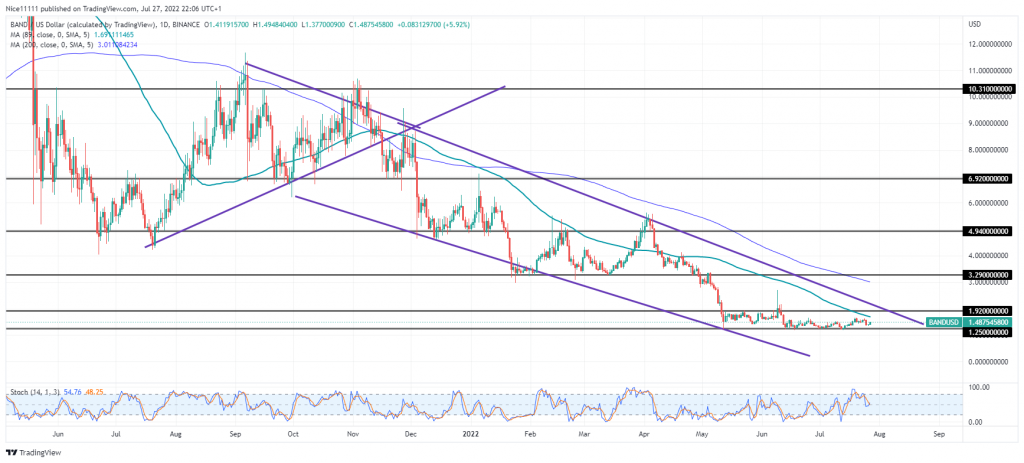



The Complexity Tax: Indicators May Be Bleeding Your Account
Estimated Reading Time: 4 minutes
Don’t invest unless you’re prepared to lose all the money you invest. This is a high-risk investment and you are unlikely to be protected if something goes wrong. Take 2 minutes to learn more

- Traders often assume complex strategies equal better results, but extra variables just create decision paralysis.
- Raw price action is the most honest market signal; stacking indicators only adds unprofitable noise.
- Simplicity leaves nowhere to hide, forces discipline, and protects your capital and sanity.
Ever looked at a trader’s screen and seen so many charts, squiggly lines, and flashing indicators that it resembles a neon-lit Christmas tree? It looks impressive. It looks sophisticated. It looks like the setup of a financial genius about to crack the market’s secret code.
It is also a fast track to burnout and bankruptcy.
In financial markets, there is a dangerous misconception that a more elaborate system yields better results. Traders—especially those eager to find their footing—layer indicator upon indicator, convinced that added variables equal added precision. But in reality, complexity doesn’t sharpen your edge. It dulls it.
Every extra rule you add is a tax you pay in mental clarity, discipline, and psychological steadiness.
The Noise Machine
The more variables you juggle, the slower your decision-making becomes. When it is time to execute a trade, a complex system forces you to weigh too many conflicting inputs. One indicator says buy, an overlay says wait, and a conditional rule says hesitate. This analytical paralysis breeds doubt at the exact moment you need to act.
Furthermore, the further you move away from raw price action, the more truth you lose. Price is the ultimate reality; it already reflects the collective expectations of global market participants. When you stack derivatives of indicators on top of each other, you aren’t gaining precision. You are just amplification noise. The core signal gets weaker the more you process it.
The Illusion of Superiority
Why do we do this? Often, it stems from a psychological need to feel smarter than the market. Traders trick themselves into believing that with just one more refinement, they will uncover a hidden pattern everyone else missed.
Consider the reality: you are competing against institutional giants wielding billions in capital, cutting-edge AI, and armies of PhD analysts. The idea that adding a few more lines to a retail charting platform will reveal a secret they overlooked is pure fantasy. It mirrors the internet contrarians who convinced themselves they knew more about epidemiology than global scientists.
Markets do not reward you for looking clever. They reward execution.
The Power of the Stripped-Back System
History consistently favors the minimalist. Take the famous Turtle Trading experiment. It didn’t succeed because of complex mathematical modeling; it succeeded because of simple breakout rules, strict position sizing, and fierce discipline. Simpler systems endure because they are harder to overfit to past data, easier to execute under pressure, and highly adaptable when market conditions inevitably shift.
Stripping back your framework is uncomfortable because simplicity leaves nowhere to hide. If a simple system fails, you can’t blame a miscalibrated indicator or a conflicting signal. The responsibility lands squarely on you. Complexity is often just a psychological safety blanket—an excuse waiting to happen so you can say “the model was wrong.”
If you want to survive the markets, stop paying the complexity tax. Keep price central, minimize your rules, define your risk upfront, and protect your sanity.