


Why the Fed Can’t Buy Bitcoin (You Might Be Surprised)
Estimated Reading Time: 3 minutes
Don’t invest unless you’re prepared to lose all the money you invest. This is a high-risk investment and you are unlikely to be protected if something goes wrong. Take 2 minutes to learn more
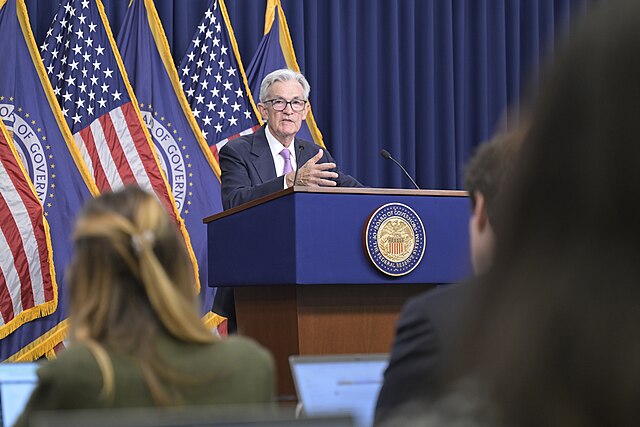
Federal Reserve Chairman Jerome Powell has definitively ruled out the possibility of the central bank holding Bitcoin, citing legal restrictions as the primary obstacle. This declaration comes amidst a period of rapid evolution in U.S. cryptocurrency policies and the broader crypto market landscape.
Why the Federal Reserve Can’t—and Won’t—Hold Bitcoin Anytime Soon
Federal Reserve Chair Jerome Powell recently reinforced the central bank’s stance on bitcoin during a press conference held after a rate cut. When asked about the possibility of the U.S. government establishing a bitcoin reserve, Powell dismissed the idea, explaining that legal constraints prevent such an action. He indicated that the Federal Reserve Act specifies the types of assets the central bank can own, and the Fed has no intention of seeking legislative changes to include bitcoin in its holdings. Powell added that any decision to amend these laws would fall under Congress’s jurisdiction, not the Federal Reserve’s.
Powell’s position remains consistent with his previously cautious approach to cryptocurrencies. In earlier remarks, he has described bitcoin as a speculative asset, lacking the stability necessary to function as a legitimate currency. In 2021, he suggested that cryptocurrencies were not reliable as a store of value and pointed to their volatility as a significant risk for investors and financial systems. He has also differentiated bitcoin from central bank digital currencies (CBDCs), emphasizing the latter’s potential as a safer, more controlled innovation in the financial space.
The Federal Reserve Act restricts the institution to holding U.S. government bonds and other secure assets. Even though the Fed has broadened its asset purchases during economic crises, such as the 2008 financial crash, cryptocurrencies remain outside its scope. Legislative initiatives like Senator Cynthia Lummis’ Bitcoin Act, which aims to incorporate bitcoin into the U.S. financial system, have faced resistance from lawmakers concerned about the lack of regulation and potential misuse of digital assets.

In contrast, former President Donald Trump announced plans to establish a national bitcoin reserve as part of a broader effort to position the United States as a global leader in cryptocurrency. This initiative involves acquiring significant bitcoin holdings, potentially leveraging assets seized in criminal cases as a starting point. The proposal has had a notable impact on the cryptocurrency market, with bitcoin’s value soaring past $100,000, driven by investor optimism over potential regulatory changes under Trump’s administration. Furthermore, Trump’s selection of David Sacks as the White House AI and crypto czar underscores his commitment to integrating digital assets into the national economic strategy.