


Bitcoin Prices Hold Steady as Inflation Slows and ETF Inflows Resume
Estimated Reading Time: 3 minutes
Don’t invest unless you’re prepared to lose all the money you invest. This is a high-risk investment and you are unlikely to be protected if something goes wrong. Take 2 minutes to learn more

Bitcoin prices held steady even though the Federal Reserve has hinted it may not cut interest rates as much as expected this year. On Wednesday, new data showed that inflation slowed down more than economists predicted in May. This caused money to start flowing back into bitcoin exchange-traded funds (ETFs) after a brief pause.
Bitcoin, the world’s biggest cryptocurrency, jumped to $70,000 after the inflation news came out. However, it pulled back to around $67,400 after the Fed released a new forecast later in the day, suggesting there may only be one interest rate cut in 2024 rather than the three cuts that were predicted back in March.
As of the time of writing, the benchmark cryptocurrency is trading at around $66,850, down by 6% in the past seven days.
Despite this, many Bitcoin analysts remain bullish. Research firm 10x Research says history shows that bitcoin prices tend to go up after months when inflation comes in lower than expected. They point out that bitcoin ETFs saw big inflows in February after a soft inflation reading, but that money stopped coming in during March, when inflation ticked back up.
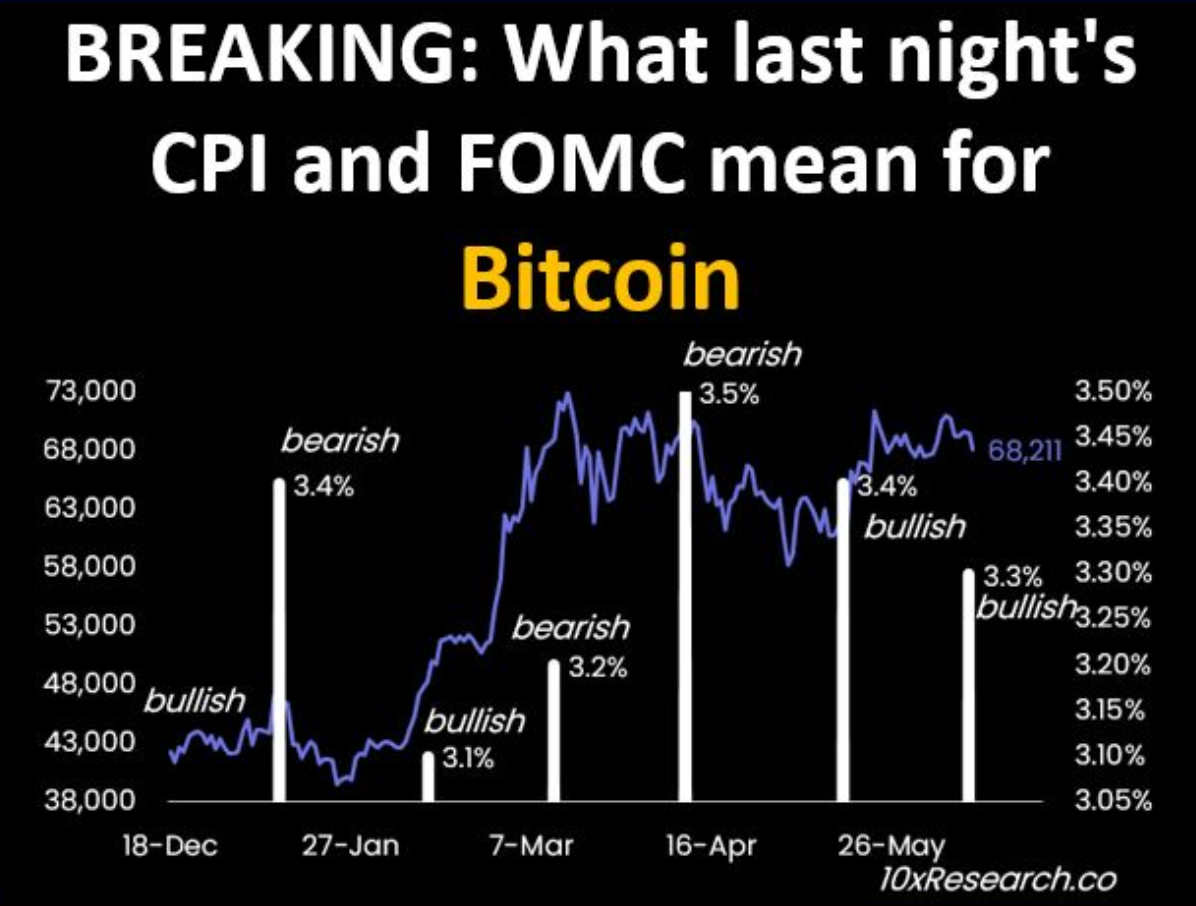
With inflation now clearly slowing down, 10x Research expects the Fed will end up signaling more rate cuts later this year, which could boost bitcoin even higher.
JPMorgan Expresses Cautious Outlook on Bitcoin ETFs
However, analysts at JPMorgan are a bit more cautious. While they note crypto ETFs have seen $16 billion in inflows so far this year, they think the current pace may be hard to sustain with bitcoin prices already quite high compared to the cryptocurrency’s estimated production costs.
Still, even JPMorgan estimates that a total of $12 billion in net new money has flowed into crypto assets year-to-date after accounting for investors shifting money from exchange wallets into the new ETFs.
If that pace keeps up, it would mean an impressive $26 billion flowing into the crypto space over the course of the year. The next key thing to watch will be the June inflation data due out next month.
When trading the crypto market, it doesn’t have to be “hit or miss.” Safeguard your portfolio with trades that actually yield results, just like our premium crypto signals on Telegram.
Interested in learning how to day trade crypto? Get all the information you need here.