


Leading Crypto Companies by Fee Revenue
Estimated Reading Time: 4 minutes
Don’t invest unless you’re prepared to lose all the money you invest. This is a high-risk investment and you are unlikely to be protected if something goes wrong. Take 2 minutes to learn more
Cryptocurrency networks impose fees for buying, selling, or transferring digital assets. These fees play a crucial role in deterring spam, ensuring blockchain security, and funding platform development. Essentially, they represent the primary revenue stream for crypto companies.
For investors, these fees serve as a valuable indicator of a company’s financial health. Similar to revenue in traditional businesses, fee income is a key metric for identifying lucrative crypto investments.
Top 3 Crypto Investments by Fee Revenue

Ethereum
Often described as a “world computer,” Ethereum enables users to run decentralized applications. To conduct transactions on the Ethereum network, users must pay transaction fees, known as gas fees. The network’s revenue increases with the number of users.
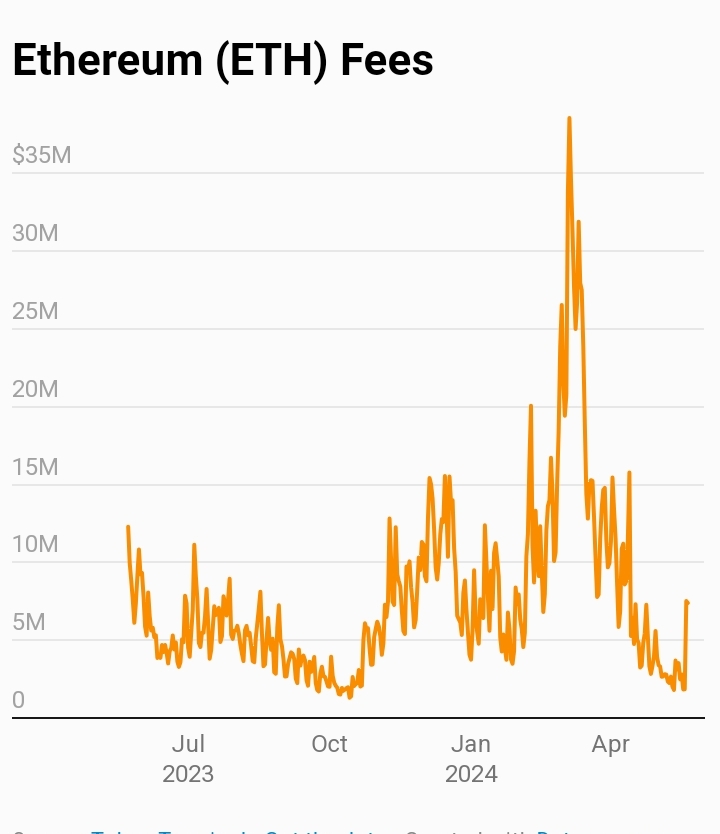
Over the past year, as illustrated in the accompanying chart, Ethereum’s fee income has remained relatively stable, except for a spike in March 2024 due to the Dencun upgrade.
Ethereum’s gas fees can soar during periods of network congestion, particularly during significant events. This has led to the rise of Layer-2 (L2) solutions, which offload some transaction work onto alternative blockchains. These blockchains then consolidate their transactions onto Ethereum more efficiently.
In the long term, L2 solutions benefit Ethereum by reducing fees and speeding up transactions. However, they also reduce some of Ethereum’s direct fee revenue.

Tron
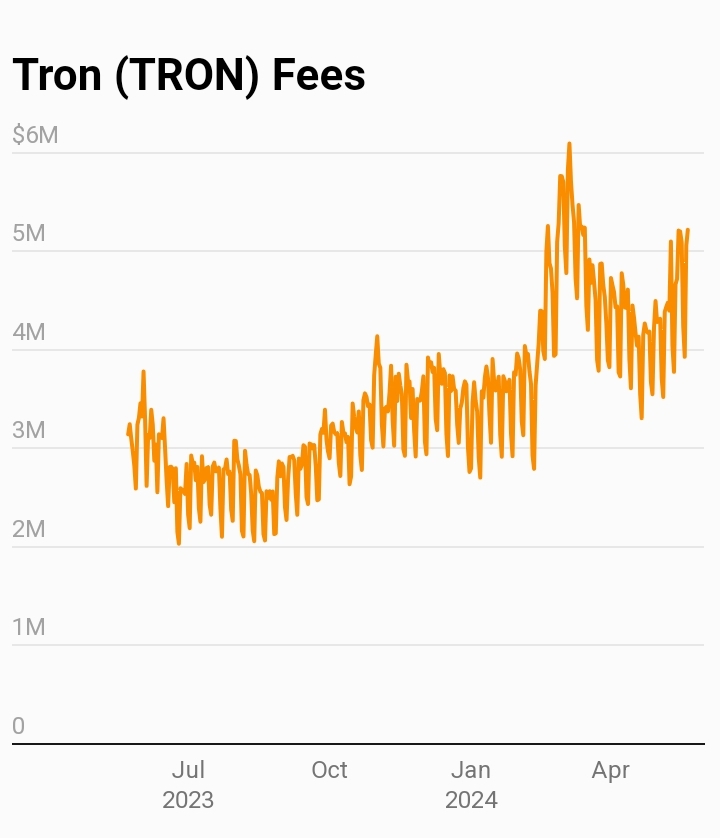
Tron, similar to Ethereum, is an open-source, decentralized blockchain capable of executing smart contracts and running decentralized applications (dApps). Tron generates revenue from fees associated with transactions, which vary based on energy, bandwidth, and transaction type.
In February 2024, Tron achieved a record-high fee revenue of $1.8 million. This surge was driven by Tron’s regular token-burning events, during which over 12 million TRX tokens were permanently removed from circulation. Although the Tron network continues to collect transaction fees, a portion is frequently used to buy back and burn TRX tokens. This process reduces the overall supply, theoretically increasing the value of TRX.
Bitcoin
Bitcoin, the original cryptocurrency, measures fees in satoshis per byte, with satoshi being the smallest unit of bitcoin. These fees are determined by transaction size and the demand for block space. Fees are paid to incentivize miners to validate transactions on the blockchain.
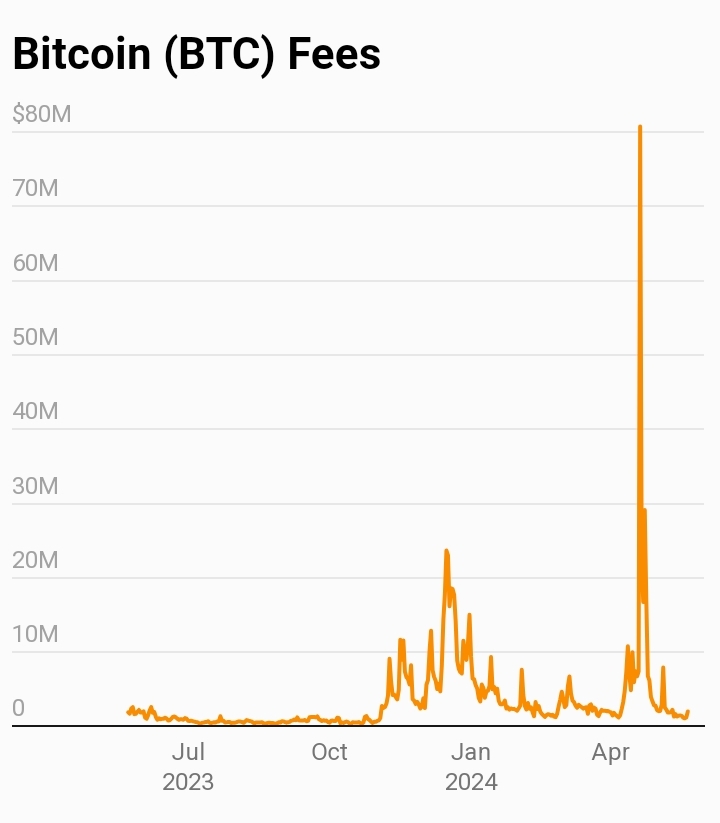
As shown in the graph below, Bitcoin experienced a significant increase in fees in March and April 2024. On April 20, the average transaction fee peaked at $128, coinciding with Bitcoin’s fourth halving and the introduction of Runes, a new protocol for creating fungible tokens on the Bitcoin blockchain. However, fees significantly decreased the following month as demand for Runes subsided.
The Connection Between Fees and Project Success
Fees are often a direct reflection of a cryptocurrency project’s success.
They are a vital indicator of a blockchain project’s utility, demand, and long-term viability. High fee generation signifies a strong product/market fit, demonstrating that users are willing to pay for the services a crypto company provides.
Furthermore, protocols that generate substantial fee revenue are typically more stable over the long term, as this revenue provides a consistent income stream to support growth and operations.
Conclusion
Generally, fees are beneficial as they indicate the user’s willingness to pay for the platform’s services. However, high fees can pose barriers, particularly for smaller transactions, and may also signal network congestion, a persistent issue for Ethereum and other platforms. Before investing in a cryptocurrency project, it’s advisable to study its transaction fees and observe whether they are increasing or decreasing.