


MoneyGram’s Solana Expansion: What It Means for Stablecoins and Investors
Estimated Reading Time: 5 minutes
Don’t invest unless you’re prepared to lose all the money you invest. This is a high-risk investment and you are unlikely to be protected if something goes wrong. Take 2 minutes to learn more
MoneyGram is taking another step into blockchain-based payments, and this time the focus is Solana.
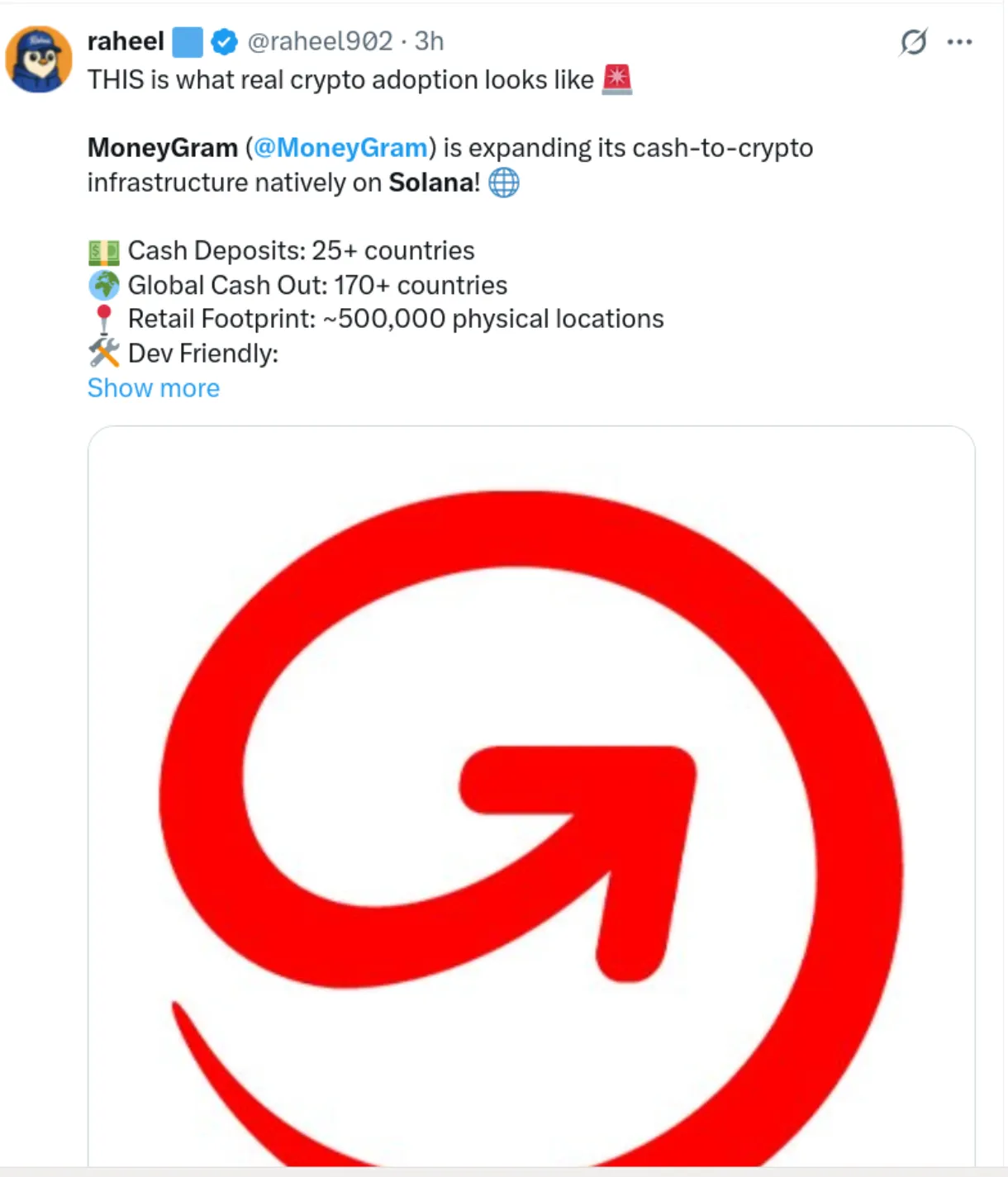
The global payments company has expanded its MoneyGram Ramps service to Solana, allowing wallets, exchanges and developers on the network to connect digital assets with local currencies through MoneyGram’s global cash network. The service supports cash deposits in more than 25 countries and withdrawals across more than 170 countries and territories.
But for investors, the bigger story is not simply another company adding Solana support. It is the growing connection between traditional payment infrastructure and blockchain networks.
From Crypto Trading To Real-World Payments
For years, much of crypto adoption revolved around trading and speculation. That is gradually changing as financial companies look for ways to use blockchain technology for actual money movement.
MoneyGram’s latest move is an example of that shift.
Its Ramps service essentially acts as a bridge between digital assets and physical money. Wallet users can move between crypto and local currencies without the entire payment process having to remain inside the blockchain ecosystem. MoneyGram handles settlement, compliance and the connection to its physical cash network.
If this model scales, blockchain could become less visible to consumers while becoming more important underneath the financial system.
Why Solana Matters
MoneyGram’s decision is particularly interesting because the company is not merely adding Solana as another supported network.
In June, MoneyGram became an active Solana validator and joined the Solana Developer Platform as an infrastructure partner. That means the company is participating at both the network and application levels.
For Solana, this provides another example of a traditional financial institution building directly around its blockchain infrastructure.
For investors, however, the important question is whether these institutional integrations eventually translate into sustained transaction activity and economic value across the ecosystem.

The Stablecoin Connection
Stablecoins could be one of the biggest beneficiaries of this trend.
Unlike volatile cryptocurrencies, stablecoins are designed to maintain a relatively stable value, making them more suitable for payments, remittances and settlement.
MoneyGram has already spent years building infrastructure around stablecoins through its partnership with Stellar. It also partnered with Kraken earlier this year to provide crypto-to-cash withdrawals through its global network.
The Solana expansion therefore looks less like an isolated announcement and more like another piece of MoneyGram’s broader strategy to connect blockchain-based assets with traditional money.
What Investors Should Watch
The biggest opportunity may not be the headline itself, but what happens if these integrations begin generating significant real-world payment volume.
Investors should watch whether stablecoins increasingly move beyond crypto trading into remittances, cross-border payments, merchant transactions and business settlement.
They should also watch whether other payment companies follow the same path.
If more financial institutions begin connecting their existing networks to blockchains, competition could shift from which cryptocurrency wins to which blockchain becomes the preferred settlement infrastructure.
That distinction matters.
A blockchain can attract major institutional partnerships without those partnerships necessarily translating into immediate gains for its native token. The long-term value will depend on actual usage, transaction activity and how much economic value the network captures.
The Bigger Picture
MoneyGram’s Solana expansion is another sign that the boundary between traditional finance and crypto is becoming less distinct.
The company is not abandoning its existing payment network for blockchain technology. Instead, it is using blockchain networks to extend what its existing infrastructure can do.
That could become the more important trend for investors to follow.
The next phase of crypto adoption may not be about replacing traditional finance. It may be about traditional financial companies quietly building blockchain into the infrastructure that moves money around the world.