


Navigating the Cryptocurrency Wild West: Protecting Yourself from Sophisticated Scams
Estimated Reading Time: 6 minutes
Don’t invest unless you’re prepared to lose all the money you invest. This is a high-risk investment and you are unlikely to be protected if something goes wrong. Take 2 minutes to learn more

As the cryptocurrency landscape continues to expand, so too do the tactics employed by cybercriminals to exploit unsuspecting users. These sophisticated scams, often leveraging AI and deepfake technology, can be incredibly convincing, making it difficult for even experienced investors to discern truth from fiction.
By understanding the common techniques used by scammers and staying informed about the latest trends, individuals can significantly reduce their risk of falling victim to these fraudulent schemes.
Google has invested heavily in combating the tactics used by hackers-for-hire to compromise YouTube creators. Despite these efforts, scammers continue to exploit vulnerabilities, particularly through AI-powered deepfakes. These deepfakes are often used to promote fraudulent giveaway events, misleading users into sending cryptocurrency to scammers. The CryptoCore group, known for its sophisticated techniques, is a prime example of this threat. By understanding these tactics, users can protect themselves from falling victim to these scams.
By gaining a deeper understanding of CryptoCore’s operations and giveaway scams, we can develop effective strategies to counter their activities and safeguard the digital world from these threats.

Modus Operandi
Leveraging trust in established brands and famous individuals, coupled with an interest in major cultural and political events, forms the foundation of these sophisticated attacks. By convincing victims that online messages or events are legitimate communications from trusted sources, scammers capitalize on this trust to divert victims to fraudulent websites promising quick and easy profits. These schemes often employ time-limited “giveaway” offers to create a sense of urgency, pressuring victims to act impulsively.
A common tactic involves creating a narrative where famous individuals invest in a promising new cryptocurrency, targeting novice crypto users. To further obfuscate the scam, these schemes often associate themselves with real-world events, such as space flights or technology-focused seminars, further blurring the lines between legitimate and fraudulent activities.
Reconstructing the Scammers’ Operation
The scammers orchestrate a complex operation involving a multi-step process to maximize their impact. To attract a large audience of potential victims, they identify significant, widely publicized eyvents, often accompanied by live broadcasts. By creating deepfake videos that mimic official event footage and embedding malicious QR codes, they redirect unsuspecting viewers to fraudulent websites. These websites, generated using a consistent framework, are designed to deceive victims into parting with their cryptocurrency.
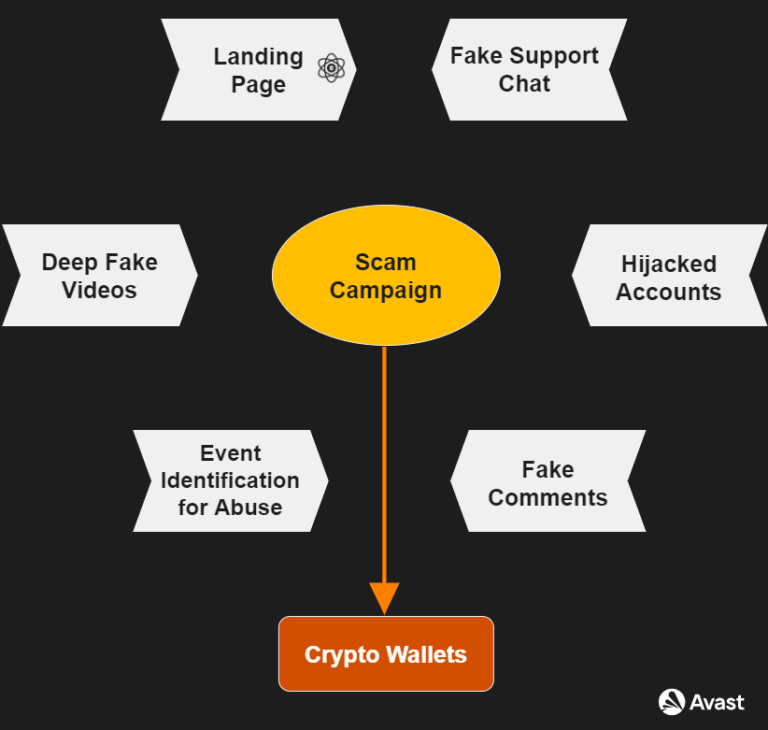
A critical component of the scam involves the acquisition of compromised accounts on popular platforms, particularly YouTube. By utilizing these accounts with substantial subscriber bases, the scammers can amplify the reach of their fraudulent content. Additionally, they employ fake comments to disseminate deceptive information further. Ultimately, the success of these campaigns results in the accumulation of significant amounts of cryptocurrency in the scammers’ wallets.
CryptoProject in Scammer Operations
The name “CryptoCore” was given to Crypto Scam projects, based on the framework used to generate their landing pages. However, these campaigns may be the result of a collaborative effort between several independent cybercriminal groups, perhaps operating through a subcontracting model.
The landing pages are constructed using a framework marketed on various hacker forums under the “CryptoProject” brand. The developers offer customization and deployment on personal domains for around $100.

They even showcase examples of the giveaway scams we’ve been tracking, as depicted in the images below. Orders for specific pages can be placed through their dedicated Telegram bot.
It’s intriguing to note that deepfake videos, stolen accounts, and even manipulated comments can be obtained through similar services. This raises the question of whether entire scam campaigns can be procured as a service, with clients simply providing cryptocurrency wallets, essentially operating on a “Scam-as-a-Service” model. Alternatively, a single group may be orchestrating these campaigns, potentially outsourcing specific tasks.
Regardless, it’s clear that the landing pages are generated using a readily available framework. We can extend this assumption to other elements, such as deepfake videos, hijacked accounts, and fake comments. Further investigation is necessary to uncover more details about the connections between these components, particularly regarding the fraudulent cryptocurrency wallets. This could help determine whether a single group or multiple entities are involved in these sophisticated scams.
Conclusion
The sophisticated giveaway scam campaign orchestrated by the CryptoCore group leverages the popularity of cryptocurrencies and exploits user trust in well-known personalities and events. Employing deepfake technology, hijacked YouTube accounts, and professionally designed websites, the scammers deceive victims into sending their cryptocurrencies to fraudulent wallets.
The CryptoCore scam group, while named after its framework, likely operates as part of a larger criminal network. Their sophisticated campaigns, involving deepfake videos and hijacked accounts, highlight the evolving nature of cryptocurrency scams. Users must remain vigilant, especially when encountering offers that seem too good to be true. They should also be wary of suspicious YouTube accounts and ensure their devices are protected with robust antivirus software. By staying informed and cautious, users can mitigate the risk of falling victim to these deceptive schemes.