


Stablecoin Wars: China Throws a Counterstrike
Estimated Reading Time: 6 minutes
Don’t invest unless you’re prepared to lose all the money you invest. This is a high-risk investment and you are unlikely to be protected if something goes wrong. Take 2 minutes to learn more

The most powerful force on Earth isn’t a missile silo, a naval fleet, or even some secret quantum breakthrough buried in a government lab—not even in China.
It’s something far simpler: a spreadsheet.
But not just any spreadsheet—a digital ledger backed by belief, minted on demand, and dressed up as a currency.
For nearly a century, that spreadsheet has had one name: the U.S. dollar. But now, as China quietly maneuvers on the global stage, that illusion is beginning to flicker.
It’s something far simpler: a spreadsheet.
But not just any spreadsheet—a digital ledger backed by belief, minted on demand, and dressed up as a currency.
For nearly a century, that spreadsheet has had one name: the U.S. dollar.
It became the world’s backbone—not because it’s beautiful or benevolent, but because no one wanted to be the first to doubt it. As long as everyone agrees it has value, the illusion holds.
That illusion, however, is starting to flicker.
Washington’s Digital Power Grab
Enter the GENIUS Act—Washington’s latest move to keep the illusion alive. On the surface, it’s about regulating stablecoins. Beneath it, however, lies a digital power grab.
It locks in the dollar as the default setting for blockchain finance, enforcing its supremacy not with tanks, but with code.
But global finance follows Newton’s laws: every action invites a reaction.
Now, China is rolling out a countermove—quiet, precise, and strategic.
And it’s using stablecoins as the delivery system.

The Quiet Offensive in Hong Kong
A few months ago, something subtle but significant happened—barely noticed by the global radar.
Two of China’s tech heavyweights—Ant Group (Alibaba’s affiliate) and JD.com—began talks with the People’s Bank of China. Their mission: to greenlight a new digital currency.
Not the e-CNY.
This time, it’s a CNH stablecoin.
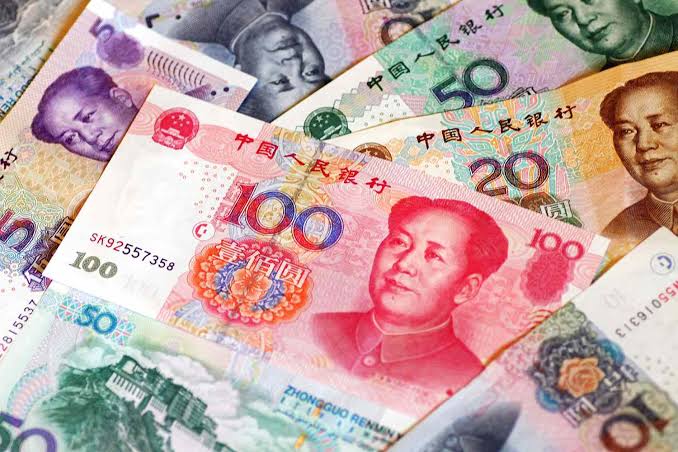
CNH is the offshore version of the Chinese yuan, traded in Hong Kong, designed to be more market-friendly than its mainland counterpart, the CNY. It offers looser controls and more flexibility—at least in theory.
For years, China was crypto’s ultimate wet blanket—banning Bitcoin, shuttering exchanges, and keeping the digital yuan under tight control. Now, however, signs of strategic openness are emerging, particularly beyond its borders.
Hong Kong’s Legal Door Opens
On May 21, Hong Kong passed the Stablecoin Ordinance, effectively declaring:
“If you want to launch a regulated, fiat-backed stablecoin—here’s your legal runway.”
The law takes effect on August 1.
Already, more than 40 companies are lining up for approval, but regulators will be selective. Only a few will succeed, as the application process is demanding.
- Requirements include:
- Tens of millions in capital
- Locally registered entities
- Audited reserves
Continuous regulatory oversight
This is no playground for anonymous coders or short-lived DAOs—it’s a high-stakes game with government oversight at every step.
The Grand Prize: A Regulated CNH Stablecoin
The winner gets the right to issue a regulated CNH stablecoin—a digital yuan for the offshore market.
Potential uses include:
- Cross-border trade
- Retail payments
- B2B transactions
- Subtle geopolitical leverage
This is more than just digital money—it’s China’s first serious attempt to inject its currency into the blockchain ecosystem on its own terms. And it all begins in Hong Kong.
Why Now? The Dollar’s Digital Dominance
The GENIUS Act shifted the playing field.
Instead of resisting crypto, the U.S. chose to ride the wave and anchor the dollar deeper into the digital economy.
With over 99% of stablecoin volume already denominated in USD, America didn’t need to win a war—it simply codified the status quo.
Consider Tether’s USDT: it processed over $20 trillion last year. Even accounting for inflated volumes, that’s still more than Visa, Mastercard, and PayPal combined.
Tether accomplished what military bases could not—it digitally projected the dollar into every corner of the internet.
China took notice.
China’s Dual-Track Strategy
Rather than shutting crypto down entirely, China is pivoting with a two-lane approach:
Track One: Keep the e-CNY (digital yuan) locked inside China’s domestic borders, under full state control.
Track Two: Allow CNH stablecoins—issued offshore by trusted corporations—to spread the yuan internationally across borders, networks, and industries.
This is a pragmatic balance between control and influence.
The BRI’s “Last Mile” Advantage
For many Belt and Road Initiative (BRI) countries, the biggest barrier isn’t infrastructure—it’s financial connectivity.
Even when trading directly with China, transactions often pass through dollar-based systems like SWIFT, adding cost, delays, and geopolitical vulnerabilities.
CNH stablecoins could eliminate this problem.
They enable small exporters, logistics companies, and merchants to settle directly in yuan—without going through the mainland banking system.
This is where Ant Group and JD.com play a crucial role. While the BRI builds physical infrastructure, CNH stablecoins create the digital rails to support it.
Conclusion: A New Monetary Battlefield
This is no longer just a cryptocurrency story—it’s a monetary showdown fought on blockchains, not battlefields.
With CNH stablecoins, China has taken its opening shot.
The race for the future of money has begun—and whoever wins will control far more than just payments.