


Ten Key Facts About Bull Markets
Estimated Reading Time: 6 minutes
Don’t invest unless you’re prepared to lose all the money you invest. This is a high-risk investment and you are unlikely to be protected if something goes wrong. Take 2 minutes to learn more

On Wall Street, there’s a famous warning: Don’t mistake luck for skill in a bull market. When stock prices climb day after day, even the least experienced investor can start to feel like a market guru. Over the past decade, U.S. equities have spent so much time in bullish territory that many have forgotten what prolonged market downturns feel like.
By one widely recognized measure, the S\&P 500 officially entered a new bull phase on January 19, 2024, when it closed above its previous peak from January 3, 2022. History’s longest bull run stretched from March 2009 until March 2020, only to be cut short by the sudden shock of the COVID-19 pandemic. That bear market proved brief, however, and stocks quickly charged back into growth mode.
Here are ten important insights into how bull markets work:
1. The origin of the term “bull market”
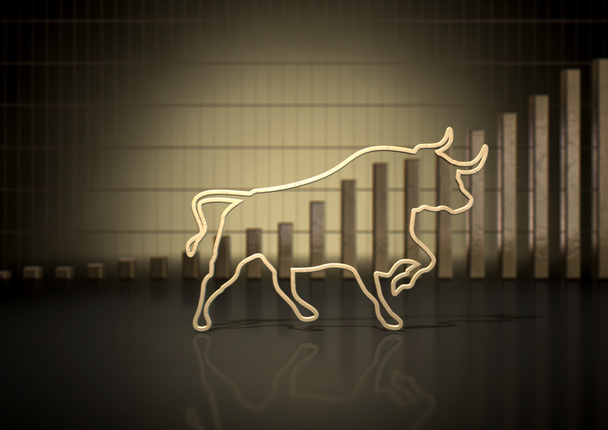
The phrase’s roots are debated. Some claim it comes from the 17th-century days when the land beneath the New York Stock Exchange served as a cattle auction site. Others believe it stems from the expression “a line of bull,” a nod to overhyped sales pitches by brokers. The most widely accepted theory, however, likens market movements to animal behavior: bulls strike upward with their horns, symbolizing rising prices, while bears swipe downward, representing falling markets.
2. What qualifies as a bull market
A record high or optimistic news segment doesn’t automatically make it a bull market. According to S\&P Dow Jones Indices, the benchmark is a 20% rise in the S\&P 500 from a recent low. By that definition, the current bull began on January 19, 2024. Some analysts set a higher bar, requiring six months without dropping below that low, while others only declare a bull after surpassing the previous all-time high.
3. Typical lifespan of a bull market
Bull runs don’t last forever, though investors might wish they did. InvesTech Research reports that since 1932, the average bull market spans about 3.8 years. The record holder—the post-2008 financial crisis rally—lasted an impressive 11 years, from 2009 until the pandemic struck in 2020.
4. How often bull markets appear
According to Ned Davis Research, since 1928 there have been 26 bull markets—and an equal number of bear markets. Historically, bull phases have rewarded investors with average gains of 112%, compared to the average 36% decline during bears. Over time, the upward trend of the market has far outweighed its downturns.
5. Which stocks tend to excel
Market leadership shifts as a bull run matures. In the early stages of an expansion, sectors sensitive to interest rates and economic growth—such as financials, consumer discretionary, and industrials—often take the lead. Midway through, technology companies frequently dominate. In the later stages, commodity-related sectors like energy and materials often outperform. The current bull market, however, has been unusual: technology has led from the outset, while financial stocks have struggled to keep pace.
6. Standout sector in the current rally
While opinions differ on the exact starting point, the surge that began in 2023 has been fueled largely by the “Magnificent 7” mega-cap tech giants—Apple, Alphabet, Microsoft, Amazon, Meta Platforms, Tesla, and Nvidia. Together, they delivered an average gain of 111% in 2023, vastly outstripping the S&P 500’s 24% return.

7. Leaders of the pack
From January 2023 through January 19, 2024, the top-performing S\&P 500 stocks included Nvidia, Meta Platforms, and Royal Caribbean.
8. How bull markets can create bubbles
Some of history’s most infamous financial bubbles began as healthy bull markets. From the Dutch tulip craze of the 1630s to the collapse of the “Nifty Fifty” in 1973 and the dot-com implosion of the early 2000s, investor overconfidence and herd mentality have repeatedly pushed valuations to unsustainable heights. For an in-depth exploration, see Manias, Panics and Crashes by Charles P. Kindleberger, updated by Robert Z. Aliber (2015).
9. Understanding secular bull markets
A secular bull market is a long-term upward trend, usually lasting decades and punctuated by shorter bear markets. Notable examples include the 1982–2000 run, when the S\&P 500 soared over 1,200% despite two bears, and the 1949–1966 period, which weathered a nearly 30% drop in 1962. Historically, secular bulls have delivered average gains approaching 500%.
10. What brings a bull to an end
Bull markets don’t last forever. Rising inflation, higher interest rates, and looming recessions often mark the beginning of the end. Typically, markets peak six to nine months before a recession starts. Sometimes, those recessions never arrive, and stocks can even thrive in the early stages of rate hikes. Eventually, though, persistent inflation and high borrowing costs can stall growth and erode investment returns.
Conclusion
Bull markets are periods of optimism, opportunity, and wealth creation, but they also require discipline, awareness, and strategic planning. While history shows that stocks generally rise over time, each rally has its own rhythm, drivers, and risks. Investors who understand the patterns, remain alert to warning signs, and maintain a long-term perspective are better positioned to ride the wave of growth while preparing for the inevitable market shifts that follow.