



What Is a Circuit Breaker in Trading? Why Markets Sometimes Hit the Pause Button
Estimated Reading Time: 6 minutes
Don’t invest unless you’re prepared to lose all the money you invest. This is a high-risk investment and you are unlikely to be protected if something goes wrong. Take 2 minutes to learn more

- Circuit breakers temporarily halt trading during extreme market volatility.
- They are designed to reduce panic selling and stabilize chaotic price moves.
- While helpful, they remain controversial for possibly disrupting natural price discovery.
Imagine watching the market plunge within minutes. Prices are falling, panic is spreading, and traders are rushing for the exit. Then, without warning, trading stops.
This temporary pause is known as a circuit breaker—a safeguard designed to prevent market chaos during extreme volatility.
The Problem: Panic Selling
Financial markets are often driven by emotion. When prices drop sharply, fear can trigger a wave of panic selling, causing losses to accelerate. In severe cases, this can create a downward spiral as more investors rush to sell before prices fall further.
To prevent such situations from getting out of control, exchanges use circuit breakers.
What Is a Circuit Breaker?
A circuit breaker is a mechanism that temporarily halts trading when a market index or individual security experiences an unusually large price movement.
Its purpose is simple: give investors time to assess market conditions and make more informed decisions instead of reacting emotionally.
How It Works
In the U.S. stock market, market-wide circuit breakers are tied to declines in the S&P 500.
- A 7% drop triggers a 15-minute halt.
- A 13% drop triggers another 15-minute halt.
- A 20% drop shuts the market for the rest of the day.
Individual stocks can also be paused if their prices move too far, too quickly.
Historical Examples
The 1987 Black Monday Crash
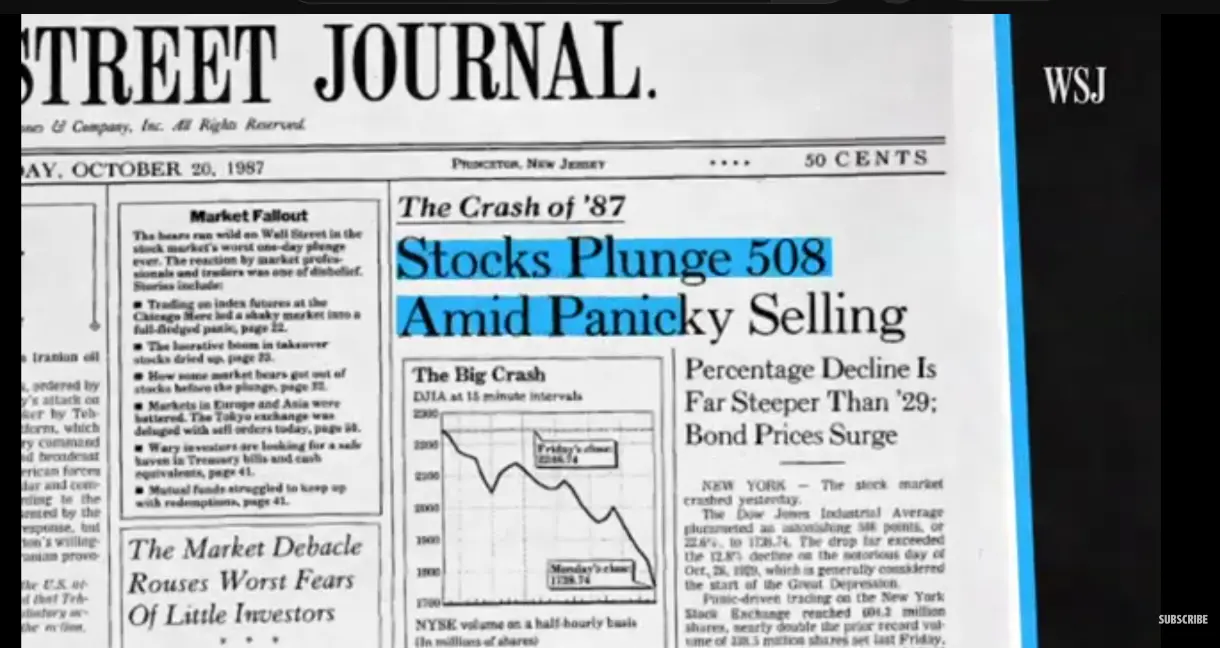
The concept of market-wide circuit breakers was born out of the October 19, 1987, “Black Monday” crash, when the Dow Jones Industrial Average plummeted over 22% in a single day.
Regulators realized that automated, cascading sell orders had overwhelmed the market’s infrastructure. To prevent future freefalls, the U.S. Securities and Exchange Commission (SEC) implemented mandatory, tiered trading halts to give investors a chance to pause, absorb information, and break panic-driven feedback loops.
The 2020 COVID-19 Turmoil
The most severe test of this system occurred decades later in March 2020. As global lockdowns and economic uncertainty surrounding the COVID-19 pandemic triggered widespread panic,
Wall Street’s circuit breakers were triggered four separate times in just a two-week span. On March 9, 12, 16, and 18, Level 1 breaches automatically halted trading across major U.S. indexes for 15 minutes each time.
These extraordinary events underscored the vital role circuit breakers play in modern finance. By forcibly introducing a “time-out” during periods of extreme volatility, they prevent systemic technological meltdowns and help restore orderly trading when human and algorithmic panic take over.
Benefits vs. Criticisms
The Case for Circuit Breakers (The Benefits)
Supporters view circuit breakers as an essential “speed bump” for modern, highly automated markets. By forcing a mandatory time-out, they reduce irrational, panic-driven selling and interrupt the dangerous feedback loops often triggered by high-frequency trading algorithms.
This cool-down window provides a crucial breather—giving human investors, market makers, and clearinghouses time to process breaking news, assess their actual exposure, and secure necessary liquidity without the pressure of a plunging ticker.
The Case Against Circuit Breakers (The Criticisms)
Critics, however, argue that these halts can actually do more harm than good by artificially interrupting “price discovery”—the market’s natural ability to find an asset’s true value based on supply and demand.
Furthermore, critics point to a psychological phenomenon known as the “magnet effect.” When stock prices drop dangerously close to a circuit breaker threshold (such as a 7% decline), fear sets in.
Traders may rush to offload their assets before the market locks up and traps their capital. This frantic race to the exit can artificially accelerate the selling pressure, bringing about the exact crash the halt was designed to prevent.
The debate ultimately centers on whether the psychological benefit of a forced “cool-down” outweighs the risk of the “magnet effect” causing a panic-driven race to the exit.
Crypto Comparison
Unlike traditional stock markets, cryptocurrency markets generally operate without market-wide circuit breakers. Since crypto trading runs 24/7, sharp price swings can continue without interruption.
This is one reason digital assets often experience greater volatility than stocks.
Key Takeaway
Circuit breakers are emergency safeguards designed to slow panic-driven market selloffs by temporarily pausing trading during periods of extreme volatility. The goal is not to stop prices from falling, but to give investors time to absorb information and make more rational decisions.
While critics argue that these pauses can interfere with normal market activity, supporters view them as a crucial defense against disorderly trading and emotional reactions. As a result, circuit breakers remain an important tool for promoting stability and maintaining confidence in financial markets during times of severe stress.