Ethereum Faces Critical Market Pressure as Institutional Interest Surges
Estimated Reading Time: 5 minutes
Don’t invest unless you’re prepared to lose all the money you invest. This is a high-risk investment and you are unlikely to be protected if something goes wrong. Take 2 minutes to learn more

Ethereum finds itself at a crucial crossroads as massive selling pressure collides with growing institutional adoption.
Recent market data reveals that ETH is experiencing its second-largest daily sell imbalance in history, while simultaneously attracting significant corporate treasury investment.
On Tuesday, Ethereum’s Net Taker Volume plummeted to -$418.8 million, marking the second-largest daily outflow ever recorded. Market data shows traders sold 115,400 more ETH tokens than they purchased through market orders.
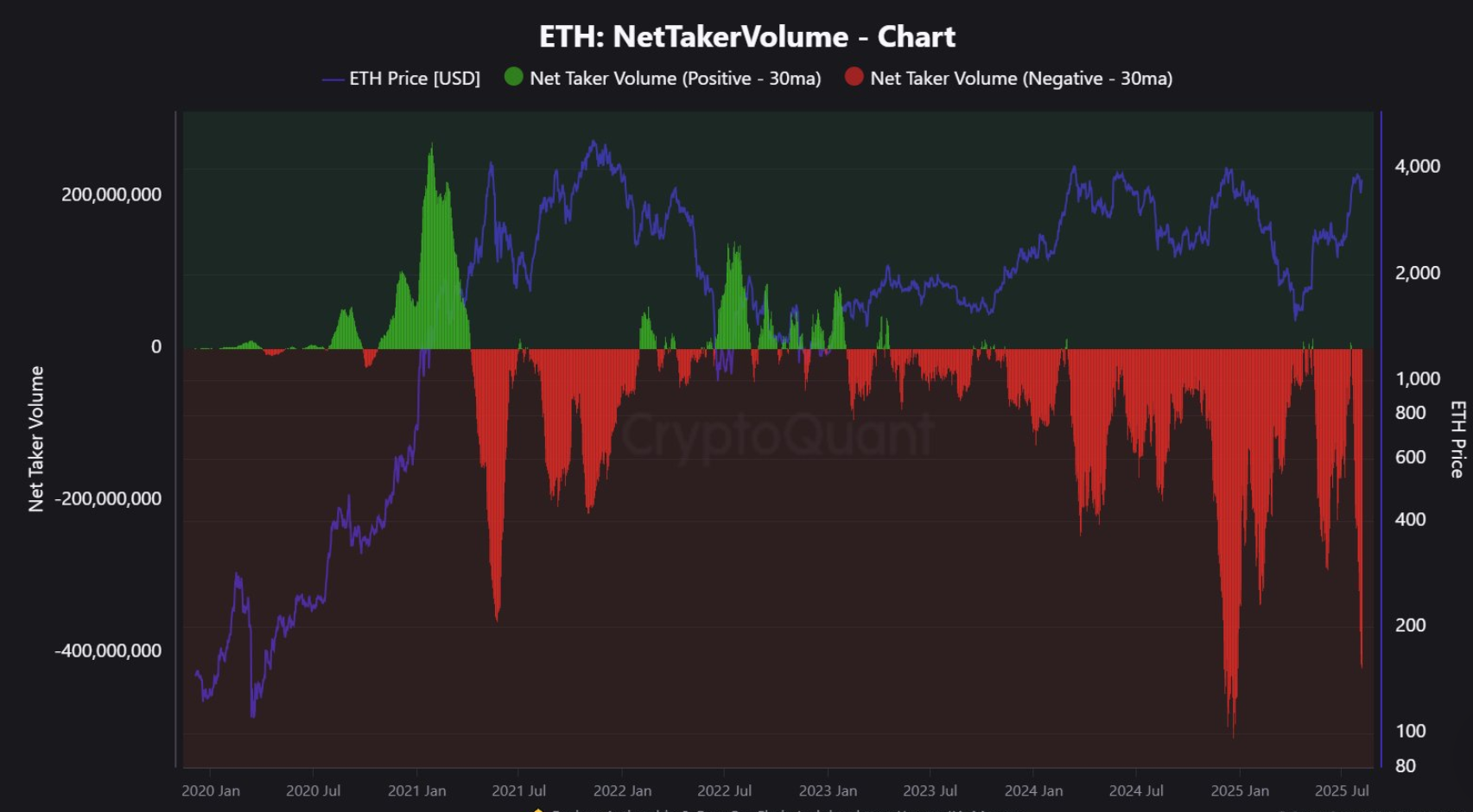
This aggressive selling activity indicates either panic selling or heavy profit-taking by large holders.
Net Taker Volume tracks the difference between urgent buy and sell orders. When sell volume significantly outweighs buy volume, it often signals capitulation or major investors cashing out their positions.
The current selling pressure closely mirrors conditions seen in December 2024, when similar market stress preceded a 66% price decline.
Meanwhile, technical analysis reveals ETH is testing a critical resistance zone between $3,600 and $4,000. This price level has repeatedly rejected upward movements since 2021, creating a significant barrier for bulls.
Market analysts predict a potential 25-35% correction toward key support levels at $2,736 and $2,333 if current selling pressure continues.
Corporate Treasury Accumulation Accelerates
Despite selling pressure from retail traders, corporate treasury companies are aggressively accumulating Ethereum. These firms have purchased 1.6% of all ETH in circulation since June, matching the pace of ETH exchange-traded fund purchases over the same period.
Standard Chartered’s digital assets research head Geoffrey Kendrick considers these treasury companies “very investable” compared to US spot ETH ETFs.
Unlike traditional ETFs, treasury companies can stake their holdings and participate in decentralized finance protocols, generating additional yield beyond price appreciation.
SharpLink Gaming, backed by Ethereum co-founder Joe Lubin, exemplifies this trend. The company’s net asset value multiple has normalized to just above 1.0, making it an attractive investment vehicle.
BitMine remains the largest ETH treasury company, with ambitious plans to accumulate 5% of all existing Ethereum tokens.
Ethereum Network Activity Reaches Annual Highs
Ethereum network transactions have hit yearly highs amid regulatory developments surrounding liquid staking protocols.
The SEC’s Division of Corporation Finance recently released guidance suggesting certain liquid staking activities may not constitute securities offerings under the 1933 Securities Act.
This regulatory clarity has boosted network activity significantly. Over 36 million ETH tokens are now staked on the network, representing nearly 30% of the total token supply.
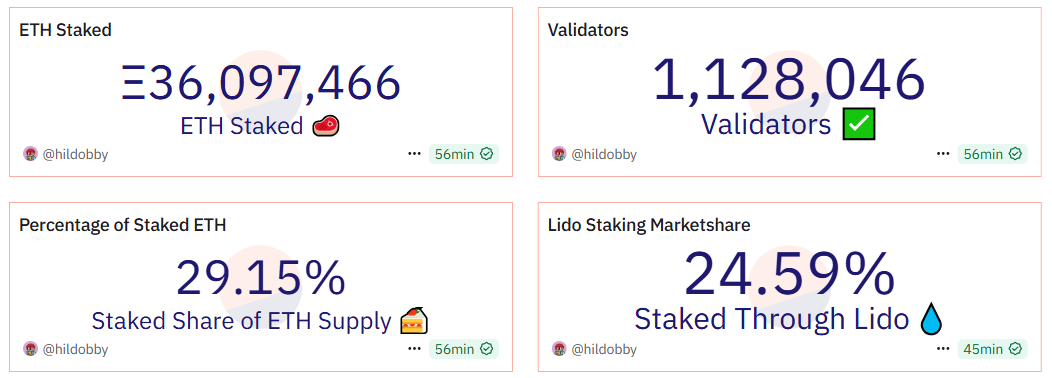
The massive amount of locked tokens indicates long-term holder confidence, as staked ETH becomes temporarily unsellable in exchange for staking rewards.
However, SEC Commissioner Caroline Crenshaw expressed skepticism about the division’s statement, arguing it relies on too many factual assumptions. This regulatory uncertainty creates a complex environment where institutions must navigate unclear legal frameworks.
Market Outlook and Strategic Implications
The confluence of massive selling pressure and institutional accumulation creates a unique market dynamic. While short-term technical indicators suggest potential downside, long-term fundamentals appear increasingly strong.
Ethereum’s ability to generate yield through staking and DeFi participation gives it distinct advantages over other digital assets. Corporate treasury adoption is expected to accelerate as more companies recognize these opportunities.
The current market test will likely determine Ethereum’s trajectory for the remainder of 2025.
Successfully defending key support levels could establish a foundation for renewed growth, while failure might trigger the predicted correction toward lower technical targets.
As regulatory frameworks continue evolving and institutional adoption grows, Ethereum’s role as the foundation of decentralized finance becomes increasingly established, despite short-term market volatility.
Interested in learning how to day-trade crypto? Get all the information you’ll need here.