China Urged to Drop U.S. Dollar and Buy Gold to Solve Trade Deficit
Estimated Reading Time: 3 minutes
Don’t invest unless you’re prepared to lose all the money you invest. This is a high-risk investment and you are unlikely to be protected if something goes wrong. Take 2 minutes to learn more
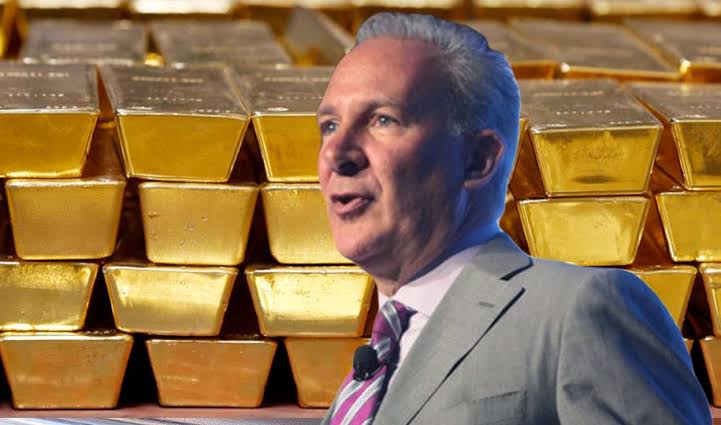
Economist Peter Schiff has suggested a bold economic strategy for China to deal with its ongoing trade problems with the United States. However, he believes that China should sell off its U.S. dollars and Treasury bonds, and then use that money to buy gold.
To this end, Schiff says that backing the Chinese currency, the yuan, with gold would increase its value, making it more valuable than the U.S. dollar. To him, this move would also cause U.S. interest rates to rise, reducing it’s citizens’ purchasing power, and giving Chinese people more buying power.
Schiff’s Strategy and Its Effects on Both Countries
Peter Schiff has long criticized U.S. economic policies, especially those pushed by President Donald Trump. In his opinion, if China used gold to support its currency, it would shift economic power away from the United States.
He argues that Chinese consumers would benefit the most because their money would be worth more. This means they could afford goods made in the U.S. and enjoy a higher standard of living. Schiff even suggested that the Chinese could buy American goods that many Americans could no longer afford to use.
Meanwhile, Schiff warns that Americans would suffer under this plan. He believes the U.S. would face massive inflation and a falling standard of living. The reason is that the dollar would lose value, making everyday items more expensive. Schiff says that China would enjoy all the goods produced in the country instead of sending them overseas. In short, the U.S. would be hit harder than China if this economic shift happened.
Ongoing Trade War and Mixed Reactions
This advice comes during a tense trade war between China and the U.S., which got worse after Trump placed tariffs on goods from more than 180 countries. In response, China responded with a 34% tariff on all U.S. products entering its market. Some fear these actions could lead to higher prices and even a recession.
Trump’s trade adviser, Peter Navarro, dismissed these concerns. He claimed that the drop in global stock markets was a “beautiful situation.” Navarro also repeated that a value-added tax (VAT) is like a tariff used by other countries.
However, Schiff disagrees, saying that VAT applies to local and foreign goods, while U.S. imports already face state sales taxes. Some Trump supporters, like billionaire Bill Ackman, have warned that continuing with the tariff strategy could lead to damage to the U.S. economy.
In order to place winning trades with us via Bybit, you can open an account here.