
A Deep Dive Into Pre-IPO Placement and Alibaba as a Case Study

A pre–initial public offering (pre-IPO) placement refers to the private allocation of substantial equity stakes before a company’s shares become publicly traded.

This approach allows early-stage or growth-focused firms to secure capital ahead of their market debut while reducing exposure to volatility on listing day. Shares are usually offered at a discounted valuation to institutional buyers such as private equity funds or hedge funds, with the reduced price serving as compensation for the higher risk involved.

Participation in pre-IPO placements is generally limited to institutional and high-net-worth investors, and these transactions often include lock-up agreements that restrict immediate resale. Such constraints help stabilize share performance once public trading begins.

How Pre-IPO Placements Work

From the company’s standpoint, a pre-IPO placement provides early financing and acts as a buffer against the possibility of an overly ambitious IPO valuation. By securing capital in advance, firms reduce the pressure on their initial public offering to perform instantly.

These placements typically bring in experienced institutional investors who may contribute beyond capital, offering guidance on corporate governance, compliance, and strategic readiness as the company prepares for life as a publicly traded entity.

The real market value cannot be ascertained, while buyers may receive shares at a discount to the anticipated IPO price. In many cases, the transaction is completed without a prospectus and without any assurance that a public listing will occur. The discounted price therefore, serves as compensation for this uncertainty.

A Deep Dive Into Pre-IPO Placement and Alibaba as a Case Study

Only a small number of individual investors participate in pre-IPO placements, which are usually restricted to specific investor categories defined by the IRS. These categories typically include high-net-worth individuals with in-depth knowledge of financial markets.

Companies also seek to prevent early investors from selling their shares immediately once prices surge after listing. To address this, they impose lock-up periods that restrict share sales in the short term.

Case Study: Alibaba’s Pre-IPO Success

Ahead of Alibaba Group’s highly anticipated initial public offering in September 2014, investor interest surged as the Chinese e-commerce giant prepared to list on the New York Stock Exchange under the ticker BABA.

Before its market debut, Alibaba made pre-IPO shares available to select institutional funds and high-net-worth investors. Among the participants was Singapore-based venture capitalist Ozi Amanat, who acquired approximately $35 million worth of shares at a price below $60 each. These shares were later distributed to Asian investors affiliated with his investment firm, K2 Global, providing early exposure to one of the most prominent tech listings of the decade.

As might be expected, Alibaba’s management later expressed some regret over the pre-IPO placement. Nevertheless, the capital provided by Amanat and other investors ensured that the company was well funded ahead of its IPO and reduced the risk that the offering would fall short of expectations.

A Deep Dive Into Pre-IPO Placement and Alibaba as a Case Study

In Conclusion

Companies strategically raise capital through pre-IPO placements, which also provide a way to manage risk ahead of a public listing. By selling shares to institutional investors at a discounted price, companies such as Alibaba can secure stable funding while benefiting from the involvement of experienced investors in governance.

However, for investors, pre-IPO placements carry notable risks, including uncertainty around the final public trading price and the lack of any guarantee that an IPO will occur.

A solid understanding of the complexities of pre-IPO placements, as well as potential lock-up periods, is therefore essential for investors considering this option.

Nasdaq and CME Seek Safer Digital Asset Access

It has been noticed that growing institutional demand for digital assets is remolding crypto markets, their structure, and their measure. Meanwhile, on January 8, Nasdaq Inc. and CME Group Inc. announced the relaunch of the Nasdaq Crypto Index under a new name, the Nasdaq CME digital asset Index. This is presenting it as a regulated benchmark designed for institutional investors.

Additionally, the move reflects increasing regulatory clarity in the United States and a shift toward familiar, transparent market standards. Company executives said the redesigned index is intended to provide diversified exposure to digital assets within a framework that meets institutional expectations.

Regulation and Institutional Benchmark Drive the Reboot

Nasdaq and CME Group explained that the updated index is not a simple rebranding exercise. Giovanni Vicioso, Executive Director of Equity and Alternative Products, was reported as saying that the initiative combines two established market standards to deliver regulated diversification that investors now expect. He added that the market is demanding foundational tools that align with traditional finance practices.

Sean Wasserman, Head of Index Product Management, reportedly stated that improving regulatory clarity, especially in the United States, has created room for more structured crypto investment products.

To this end, he noted that investors are increasingly seeking regulated solutions similar to those used in equities and other asset classes. This further brings to the limelight why people are turning away from single-asset strategies towards broader index approaches.

Index Structure, Asset Mix, and Market Coverage

The Nasdaq CME Crypto Index is designed specifically for institutional use. It tracks a diversified basket of U.S. dollar–traded digital assets while applying strict rules on liquidity, exchange quality, and custody. Moreover, the list of assets on the index is weighted using a free-float market capitalization method and is reviewed every quarter under the supervision of the Nasdaq Index Management Committee.

Nasdaq and CME Relaunch Regulated Crypto Index for Institutional Investors

However, pricing and calculation are handled by CF Benchmarks, while Nasdaq publishes a transparent methodology covering eligibility, weighting, governance, and rebalancing.

To this end, as of September 30, pricing data was sourced from major exchanges such as Coinbase, Kraken, Gemini, and Bitstamp. However, Bitcoin remained the largest component, followed by Ethereum, XRP, Solana, and Cardano, offering institutions a regulated gateway into the broader digital token market.


In order to place winning trades with us via Bybit, you can open an account here.

Dogecoin (DOGE) Price Prediction: DOGE/USDT Sees a Shift to Continue Upside Move

Date: January 12, 2026

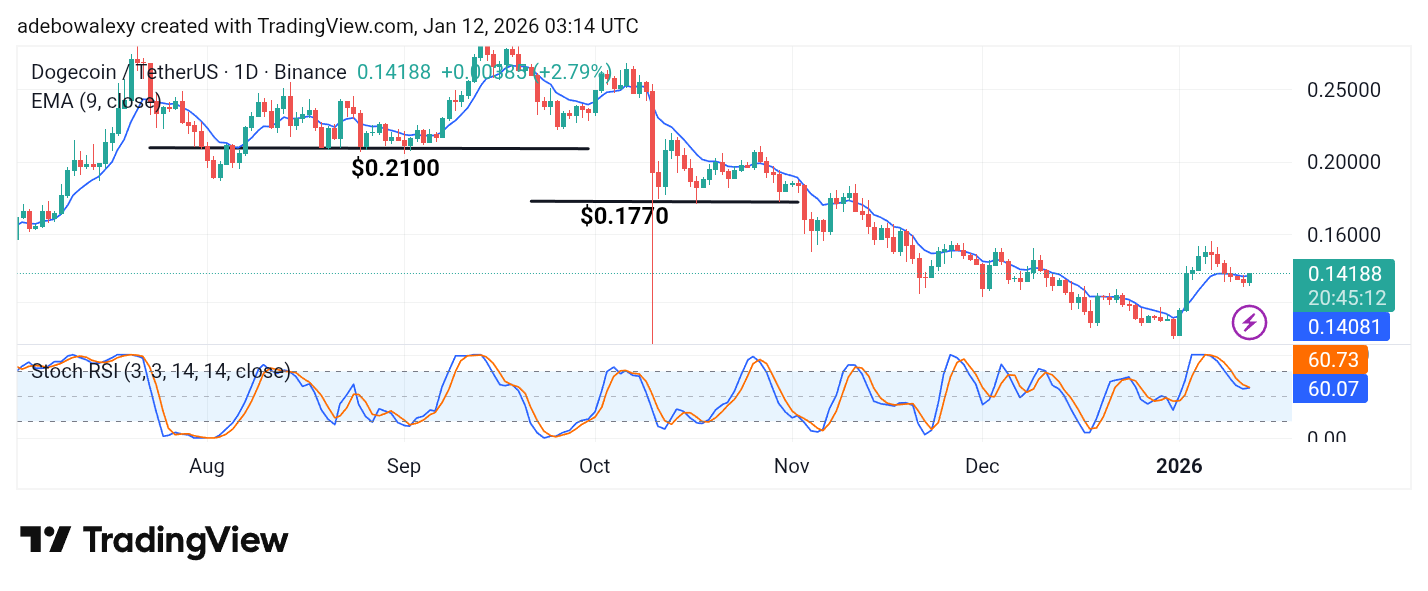
The Dogecoin market has experienced a sustained upside retracement in recent sessions. However, a modest correction recently pushed price action toward lower levels. Nevertheless, today’s trading session has introduced another shift in price direction, suggesting a potential continuation of the broader upward move.

DOGE/USDT Long-Term Trend — Bullish (Daily Chart)

Key Price Levels

Resistance: $0.1500, $0.1600, $0.1700

Support: $0.1400, $0.1300, $0.1200

Dogecoin (DOGE) Price Prediction: DOGE/USDT Sees a Shift to Continue Upside Move

The ongoing session has opened bullish, with price action pulling back to the upside. As a result, the latest price candle has pushed DOGE back above the 9-day Exponential Moving Average (EMA). The Stochastic Relative Strength Index (SRSI) lines are converging for a potential upside crossover around the 60 level, which aligns with a possible bullish recovery.

Dogecoin (DOGE) Price Prediction: DOGE/USDT Bulls Bounce Back Into Action

Over the past week, the Dogecoin market retraced to lower price levels, a move that dragged price action below the 9-day EMA curve. However, the current session has returned trading activity above the EMA, marking a notable shift from last week’s trend.

The convergence of the SRSI indicator lines further confirms this change in momentum, suggesting that price action may experience additional upward movement going forward.

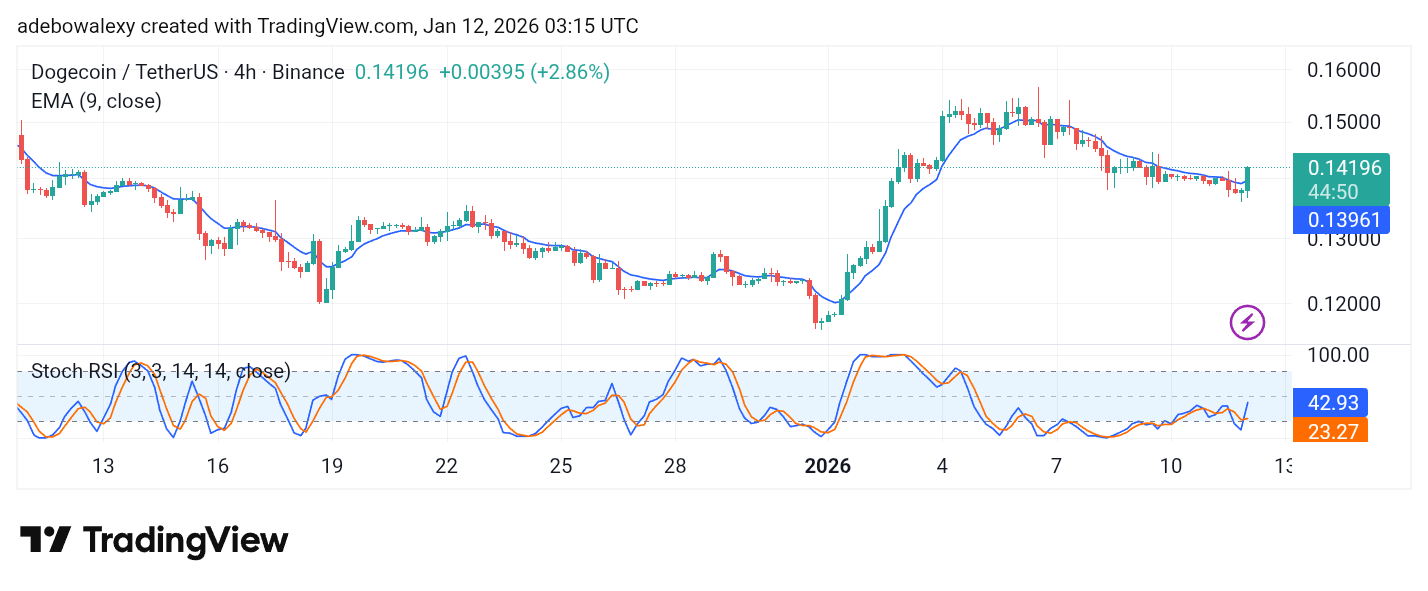
Dogecoin (DOGE) Price Prediction: DOGE/USDT Snaps Back Above the $0.1400 Support (4-Hour Chart)

The 4-hour Dogecoin chart provides further insight into recent market behavior. The latest price candle appears significantly larger than the previous one. Similar to the daily chart, trading activity is also positioned above the 9-day EMA curve.

Dogecoin (DOGE) Price Prediction: DOGE/USDT Sees a Shift to Continue Upside Move

In addition, the SRSI indicator lines have already completed an upside crossover, with the indicator now trending upward. This confirms that price action may resume its upward trajectory toward the $0.1550 level and possibly the $0.1600 price level.

Get Dogecoin (DOGE) here. Buy DOGE 

COMP/USD Cools Near $26.70 Market Zone

COMPUSD Price Analysis – Compound bulls eye $29.70 market level

Compound (COMPUSD) is trading near $26.70, down 1.00% on the 4H chart, as price action softens after a modest recovery attempt. The token remains in a mid-range consolidation zone, with momentum indicators stabilizing and volatility compressing. The market is coiling beneath key resistance, awaiting a directional trigger.

Compound Key Levels:

Support Levels: $22.20, $20.00
Resistance Levels: $45.10, $55.70

COMP/USD Cools Near $26.70 Market Zone

COMP continues to trade within a broad corrective structure, holding above the $22.22 support zone. Price has yet to reclaim the $29.70 breakdown level, which remains the nearest make-or-break resistance.

The Stochastic Oscillator is elevated, suggesting momentum is cooling but not yet reversing. ADR (14) is at 1.09, indicating moderate volatility and a coiling setup.


A breakout above $29.70 would confirm bullish continuation and open the path toward $45.10. Failure to hold above $26.00 could expose $22.22 as the next support zone. The market remains range-bound, and directional energy is building. Traders should monitor for volume expansion and candle amplitude to confirm breakout intent.

COMP/USD Cools Near $26.70 Market Zone

Market Expectation

On the 4-hour chart, COMP is trading between $26.60 and $26.70, showing signs of short-term balance. The Stochastic Oscillator is mid-range suggesting momentum is stabilizing but not yet strong.

ADR is at 0.49, confirming that volatility remains compressed. This setup often precedes expansion, with the next impulse likely defined by a break above $27.50 or a drop below $25.80.

You can purchase Lucky Block here.  Buy LBLOCK

Note: Cryptosignals.org is not a financial advisor. Do your research before investing your funds in any financial asset or presented product or event. We are not responsible for your investing result.

Stellar (XLMUSD) Price Stalls After Bounce as Bulls Defend the $0.210 Floor

Stellar Price Prediction — January 9th

Stellar (XLMUSD) is trading around $0.230 after a sharp early-January pop that topped near $0.260 and then cooled off. The broader structure still looks like a market attempting to build a base. Nevertheless, short-term momentum has faded and XLM is now back to make a statement. The market is likely to hold the higher-low region and reload, or it slides back into the lower range.


Stellar (XLMUSD) Market Key Levels

Resistance levels: $0.260, $0.350

Support levels: $0.210, $0.200

Stellar (XLMUSD) Price Stalls After Bounce as Bulls Defend the $0.210 Floor

Stellar Long-Term Trend — Bullish (Daily Chart)

On the daily chart, XLM has been grinding lower for months after the mid-year spike, but the recent rebound from the $0.210 zone is technically meaningful. Price is now trading above that floor and hovering in the $0.220–$0.240 band. This suggest the market is assessing its next directional commitment.

What is the market outlook for XLMUSD?

Daily Stochastic sits in the mid-range, which fits a market that is neutral-to-recovering, not one that has fully established a trend flip. In practical terms, the daily structure is improving but not yet clean enough to call a confirmed reversal.

If XLM continues to defend $0.210 and pushes back above the near-term pivot zone around $0.230–$0.240, buyers will likely take another run at $0.260. A clean break and hold above $0.260 would be the first structural signal that the market is graduating from bounce to reversal. This will open room for a move toward $0.350 and beyond as part of supportive crypto signals.

If XLM loses $0.210 decisively, the structure would weaken quickly, exposing $0.200 as the next downside level. That outcome would effectively negate the recent breakout attempt and put the market back into a defensive posture.

Stellar (XLMUSD) Price Stalls After Bounce as Bulls Defend the $0.210 Floor

Stellar Short-Term Trend — Bearish (4-Hour Chart)

On the 4-hour chart, XLM rallied into $0.260 and then rolled over into a sideways-to-down pullback. Price is clustering around the $0.230 pivot, and 4hour Stochastic is near oversold levels. This indicates that short-term selling pressure may be stretched.


Stellar (XLM) Market Statistics

Current Price: $0.230
Market Capitalization: $6.70B
24H Trading Volume: $180.0M

You can purchase Stellar here. Buy XLM

Top Five Trending Coins for January 11: ESPORTS, LISA, HOOT, zama, FF

The crypto market continues to reflect largely the same sentiment observed in last week’s CoinMarketCap trending markets. Across most of the list, assets are attempting to hold their ground amid strong headwinds and mixed market conditions. However, a few notable exceptions have emerged, with some tokens recording significant upside moves. Without further ado, let us delve into the analysis of each of these markets.

Yooldo (ESPORTS)

Major Bias: Indecision
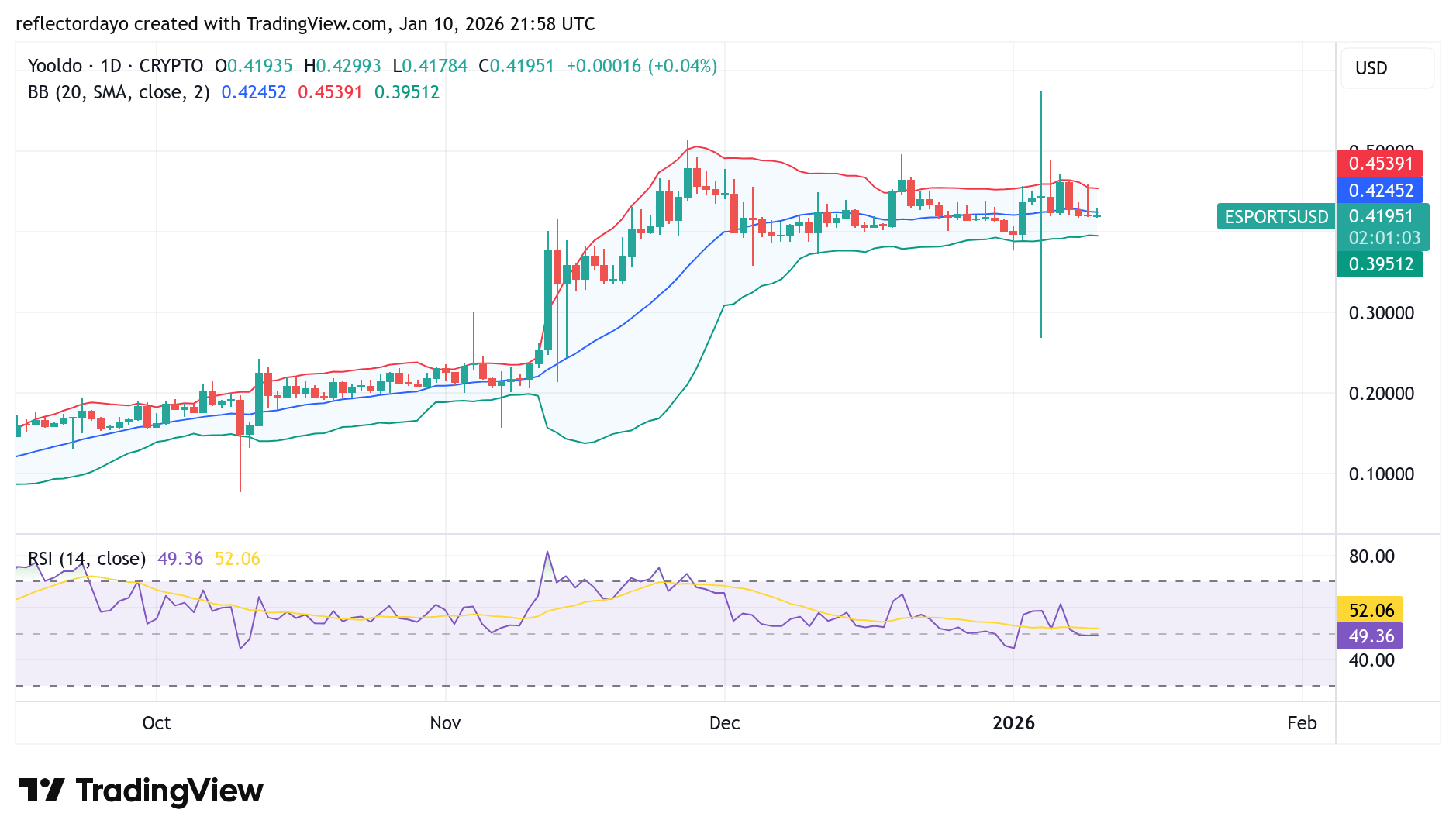
The Yooldo (ESPORTS/USD) market has maintained its top position this week, at least for the time being. Its consistent presence near the peak suggests that traders, investors, and analysts continue to show substantial interest, keeping the market in a prominent spot. Similar to a few weeks ago, the price has remained buoyant around the $0.42 level. The sustained activity of demand and supply around this area has effectively established it as a key price level. Consequently, if the market breaks out above this point, $0.42 will serve as a strong support. Conversely, if the price breaks down below this level, the area could become a formidable resistance.
Current Price: $0.42
Market Capitalization: $114.56 million
Trading Volume: $ 187.26 million

Top Five Trending Coins for January 11: ESPORTS, LISA, HOOT, zama, FF

AgentLISA (LISA)

Major Bias: Bullish
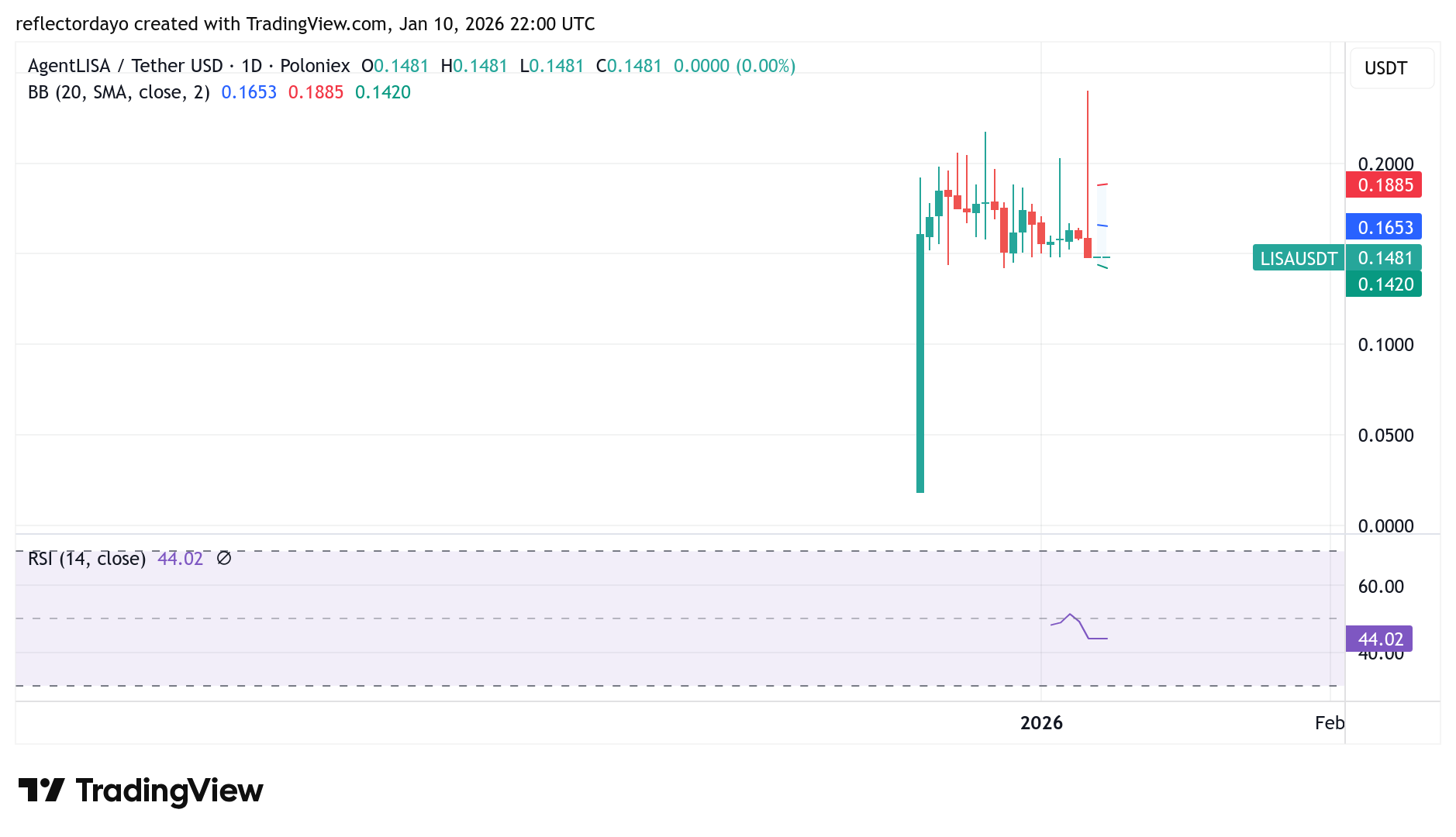
This market appears relatively new, with historical trading activity dating back to around December 19, 2025. The price initially opened near $0.01, and speculation quickly drove it upward until it encountered resistance around the $0.20 level. This resistance has accommodated bearish pressure since then, with several tests confirming its significance. On the other hand, bulls have maintained a firm stand around the $0.15 level. Despite headwinds, the market has remained strong near this support, which has proven resilient as several bearish advances were rejected in previous sessions.
Current Price: $0.1481
Market Capitalization: $35.6 million
Trading Volume: $3.2 million

Top Five Trending Coins for January 11: ESPORTS, LISA, HOOT, zama, FF

HOOT (HOOT)

Major Bias: Bullish
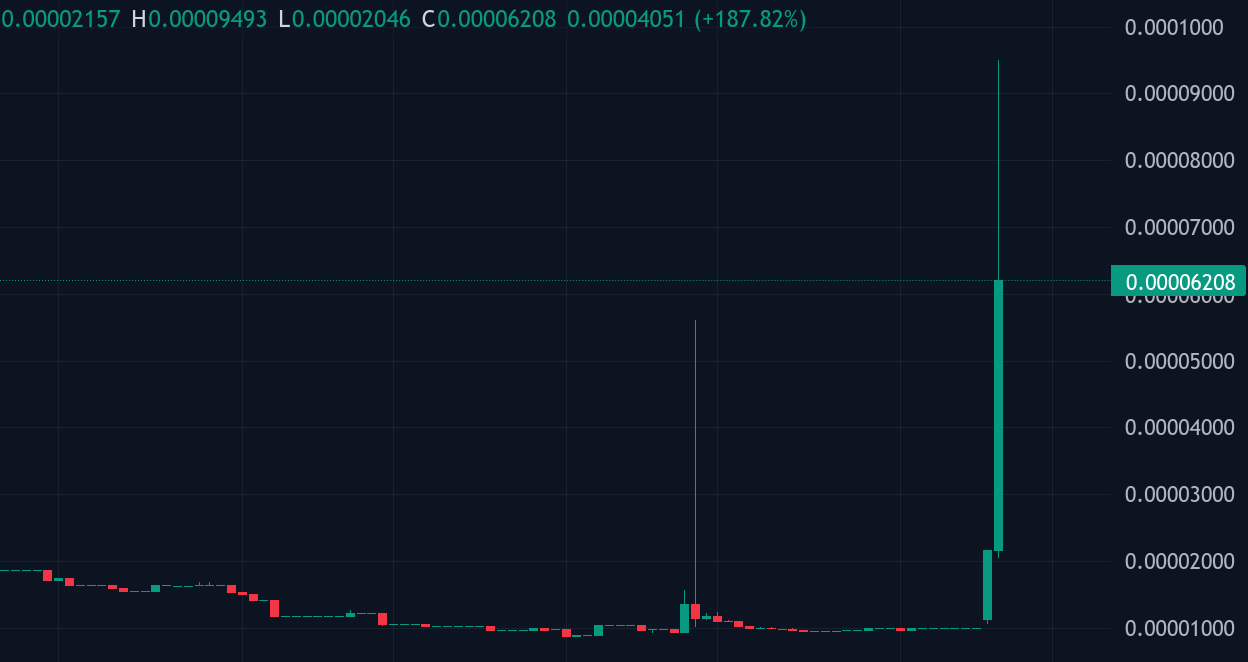
This market has shown a notable exception, as while many other assets are merely trying to hold their ground amid headwinds, this market has surged upward in a remarkable fashion. Over the past 24 to 48 hours, the price climbed from approximately $0.00001 and nearly reached $0.0001 before profit-taking pushed it back to around $0.00006. At this level, the market currently finds equilibrium between demand and supply. Investment in this market may be relatively safer if the price continues to hold around the $0.00006 level in the upcoming trading sessions.
Current Price: $0.000385
Market Capitalization: $54,934
Trading Volume: $12,551

Top Five Trending Coins for January 11: ESPORTS, LISA, HOOT, zama, FF

TOKEN zama_fhe EXECUTIon (zama)

Major Bias: Bullish
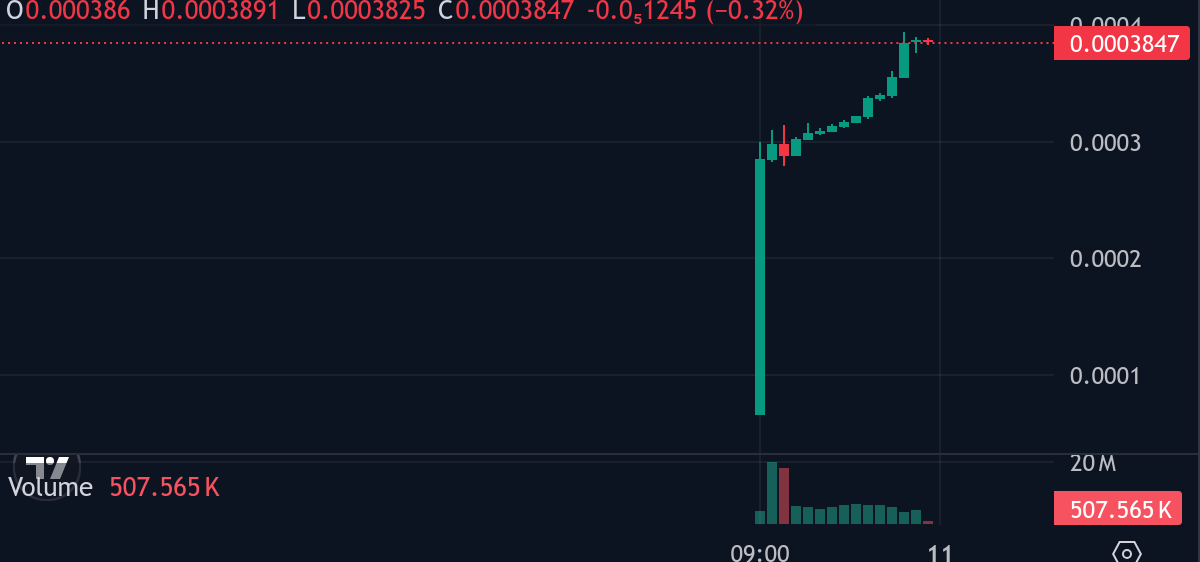
This token is a meme-style SPL token that recently appeared on the Solana network. Judging by its activity, it seems the market was launched within the last 24 to 48 hours. Since then, the token has exhibited strong bullish performance, likely fueled by speculative trading. While bullish sentiment has remained dominant, recent trading sessions indicate that momentum may be slowing, suggesting that profit-taking could be imminent.

Current Price: $0.000388
Market Capitalization: $1.7 million
Trading Volume: $

Top Five Trending Coins for January 11: ESPORTS, LISA, HOOT, zama, FF

Falcon Finance (FF)

Major Bias: Indecision
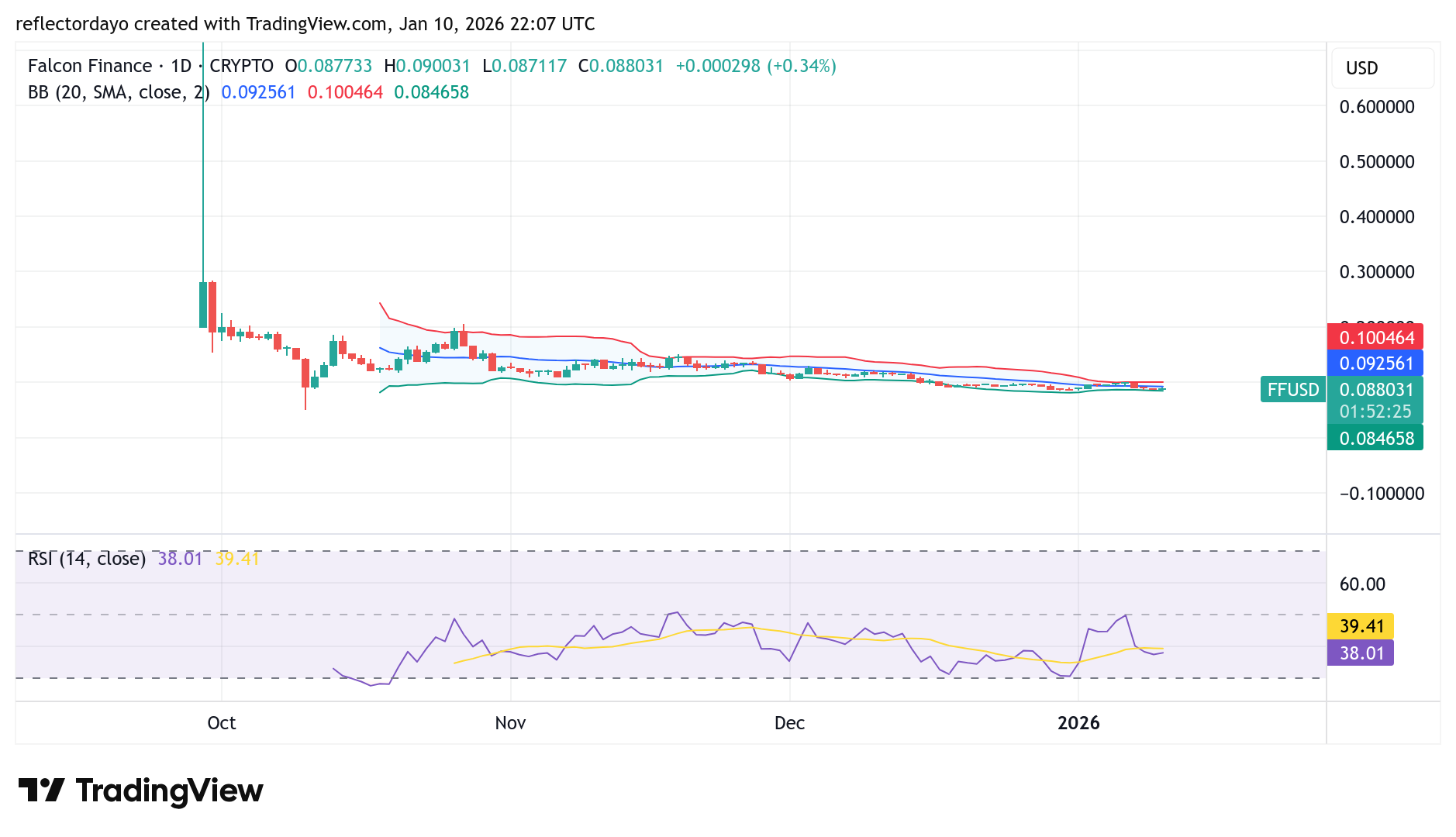
Rounding out the list is Falcon Finance, which is currently trying to hold ground around the $0.09 price level despite facing significant downward pressure. This stabilization, which has persisted for some time, comes after a pronounced bearish trend, suggesting the crypto signal may be preparing for a rebound. The support zone between $0.088 and $0.10 is helping to slow the bearish momentum. Additionally, the convergence of demand and supply in this area indicates that the selling pressure may be easing. Taken together, these factors suggest that Falcon Finance could be gearing up for a potential recovery in the near term.
Current Price: $0.088
Market Capitalization: $223 million
Trading Volume: $73.6 million

Top Five Trending Coins for January 11: ESPORTS, LISA, HOOT, zama, FF

Trade crypto coins on BYBIT

Chainlink (LINK/USDT) Stabilizes Above $13 as Sellers Lose Momentum

The market for Chainlink against Tether has recorded a modest price increase of 1.03% in the last 24 hours, rising to $13.21, as the current gain is against the coin’s overall weekly decline of 1.48% and the wider cryptocurrency market (0.21%) during the same period.

Meanwhile, this recent action has been attributed to several factors, and prominent among these factors are Chainlink’s inclusion in major financial indices linked to Nasdaq and the new strategic partnerships with institutional players. To this end, the positive signals from these factors have cumulated in a slight bounce as the current stance suggests temporary stability rather than a clear upward trend.

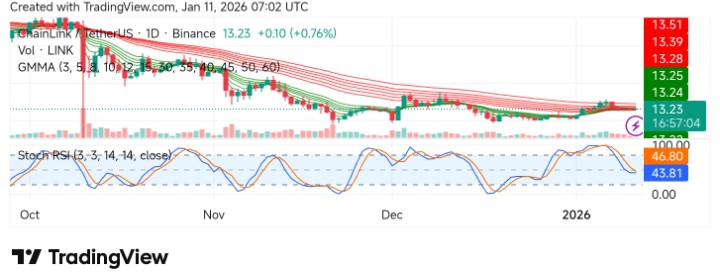
Currently, Chainlink trades at $13.23 with potential upside move as the price stabilizes within the Guppy Multiple Moving Averages (GMMA).

Chainlink (LINK/USDT) Stabilizes Above $13 as Sellers Lose Momentum
LINKUSDT-Daily Chart

Technical Indicators

Major Resistance Levels: $13.50, $14.00, and $15.00

Major Support Levels: $13.00, $12.60, and $12.00

Technical Analysis

On the daily timeframe, Chainlink against Tether has been reported to be trading above the $13.00 level and also above the lows recorded in November and December of the previous year. Meanwhile, price action within the cluster of exponential moving averages suggests the price tends to break out, but more bullish strength is needed as downward pressure weakens.

From another point of view, the Stochastic RSI appears to be showing neutral momentum, indicating the market has the potential to break either side. To this end, the price needs to break far above $13.50 for a continued upside move; otherwise, a fall below $13.00 may pull the price towards the monthly support around $11.00.

Chainlink Update

The market for Chainlink has not really made any significant changes over the week; the price has been acting under the $14-$15 resistance with strong support around the November and December low. From an Elliot point of view, a kind of 335 move is about to form as the price sees a continuous bounce from the previous support area. As it stands, it appears the token might be making progress towards the $15 level, but until this line is broken, Chainlink might need to test the previous low.

LINK/USDT Analysis: Will Momentum Improve?

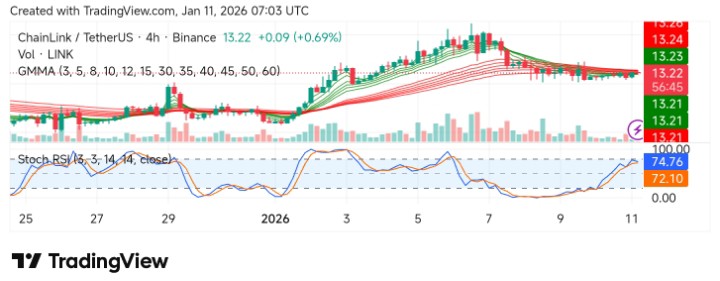
On the smaller timeframe (4H), LINK/USDT seems to be improving above $13.22, operating within the converging EMAs. As it stands, the price is stationed above the short-term set of moving lines, suggesting that buyers are defending their current trading conditions, which improve slightly.

Meanwhile, the Stochastic RSI on the 4-hour timeframe was reported to be above 70, reflecting strengthening bullish momentum in the short term. However, it was also noted that this condition could signal limited upside unless volume expanded.

To this end, without a move above $13.40, the next action may not be in favor of the bulls, as the momentum oscillator nears the overbought zone.

Chainlink (LINK/USDT) Stabilizes Above $13 as Sellers Lose Momentum
LINKUSDT-4H Chart


You can purchase crypto coins here. Buy Crypto

Arthur Hayes Links Global Events and Oil to Bitcoin’s Future Path

Arthur Hayes, one of the founders of Bitmex and CIO of Maelstrom, has shared his view on how global events, U.S. elections, and oil dynamics could influence the performance of Bitcoin based on the uncertainty in the world market.

In an essay published on the fifth day of January, Hayes explored how a U.S. intervention in Venezuela’s oil industry might impact not just political campaigns but also liquidity conditions and the cryptocurrency market.

U.S. Elections and Geopolitical Decisions

According to the analysis made by Hayes, U.S. policymakers are primarily driven by the need to ensure re-election rather than by ideological or ethical concerns. He explained that U.S. President Donald Trump, facing the upcoming midterms in November 2026 and the presidential race in 2028, is under immense pressure to maximize economic growth without triggering inflation.

Also, Hayes argued that rising gasoline prices, a major concern for American households, serve as an important economic indicator for voters. To the analyst, access to Venezuela’s oil reserves would allow officials of the U.S. government to suppress rising fuel prices while continuing to engage in aggressive monetary policies such as credit expansion.

Bitcoin’s Rise Amid Monetary Expansion

As it stands, Hayes has further explored how Bitcoin could benefit from this geopolitical and economic scenario. The analyst stated that increased money printing, with the probability of global intervention in that sequence, would likely cause Bitcoin prices to soar.

Arthur Hayes Links Global Events and Oil to Bitcoin's Future Path

To him, Bitcoin has been described as the “purest monetary abstraction.” He explained that by praising its decentralized nature and proof-of-work mining system. A structure that remains unaffected by short-term energy price fluctuations—except when rising oil prices force politicians to limit credit creation.

To this end, he emphasized that Bitcoin, unlike traditional currencies, thrives in an environment of continued monetary expansion.

Impact of Oil and Bond Markets

In the concluding part of the essay, Hayes highlights the importance of oil prices and bond market volatility in shaping future policies. However, he didn’t fail to point to the fact that key indicators, such as the 10-year U.S. Treasury yield and the MOVE Index, could provide important information on when market volatility and uncertainty may lead to policy shifts.

To this end, as central banks continue to accommodate large deficits and fiat credit expansion, Hayes suggested that Bitcoin’s price could rise steadily in parallel with these economic developments.


Inorder to place winning trades with us via Bybit, you can open an account here.

POL (Prev. MATIC) Price Prediction: POL/USDT Upward Rebound Extends

Date: January 10, 2026

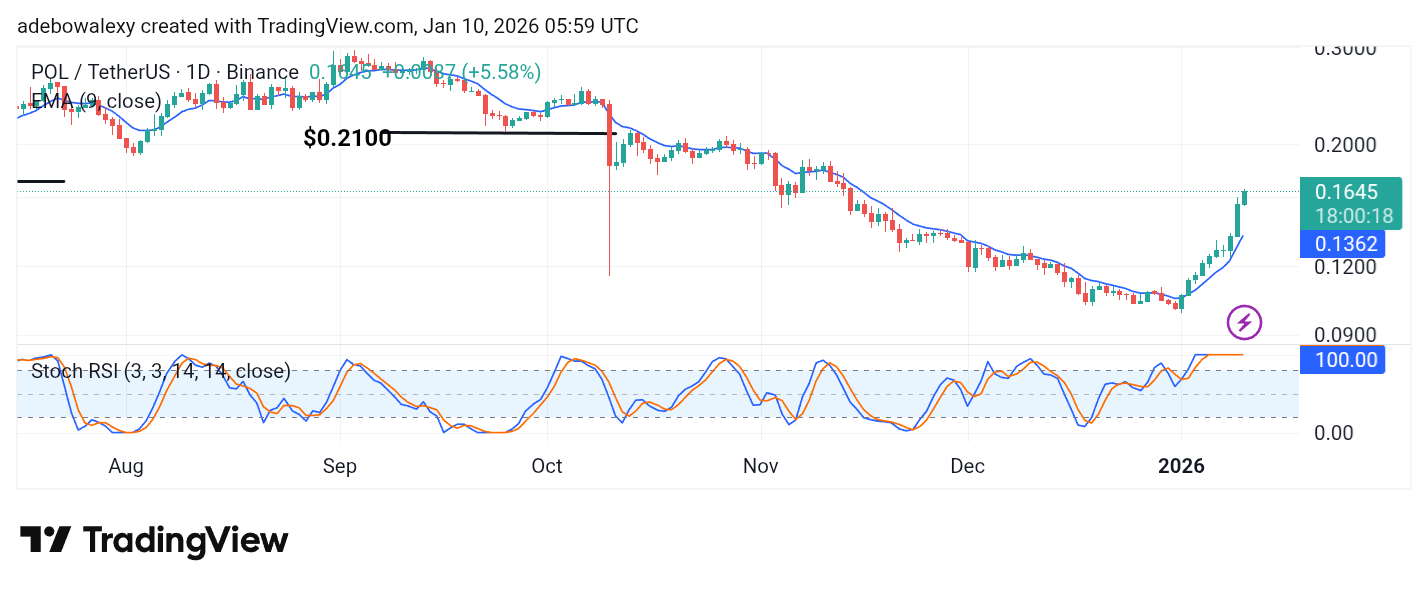
The POL (prev. MATIC) market is witnessing a sustained upward price movement. Price action in this market has remained bullish for an extended period, and further upside moves may still emerge.

POL/USDT Long-Term Trend — Bullish (Daily Chart)

Key Price Levels

Resistance: $0.1800, $0.2000, $0.2250

Support: $0.1700, $0.1500, $0.1300

POL (Prev. MATIC) Price Prediction: POL/USDT Upward Rebound Extends

Over the past nine trading sessions, price action in the POL (prev. MATIC) market has remained on a bullish trajectory. The current session has continued this trend, printing a green candle above the 9-day Exponential Moving Average (EMA). During this session, the market has breached the psychological $0.1600 price level.

The Stochastic Relative Strength Index (SRSI) lines are moving sideways near the 100 level, indicating a potential price peak at this stage.

POL/USDT Price Prediction: POL (Prev. MATIC) Bulls Seem to Possess Strong Momentum (Daily Chart)

Buying activity in the POL (prev. MATIC) market remains robust, keeping price action on a sustained upward path. This bullish bias persists despite the clearly overbought condition indicated by the SRSI.

The ongoing session, in particular, maintains a strong bullish stance above the 9-day EMA curve. As a result, the corresponding price candle has decisively broken above the $0.1600 level and appears to be targeting the next psychological resistance.

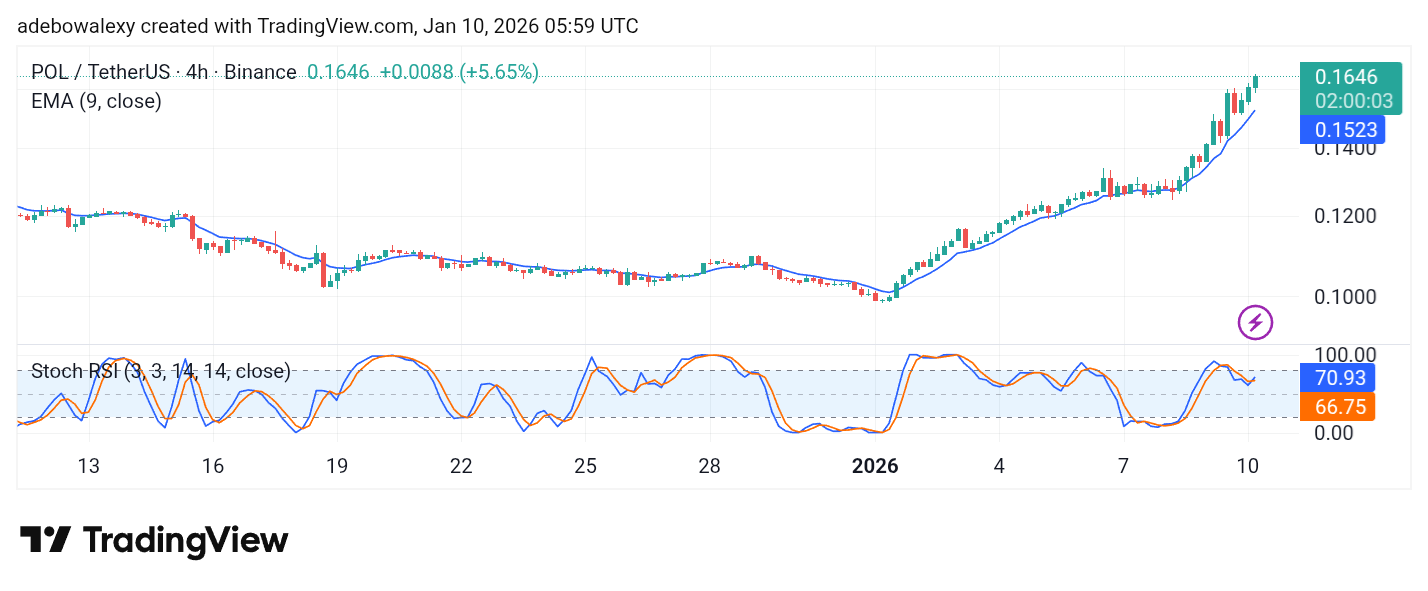
POL/USDT Price Prediction: POL (Prev. MATIC) Bulls Are Progressing (4-Hour Chart)

Buyers in the POL (prev. MATIC) market continue to apply upward pressure, pushing price action higher. On the 4-hour chart, the ongoing session remains firmly bullish and positioned above the 9-day EMA curve.

POL (Prev. MATIC) Price Prediction: POL/USDT Upward Rebound Extends

Meanwhile, the SRSI lines had previously descended below the 80 level but have now produced an upside crossover, with the indicator lines turning upward. Since the SRSI has moved back above the 70 level, the short-term outlook appears strong. Therefore, traders may target the $0.1750 and $0.1800 price levels.

Get POL (prev. MATIC) here. Buy POL