
Ethereum at 14-Month Low — Could the Next Move Catch Bears Off Guard?

KEY TAKEAWAYS:

  • ETH fell to a 14-month low near $1,745 after a 26.6% monthly decline.
  • Whales and institutions are buying, despite the ongoing price weakness.
  • A reversal setup may be forming as accumulation grows while sentiment remains bearish.


Ethereum has arrived at a price level that is starting to attract a different kind of attention. At $1,744.87 — down 26.6% over thirty days and trading at its lowest point in fourteen months — ETH is no longer simply a disappointing performer in a weak market. It is becoming a number that long-term investors, institutional allocators, and patient contrarians are quietly circling on their screens. The question is whether the bears who have driven it here have fully accounted for what tends to happen when oversold, fundamentally sound assets reach multi-year lows in a rotation cycle rather than a structural collapse.

What Two Charts Are Saying Simultaneously

The CoinGecko 30-day data captured at approximately 13:30 UTC on June 4, 2026 tells two distinct stories depending on which pair you examine.

Ethereum at 14-Month Low — Could the Next Move Catch Bears Off Guard?
ETHUSD Monthly Chart. Source: CoinGecko.

The ETH/USD chart is unambiguous in its bearishness — a near-unbroken decline from $2,400 in early May through $2,200, $2,000, $1,800, and now $1,744, with the final leg of the selloff accelerating sharply after May 29. There are no visible accumulation structures, no dip-buying clusters, no floors that held. The 30-day shape is a textbook distribution chart, and at $1,744, ETH has now surrendered every gain accumulated since the March 2025 recovery phase.

The ETH/BTC 30-day chart is where the more interesting signal lives. Opening the period near ₿0.029, the pair drifted lower in line with the USD price through most of May — until a sharp spike between May 29 and June 1 briefly pushed it back above ₿0.028. That spike, arriving precisely when Tom Lee’s $230 million ETH purchase was confirmed on-chain, represents the single most significant demand signal the pair has generated in thirty days.

Ethereum at 14-Month Low — Could the Next Move Catch Bears Off Guard?
ETHBTC Chart. Source: CoinGecko.

The fact that it faded does not erase its significance — it confirms that at these levels, at least one major market participant found the valuation compelling enough to deploy nine figures. The current reading of ₿0.02797 is holding marginally above the 30-day floor, suggesting the BTC-relative low may already be in.

The most dangerous trade in crypto is shorting an asset that serious money is visibly accumulating at multi-year lows.

The Setup the Bears May Be Underestimating

Ethereum’s fundamental position has not deteriorated with its price. Whale wallets above 100,000 ETH hit a 9-week high just days ago. Spot ETH ETF inflows have been building steadily. The protocol’s rollup scaling roadmap is operational and reducing costs in real time. A 26.6% monthly decline in an asset with this institutional footprint is not a fundamental repricing — it is a momentum vacuum, and momentum vacuums fill when the right catalyst arrives.

At $1,744, Ethereum is priced for continued despair. The ETH/BTC chart suggests at least some of the market’s smartest money has already decided that despair is the wrong position.

Where Is the Money Going Instead of Bitcoin?

KEY TAKEAWAYS

  • Capital is rotating away from Bitcoin into gold, AI stocks, and IPOs.
  • The issue appears to be momentum, not demand, according to Schwab’s Jim Ferraioli.
  • A new catalyst could reverse the trend if capital rotates back into crypto.


Charles Schwab’s Jim Ferraioli offered one of the more clinically precise diagnoses of Bitcoin’s current malaise this week — and it was not the answer most crypto holders wanted to hear. Speaking on June 4, Ferraioli argued that Bitcoin’s price struggles stem not from fading institutional demand but from losing its momentum-trade status, as capital rotates toward gold, AI stocks, and IPOs. That distinction matters enormously. Also, A demand problem is structural and slow to heal. A rotation problem is cyclical — and cycles, by definition, turn.

The Chart That Demands Explanation

The CoinGecko 30-day chart captured at approximately 13:15 UTC on June 4, 2026 is one of the more uncomfortable charts in Bitcoin’s recent history. From a 30-day opening near $80,000 in early May, Bitcoin has printed an almost unbroken decline through every support level the bulls offered — $78,000, $75,000, $72,000, $70,000, $65,000 — closing at $62,362, down 23% over the period. 

Where Is the Money Going Instead of Bitcoin?
BTCUSD Monthly Chart. Source: CoinGecko.

There are no meaningful bounce attempts visible, no accumulation bases, no signs of aggressive dip-buying at any of the levels that prior cycles treated as floors. The shape of the decline — gradual, sustained, and structurally clean — is the visual signature of capital rotation rather than panic selling. Money is not fleeing risk. It is simply finding better momentum elsewhere.

Bitcoin hasn’t lost institutional interest. It has lost institutional impatience — and in momentum markets, those two things produce identical price charts.

Where the Capital Is Actually Going

Ferraioli’s three destinations — gold, AI stocks, and IPOs — share a common characteristic that Bitcoin currently lacks: a live, immediate narrative catalyst. Gold has spent 2026 as the primary beneficiary of geopolitical uncertainty, with the US-Iran Hormuz standoff and broader macro anxiety driving safe-haven flows into an asset that institutional risk committees have approved for decades. 

Where Is the Money Going Instead of Bitcoin?
Image Via X/CoinMarketCap.

The argument for gold does not require a compliance conversation. AI stocks — Nvidia, Microsoft, Alphabet — are absorbing the Goldman Sachs-projected 24x growth in AI token demand with quarterly earnings that momentum desks can model, value, and present to investment committees with a straight face. And the IPO market, reopening after years of suppression, is offering the kind of early-stage asymmetry that previously drove capital into crypto’s higher-beta assets.

Adding to this, Bitcoin’s 2024 narrative was the ETF approval. Its 2025 narrative was the all-time high above $126,000. Its 2026 narrative — a deflationary supply story, institutional infrastructure embedding, CLARITY Act regulatory clarity — is real but not yet crystallised into the kind of immediate price catalyst that momentum capital requires. Momentum follows events, not theses.

What Brings It Back

Ferraioli’s framing is ultimately constructive for anyone willing to look past the 30-day chart. If the problem is rotation rather than rejection, the resolution comes when Bitcoin’s next catalyst arrives — and the infrastructure being built across BlackRock, Visa, Ripple, and Solana suggests that catalyst is being assembled right now, at prices that momentum traders have abandoned. The gold trade will mature. The AI stock cycle will rotate. The IPO window will close. Capital that left Bitcoin for better momentum does not disappear — it looks for the next one.

At $62,362, Bitcoin is 51% below its all-time high and sitting at the intersection of maximum pessimism and minimum momentum. Those two conditions have historically defined the most asymmetric entry points the asset has ever offered — not because the chart looks good, but precisely because it doesn’t.

Social Dominance Just Hit a 2026 High — Can Hyperliquid (HYPE) Reach Triple Digits?

Hyperliquid is doing something that almost no asset in the current market is managing — it is making new highs while the broader crypto complex makes new lows. With social dominance hitting its highest reading of 2026 and HYPE trading at $72.13 against a backdrop of Bitcoin sliding toward $68,000, the question of whether the market’s most momentum-charged asset can cross $100 has moved from speculative to genuinely plausible in a matter of weeks.

HYPEUSD Weekly Performance

The TradingView weekly charts captured at 15:43–15:44 UTC on June 3, 2026 tell a story of momentum that is almost uncomfortable in its intensity. On HYPE/USD (Binance.US), price has surged from a cycle low of $20.55 to a weekly high of $75.72 — a recovery of over 268% — before consolidating at $72.13. 

Social Dominance Just Hit a 2026 High — Can Hyperliquid (HYPE) Reach Triple Digits?
HYPEUSD Weekly Chart. Source: TradingView.

The Parabolic SAR has flipped bullish at $43.77, sitting well below current price and confirming the weekly uptrend is structurally intact. The RSI at 81.39 with the signal line at 62.64 is deeply overbought — a reading that in trending assets typically signals continuation before exhaustion rather than immediate reversal. The distance between the RSI and its signal line is itself a measure of momentum strength, and at 19 points of separation, that strength is exceptional.

HYPEBTC Performance Overview

The HYPE/BTC weekly chart (Bitfinex) is even more striking. The BTC-relative RSI reads 84.18 against a signal line of 65.21 — among the strongest weekly overbought readings of any major asset this cycle. In a week where almost every altcoin is losing ground against Bitcoin, HYPE is emphatically not one of them.

Social Dominance Just Hit a 2026 High — Can Hyperliquid (HYPE) Reach Triple Digits?
HYPEBTC Weekly Chart. Source: TradingView.

An asset making cycle highs while the market makes cycle lows is not ignoring macro. It is running on a narrative so specific that macro becomes temporarily irrelevant.

The Triple-Digit Question

Hyperliquid’s rise is fundamentally driven by its position as the dominant on-chain perpetuals exchange — a DEX capturing trading volume that once required centralised infrastructure, with fees flowing directly back to HYPE holders through its buyback mechanism. As CEX trust has eroded across multiple cycles, Hyperliquid has absorbed that migration with a product experience that serious traders have publicly preferred. 

Social dominance at a 2026 high means the narrative is widening beyond core DeFi audiences into the broader crypto conversation — historically the phase that precedes the most aggressive price discovery.

At $72.13, HYPE needs a 38% move to reach $100. With a weekly RSI above 80 and SAR firmly bullish, that distance looks shorter than the chart suggests — unless the broader market deterioration finally catches up with the one asset that has, so far, refused to follow it down.


Cardano Sinks to a Five-Year Low — Is More Pain Ahead for ADA?

Cardano is testing territory it has not visited in half a decade. ADA/USD has pushed to a daily low of $0.2071 — a level that, when placed against the cycle high of $0.6187, represents a drawdown of over 66% from the period’s peak. In a week where Bitcoin itself fell nearly 11%, ADA has not merely followed the market lower — it has underperformed it, and the charts suggest the structural case for a floor is still being built rather than confirmed.

ADAUSD Daily Chart Outlook

The TradingView daily charts captured at 14:55 UTC on June 3, 2026 show an asset that remains technically compromised on the USD pair while flashing the first tentative recovery signal on its Bitcoin cross. On ADA/USD (Coinbase), price closed at $0.2138 with the Parabolic SAR still above at $0.2374 — confirming the daily downtrend is intact. 

Cardano Sinks to a Five-Year Low — Is More Pain Ahead for ADA?
ADAUSD Daily Chart. Source: TradingView.

The MACD histogram reads −0.0063 against a signal line of −0.0093, with the MACD at −0.0030. The histogram is compressing and beginning to turn, which indicates slowing downside momentum — but the lines have not crossed, and until they do, the path of least resistance remains lower. The $0.2071 daily low is the number to watch; a weekly close below it would open a technical void with minimal historical support until the $0.15–$0.17 range.

ADABTC Chart Outlook

The ADA/BTC daily chart (Binance) offers a marginally more constructive reading. At ₿0.00000321, price is trading just above the SAR at ₿0.00000313 — the narrowest SAR gap on this pair since the March lows. 

The MACD on this pair has compressed almost exactly to zero, with the histogram and signal lines converging in a configuration that typically precedes a directional decision within days rather than weeks.

Cardano Sinks to a Five-Year Low — Is More Pain Ahead for ADA?
ADABTC Daily Chart. Source: TradingView.

A daily close above ₿0.00000325 with the SAR flipping below price would be the first credible BTC-relative buy signal ADA has generated since April.

Conclusion

The USD chart says distribution is still in progress. The BTC chart says a momentum decision is imminent. Until those two resolve in the same direction, ADA at $0.21 is a chart to monitor closely — not one to chase.

Crypto Stop Loss Guide: Why Every Trade Needs an Exit Plan

A stop loss is one of the simplest tools in trading, but it is also one of the most ignored. Many beginners enter a crypto trade with a target in mind but no clear exit if the market turns against them.

That is a problem. In crypto, hope is not a strategy.

What Is a Stop Loss?

A stop loss is a predefined exit level. It tells you where your trade idea is wrong. If price reaches that level, you close the trade and protect the rest of your capital.

The point is not to predict the market perfectly. The point is to stop a small controlled loss from becoming a large uncontrolled one.

Why Stop Losses Matter in Crypto

Crypto markets are volatile. A normal pullback in one coin can look like a full crash in another. News, liquidations and Bitcoin moves can all create sudden candles that move faster than expected.

Without a stop, you may freeze. You tell yourself it will bounce. Then the loss grows, and the decision becomes even harder.

A stop loss makes the decision before emotions take over.

telegram

Free Crypto Signals Channel

More than 50k members
Technical analysis
Up to 3 free signals weekly
Educational content
telegram Free Telegram Channel

Where Should You Place a Stop?

A good stop should be based on market structure, not on how much pain you feel comfortable taking.

For a long trade, many traders place stops below a recent swing low, support area or invalidation level. For a short trade, stops often sit above a swing high or resistance area.

The stop should be far enough away to avoid normal market noise, but close enough that the trade still offers a sensible risk-to-reward ratio.

The Biggest Stop Loss Mistake

The worst mistake is moving your stop further away after price moves against you. That turns a planned trade into an emotional bet.

If your original analysis said the trade was invalid below a certain level, that should still be true when price reaches it. Moving the stop usually means you are avoiding the loss rather than managing the trade.

Stops can sometimes be tightened to reduce risk. But widening a stop after entry is usually a red flag.

Stop Losses and Position Size

Your stop distance affects your position size. A wider stop means you need a smaller position if you want to keep the same account risk. A tighter stop allows a larger position, but it may get hit more easily.

This is why stop losses and risk management work together. You should know your entry, stop, target and position size before the trade begins.

Cryptocurrency Signals Monthly
£42
  • 2-5 Signals Daily
  • 82% Success Rate
  • Entry, Take Profit & Stop Loss
  • Amount To Risk Per Trade
  • Risk Reward Ratio
Cryptocurrency Signals Quarterly
£78
  • 2-5 Signals Daily
  • 82% Success Rate
  • Entry, Take Profit & Stop Loss
  • Amount To Risk Per Trade
  • Risk Reward Ratio
Cryptocurrency Signals Yearly
£210
  • 2-5 Signals Daily
  • 82% Success Rate
  • Entry, Take Profit & Stop Loss
  • Amount To Risk Per Trade
  • Risk Reward Ratio
arrow
arrow

Mental Stops vs Hard Stops

Some traders use mental stops, meaning they plan to close manually if price hits a level. This can work for experienced traders, but beginners often struggle to act quickly when the moment arrives.

A hard stop placed on the exchange can remove hesitation. The downside is that stop hunts and wicks can trigger it before price reverses. That is why placement matters.

The Bottom Line

A stop loss is not a sign that you expect to lose. It is a sign that you respect risk.

Every crypto trade should have an exit plan before entry. Know where you are wrong, size the position correctly and do not move the stop further away just because the market makes you uncomfortable.

Need help applying this to live market conditions? Get instant access to our VIP trading signals here.

XRP Bears Got Their Inflow Signal — Then This Happened

XRP bears finally got the exchange inflow signal they had been waiting for. On May 28, blockchain analytics data showed roughly 22.8 million XRP moving onto exchanges, marking the largest daily inflow event of 2026. Traditionally, large transfers to exchanges are viewed as a potential sell signal, as investors often move assets to trading platforms before offloading them.

At first glance, the data appeared to support a bearish narrative.

However, what happened next quickly complicated that outlook.

Massive Outflows Follow Record Inflows

According to Santiment’s exchange flow balance data, the large inflow was followed almost immediately by an even larger outflow. Between May 29 and May 30, approximately 25.24 million XRP left exchanges, effectively reversing the previous day’s accumulation of exchange supply.

XRP Bears Got Their Inflow Signal — Then This Happened
XRP Ledger exchange flow. Source: Santiment.

The shift suggests that market participants were not rushing to sell despite the initial inflow spike. Instead, the subsequent withdrawal of tokens indicates that investors may have taken advantage of lower prices to move XRP into self-custody or long-term storage.

This reversal is significant because exchange balances often provide clues about market sentiment. Rising balances can signal increased selling pressure, while declining balances frequently point to accumulation behavior and reduced immediate supply available for sale.

Price Still Under Pressure

Despite the encouraging outflow data, XRP’s price has remained under pressure.

Over the past 24 hours, XRP fell roughly 5%, sliding toward the $1.24 level as broader weakness across the cryptocurrency market weighed on sentiment. The decline erased recent gains and pushed the asset closer to key support zones that traders are now monitoring closely.

XRP Bears Got Their Inflow Signal — Then This Happened
XRPUSD Daily Chart. Source: TradingView.

The price reaction highlights an important reality in crypto markets: on-chain accumulation does not always translate into immediate upside. Macroeconomic uncertainty, Bitcoin volatility, and risk-off market conditions can temporarily overshadow positive network metrics.

What Traders Are Watching Next

The divergence between exchange flow data and price action has created an interesting setup for XRP.

Bears initially appeared to gain confirmation when the largest inflow day of the year hit exchanges. Yet the rapid reversal through even larger outflows suggests that significant holders may not be preparing for a sustained selloff after all.

If exchange balances continue to decline while selling pressure eases, XRP could find a stronger foundation for recovery. For now, traders are closely watching whether the recent outflow trend continues—or whether another wave of exchange deposits gives bears the upper hand once again.

Bitcoin Sentiment Flashes a Rare Signal — What Happens Next?

The crowd is the most bullish it has been all year — and Bitcoin just had its worst week in months. That contradiction is not an error. It is, historically, one of the most reliable setups in crypto. 

Santiment data reported by CoinMarketCap on June 1, 2026 shows Bitcoin social sentiment has hit its most bullish ratio of 2026 at 2.23 to 1 — even as spot ETF outflows have topped $2.97 billion since May 15. 

Price down. Sentiment up. Institutions selling. Retail convinced. The last time this configuration appeared at scale, the recovery that followed was not subtle.

The Divergence That Contrarians Live For

The CoinGecko 7-day chart captured at approximately 14:15 UTC on June 2, 2026 is one of the cleaner illustrations of sustained institutional distribution the market has seen this cycle. 

Bitcoin Sentiment Flashes a Rare Signal — What Happens Next?
BTCUSD Weekly Chart. Source: CoinGecko.

Bitcoin opened the period near $77,000 on May 27 and has not looked back once — a grinding, uninterrupted decline through $76,000, $74,000, $72,000, and now $70,000, closing at $68,792 and down 10.8% on the week. 

There were no sharp flush-and-recover sequences, no dramatic wicks suggesting panic buying at support. Just a steady, directional step-down that has the structure of deliberate de-risking rather than retail fear. 

The $2.97 billion in spot ETF outflows since May 15 confirms who has been doing the selling — and it is not the crowd that is currently 2.23 to 1 bullish on social media.

That gap between what retail sentiment is saying and what institutional flow data is doing is the tension the entire setup hinges on.

When the crowd is most convinced the bottom is in, and institutions are still walking out the door — one of them is about to be proven spectacularly wrong.

Why the Sentiment Signal Has Teeth

Extreme bullish sentiment during a price decline is not always a contrarian buy signal — context determines everything. But the specific configuration here carries historical weight. 

A 2.23 to 1 bullish-to-bearish ratio on Santiment’s social data, reached while price is making new short-term lows rather than new highs, suggests the crowd is buying the narrative of a recovery rather than chasing momentum. 

Bitcoin Sentiment Flashes a Rare Signal — What Happens Next?
Image Via X/CoinMarketCap

That is the psychologically cleaner version of the setup — believers accumulating conviction at lower prices, not tourists arriving late to a party. 

When sentiment of this kind precedes an actual demand catalyst, the resulting move tends to be both sharp and sustained because the positioning is already in place before the trigger fires.

The risk is equally clear. $2.97 billion in ETF outflows since May 15 represents real Bitcoin hitting the market from the largest and most institutionally connected vehicles in the asset class. 

Until those outflows reverse — or at minimum stabilise — the structural supply overhang remains. Retail sentiment cannot absorb institutional distribution indefinitely.

What Resolves the Contradiction

Three variables will determine which side of this trade ages better. First, the US-Iran MoU outcome — a signed agreement removes the macro risk-off pressure that has been the most credible explanation for the ETF outflow pattern. 

Second, the CLARITY Act legislative trajectory — any progress toward regulatory certainty historically triggers institutional re-engagement with crypto allocations. 

Third, and most immediately, whether this week’s ETF flow data shows a deceleration in outflows — a single week of neutral or positive flows into IBIT and its peers would signal that the institutional selling pressure is exhausting itself.

Bitcoin at $68,792, with social sentiment at its most bullish level of the year and over $2.97 billion in institutional outflows since mid-May, is a market at maximum internal contradiction. 

Contradictions in markets do not persist indefinitely. They resolve — usually faster and more violently than anyone expects, and almost always in the direction that the majority is least prepared for.


Crypto Take Profit Strategy: How to Lock In Gains Without Guessing

Getting into a winning crypto trade feels great. The hard part is knowing when to take profit.

Many traders watch a position go green, wait for more, then see the market reverse and give the gains back. Others sell too early and watch the coin keep running. There is no perfect exit, but there are better ways to manage the decision.

Why Take Profit Rules Matter

Crypto can move sharply in both directions. If you do not have a profit-taking plan, your emotions will usually decide for you.

Greed tells you to hold forever. Fear tells you to close too early. A take profit strategy gives you a framework before the pressure arrives.

Use Targets Before You Enter

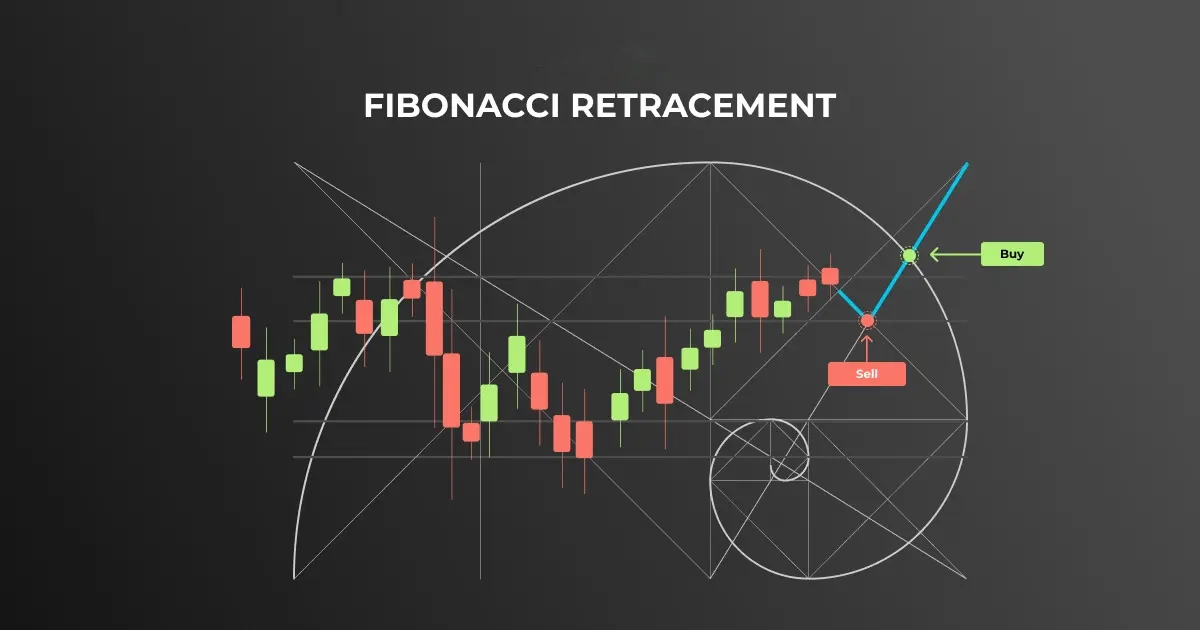
A take profit level should be planned before the trade begins. It might be based on resistance, previous highs, Fibonacci levels, measured moves, or a fixed risk-to-reward ratio.

For example, if your stop is 3% away and your target is 6% away, the trade offers a 1:2 risk-to-reward ratio. That means you are aiming to make twice what you are risking.

Planning the target first helps you avoid trades where the upside is too small compared with the downside.

telegram

Free Crypto Signals Channel

More than 50k members
Technical analysis
Up to 3 free signals weekly
Educational content
telegram Free Telegram Channel

Scaling Out of Positions

One popular method is scaling out. Instead of closing the full position at one target, you take partial profit at the first target and leave the rest running.

For example:

Take 50% profit at TP1 Move stop to breakeven Let the remaining 50% aim for TP2

This approach gives you a balance between locking in gains and staying exposed if the trend continues.

Do Not Turn Winners Into Losers

One of the most frustrating mistakes is letting a profitable trade become a losing trade. This often happens when a trader refuses to take profit and refuses to adjust risk.

Once price reaches a meaningful target, consider reducing risk. That might mean taking partial profit, moving the stop closer, or setting a trailing stop.

The goal is not to squeeze every last dollar out of the move. The goal is to trade consistently.

Cryptocurrency Signals Monthly
£42
  • 2-5 Signals Daily
  • 82% Success Rate
  • Entry, Take Profit & Stop Loss
  • Amount To Risk Per Trade
  • Risk Reward Ratio
Cryptocurrency Signals Quarterly
£78
  • 2-5 Signals Daily
  • 82% Success Rate
  • Entry, Take Profit & Stop Loss
  • Amount To Risk Per Trade
  • Risk Reward Ratio
Cryptocurrency Signals Yearly
£210
  • 2-5 Signals Daily
  • 82% Success Rate
  • Entry, Take Profit & Stop Loss
  • Amount To Risk Per Trade
  • Risk Reward Ratio
arrow
arrow

Understand Market Conditions

Take profit strategy depends on the market. In a strong trending market, holding a runner can work well. In a choppy market, price often taps a target then reverses quickly.

That is why context matters. If Bitcoin is ranging and liquidity is thin, quicker profit-taking may make sense. If the whole market is breaking out with volume, you may give winners more room.

Common Take Profit Mistakes

The first mistake is having no target at all. The second is constantly changing your target because the trade feels exciting. The third is taking profit too early on every trade, which can ruin your risk-to-reward ratio.

If your losers are full size but your winners are always tiny, the maths becomes difficult.

The Bottom Line

A good crypto take profit strategy helps you make decisions before emotions take over.

Set targets before entry. Consider scaling out. Reduce risk once the trade moves in your favour. Most importantly, remember that consistent profit-taking beats trying to catch the exact top every time.

Need help applying this to live market conditions? Get instant access to our VIP trading signals here.

Crypto Risk Management: How to Protect Your Capital

Crypto moves fast. That is what makes it exciting, but it is also what makes it dangerous. A coin can rally 20% in a day, then give it all back before you have even had time to react.

That is why risk management matters. It is not the boring part of trading. It is the part that keeps you alive long enough to benefit from the good trades.

Why Risk Management Comes First

Most beginners focus on entries. They want to know what to buy, when to buy it and how quickly it can go up. But professional traders usually ask a different question first: what happens if this trade is wrong?

Every trade can fail. Even a strong setup with good analysis can break down because of bad news, low liquidity, Bitcoin volatility or simple market noise. Risk management accepts that reality before the trade begins.

The goal is not to avoid every loss. That is impossible. The goal is to make sure no single loss can damage your account badly enough to knock you out of the game.

Use a Fixed Risk Per Trade

One of the simplest rules is to risk a fixed percentage of your account on each trade. Many traders use 0.5% to 2% per trade depending on their experience and strategy.

For example, if your account is worth $1,000 and you risk 1% per trade, your maximum planned loss is $10. That does not mean your position size is $10. It means the distance between your entry and stop loss should equal $10 of risk.

This is where beginners often get confused. Position size and risk are not the same thing. You might buy $200 worth of crypto but only risk $10 if your stop loss is placed correctly.

telegram

Free Crypto Signals Channel

More than 50k members
Technical analysis
Up to 3 free signals weekly
Educational content
telegram Free Telegram Channel

Always Know Your Stop Before Entering

A stop loss is the price where your trade idea is no longer valid. It should not be random, and it should not be moved further away just because the trade is going against you.

Good stop placement usually sits beyond a clear invalidation point: below support for a long trade, above resistance for a short trade, or outside the structure that made the setup attractive in the first place.

If you cannot identify where the trade is wrong, you probably should not enter yet.

Avoid Overexposure

Crypto traders often think they are diversified because they own several coins. But if all of those coins move with Bitcoin, the portfolio may still behave like one big Bitcoin trade.

Overexposure happens when too many positions rely on the same market condition. If you are long BTC, ETH, SOL, XRP and DOGE at the same time, a sudden Bitcoin sell-off can hit everything together.

A practical rule is to limit your total open risk. If you risk 1% per trade and have five similar long trades open, you may effectively be risking much more than you realise.

Respect Daily Loss Limits

A daily loss limit stops one bad session from turning into emotional revenge trading. For example, some traders stop trading for the day after losing 2% or after taking two or three losing trades in a row.

This protects you from the most dangerous state in trading: trying to win it all back immediately.

When emotions are high, decision quality drops. A daily stop gives you space to reset.

Cryptocurrency Signals Monthly
£42
  • 2-5 Signals Daily
  • 82% Success Rate
  • Entry, Take Profit & Stop Loss
  • Amount To Risk Per Trade
  • Risk Reward Ratio
Cryptocurrency Signals Quarterly
£78
  • 2-5 Signals Daily
  • 82% Success Rate
  • Entry, Take Profit & Stop Loss
  • Amount To Risk Per Trade
  • Risk Reward Ratio
Cryptocurrency Signals Yearly
£210
  • 2-5 Signals Daily
  • 82% Success Rate
  • Entry, Take Profit & Stop Loss
  • Amount To Risk Per Trade
  • Risk Reward Ratio
arrow
arrow

The Bottom Line

Crypto risk management is about staying in control. Use fixed risk per trade. Place your stop before entering. Avoid stacking the same exposure. Respect daily loss limits.

You do not need to win every trade to grow. You need to keep losses small enough that your winners can actually matter.

Need help applying this to live market conditions? Get instant access to our VIP trading signals here.