
The Hidden Risk of Tokenized Stocks in DeFi

  • The Edel exploit exposes hidden risks in tokenized-stock lending.
  • Tokenized assets need stronger security as DeFi evolves.
  • The future of DeFi depends on safer collateral management.

The recent exploit of Edel Finance has put tokenized stocks under an uncomfortable spotlight. An attacker manipulated the protocol’s wrapped Google stock collateral, leaving hundreds of thousands of dollars in bad debt despite the use of trusted pricing infrastructure. While the protocol has pledged to make users whole, the incident raises a much bigger question: Are tokenized stocks introducing new security risks that DeFi has yet to fully solve?

As tokenized assets continue to gain momentum, this exploit serves as an early warning that innovation must be matched with stronger safeguards.

How attacks like this happen

Unlike traditional crypto lending, tokenized stocks rely on multiple layers of infrastructure, including wrapped assets, collateral valuation models, and exchange-rate mechanisms. If a protocol incorrectly calculates the value of these assets, attackers can exploit the discrepancy.

Bad actors often combine flash loans with rapid borrowing and repayment cycles to inflate collateral values temporarily. Once the protocol recognizes the manipulated collateral as more valuable than it actually is, the attacker can borrow assets far beyond their legitimate limit before the system corrects itself.

These attacks typically unfold within a single blockchain transaction, making them extremely difficult to stop in real time.

Image depicting blockchain and cybersecurity.
Image depicting blockchain and cybersecurity. Source: create.vista.com / cryptosignals

Why tokenized stocks face unique risks

Tokenized stocks are designed to bring traditional financial assets onto the blockchain, unlocking around-the-clock trading, global accessibility, and integration with DeFi applications. However, every additional layer—whether wrapping, tokenization, or collateral management—creates another potential point of failure.

The Edel incident demonstrates that even if an external price feed remains accurate, weaknesses in a protocol’s internal valuation logic can still expose users and liquidity providers to significant losses.

As more tokenized assets enter DeFi, protocols must ensure that every component of the valuation process is as secure as the underlying asset itself.

How DeFi is likely to evolve

The good news is that incidents like Edel often accelerate security improvements across the industry.

Future DeFi lending protocols are expected to adopt stronger collateral verification, more resilient exchange-rate models, tighter borrowing limits for newly listed assets, and automated circuit breakers that pause abnormal activity before losses escalate. Developers are also likely to introduce multiple layers of validation instead of relying on a single pricing mechanism.

These improvements will make it increasingly difficult for attackers to exploit valuation gaps while helping protocols respond more quickly to suspicious activity.
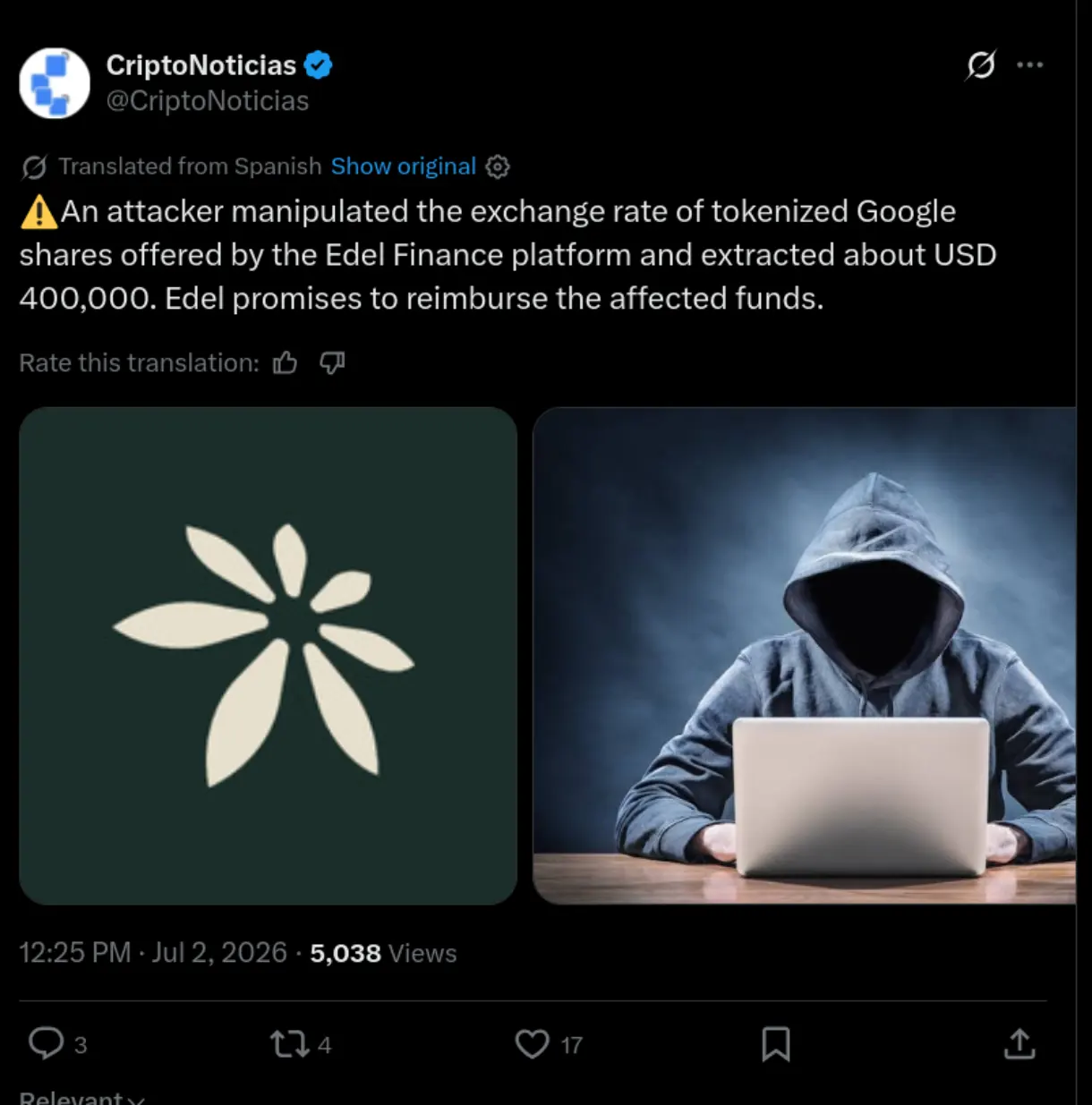
The Edel finance exploit is reflected on an X post.
The Edel finance exploit is reflected on an X post. Source: X / cryptosignals

Final thoughts

The Edel exploit should not be viewed as a failure of tokenized stocks themselves but as an important lesson for the next generation of DeFi infrastructure. As tokenized assets become more common, security must evolve alongside innovation.

For investors, the takeaway is simple: attractive yields should never replace careful risk assessment. Understanding how a protocol values and secures its collateral may prove just as important as choosing which asset to invest in.

McAfee Warns of Silent Swap Crypto Malware Exploiting Human Mistakes

You may spend hundreds of dollars securing your crypto with a hardware wallet, two-factor authentication, and strong passwords. Yet one careless copy-and-paste could still send your Bitcoin to a scammer.

That is the alarming reality highlighted by cybersecurity researchers at McAfee, who recently uncovered Silent Swap—a sophisticated malware campaign that silently replaces copied cryptocurrency wallet addresses with those controlled by attackers.

Rather than breaking blockchain security or stealing private keys, the malware exploits a simple moment of trust between copying and pasting, potentially diverting funds without the victim realizing anything has gone wrong until it is too late.

How the Silent Swap Scam Works

Contrary to what many people assume, Silent Swap doesn’t hack the blockchain or crack wallet encryption. Instead, it exploits one of the weakest links in any security system: human trust.

Once installed—typically through unofficial or cracked software disguised as legitimate applications—the malware silently injects a fake browser extension into Chromium-based browsers such as Chrome, Edge, Brave, and Opera. From there, it patiently waits in the background for the right opportunity.

That opportunity comes when a user copies a cryptocurrency wallet address to send funds.

A list of threats to be aware of while using the web.
A list of threats to be aware of while using the web. Source: create.vista.com / cryptosignals

Instead of stealing private keys or breaking into a crypto wallet, Silent Swap monitors the clipboard for copied wallet addresses. The moment it detects one, it quietly replaces the copied address with another controlled by the attacker. To the victim, everything appears normal. The pasted address looks legitimate, and unless it is carefully checked before the transaction is confirmed, the funds are sent directly to the scammer’s wallet.

The blockchain itself isn’t compromised—it simply processes the transaction exactly as instructed. Because blockchain transactions are irreversible, recovering the funds after they have been sent is extremely difficult, if not impossible.

This is what makes Silent Swap particularly dangerous. It doesn’t rely on defeating advanced cryptography; it relies on something much simpler: the assumption that what you paste is exactly what you copied. By exploiting this brief moment of trust, attackers can steal digital assets without ever gaining access to a victim’s wallet or private keys.

How to Protect Yourself from Clipboard-Hijacking Malware

As cybercriminals continue to devise more sophisticated ways to target crypto users, vigilance remains one of the most effective defenses. While security tools such as hardware wallets and two-factor authentication are essential, they cannot protect against every form of deception.

To reduce the risk of falling victim to attacks like Silent Swap, users should adopt the following best practices:

  • Download software only from official sources. Avoid cracked software, unofficial installers, and suspicious downloads, as these are common vehicles for malware.
  • Review your browser extensions regularly. Remove extensions you no longer use and install new ones only from trusted developers.
  • Always verify wallet addresses before sending funds. Take a few extra seconds to compare the first and last several characters of the pasted address with the intended destination.
  • Keep your operating system, browser, and antivirus software up to date. Security updates often patch vulnerabilities that malware exploits.
  • Use reputable security software capable of detecting malicious applications and browser extensions before they can cause harm.
  • Be cautious of unexpected prompts to install software or browser extensions, especially when downloading free tools from unofficial websites.

Ultimately, attacks like Silent Swap serve as a reminder that cybercriminals are increasingly targeting users rather than blockchains. Cryptocurrency networks remain secure by design, but a single overlooked detail can still lead to irreversible losses.

In an ecosystem where transactions cannot be reversed, taking a few extra moments to verify every transaction may be the simplest—and most valuable—security habit a crypto investor can develop.

Ethereum (ETH) Rebounds from Strong Support

Summary:

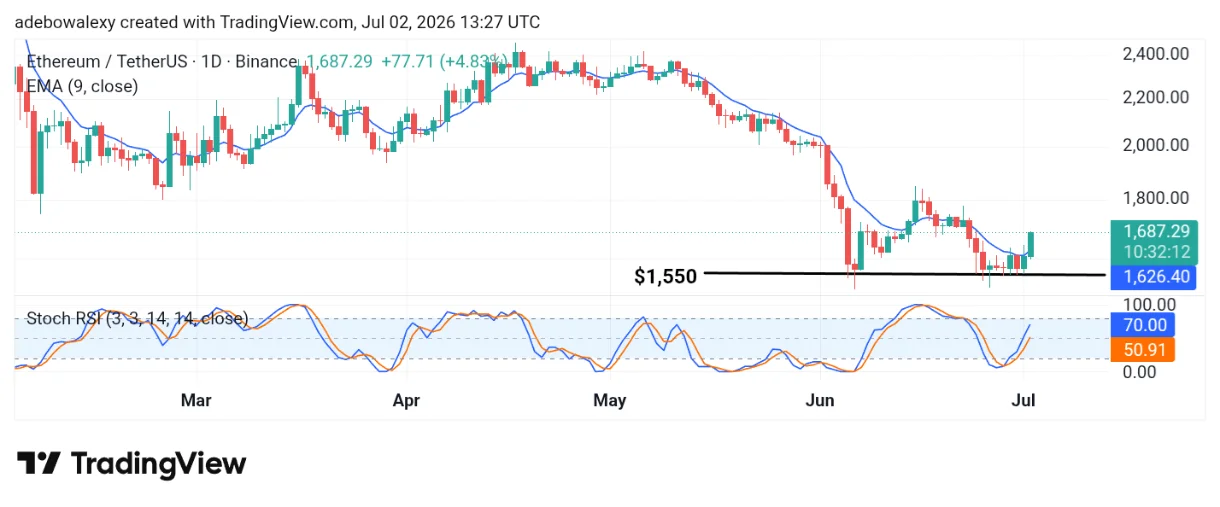
  • ETH is rebounding from the $1,550 support with a bullish double-bottom pattern.
  • Price has moved above the 9-day EMA, signaling strengthening momentum.
  • $1,800 and $2,000 are the next key upside targets.

The broader cryptocurrency market is showing signs of recovery after recent bearish pressure. As a result, Ethereum has begun to rebound from a strong support level. In addition, market indicators suggest that ETH could record a significant upward move this month as bullish sentiment continues to strengthen.

ETH on the Daily Price Chart

Ethereum has been rebounding from a strong support zone around $1,550. Price action appears to have formed a double-bottom pattern, a bullish reversal formation, before staging its current recovery.

Ethereum (ETH) Rebounds
Ethereum (ETH) Rebounds from Strong Support / Cryptosignals : TradingView

The ongoing session has pushed the market above the 9-day Exponential Moving Average (EMA), strengthening the bullish outlook. Meanwhile, the Stochastic Relative Strength Index (SRSI) is climbing steadily toward the overbought region. The lead line has reached the 70 level, and the indicator’s movement remains consistent with the recent price recovery.

Ethereum Bulls Remain Optimistic

Bullish momentum in the ETH market continues to strengthen. Over the past few sessions, buying pressure has gradually increased, and a strong bullish candle supports the current session. by a strong bullish candle.

Ethereum (ETH) Rebounds from Strong Support
Ethereum (ETH) Rebounds from Strong Support. Source / Cryptosignals : YouTube

Furthermore, the fact that ETH is now trading above the 9-day EMA reinforces bullish conviction. The SRSI continues to trend higher toward the overbought region, suggesting that buyers remain firmly in control of the market.

Possible Trend for Ethereum

Based on the current technical outlook, Ethereum appears well-positioned for further gains. The recently formed double-bottom pattern typically signals the potential for a sustained bullish reversal.

With price now holding above the 9-day EMA, buying interest could continue to increase. In the short term, ETH may target the $1,800 level, with the $2,000 price level emerging as the next major upside objective if bullish momentum persists.

Disclaimer:
Note: Cryptosignals.org is not a financial advisor. Do your research before investing your funds in any financial asset, product, or event. We are not responsible for your results.

The Wall Between Crypto and Custody Just Crumbled: Why Institutional Investors Are Winning

For years, big institutional players looking at the crypto markets faced a high-stakes dilemma: how do you chase high-volume yields on a massive exchange without leaving millions of dollars exposed to exchange counterparty risk? The memories of historic exchange collapses left many traditional funds parked firmly on the sidelines. But a new infrastructure partnership has quietly solved this exact problem.

By integrating Anchorage Digital’s “Atlas” off-exchange settlement platform directly with Binance, a major structural shift has occurred. The wall separating traditional institutional safety from crypto liquidity has officially crumbled.

The Mechanics of the Triparty Shift

At its core, this integration introduces a classic financial blueprint to the digital asset space: the triparty collateral arrangement. Historically, trading crypto required “pre-funding”—meaning an institutional trader had to physically move their cash or crypto onto an exchange’s internal ledger before making a move. If the exchange went under or froze withdrawals, that capital was trapped.

Under the new Atlas-Binance framework, custody and execution are completely decoupled. Eligible institutional clients can now execute high-volume trades on Binance while their underlying collateral remains safely locked inside Anchorage Digital—a federally chartered US crypto bank.

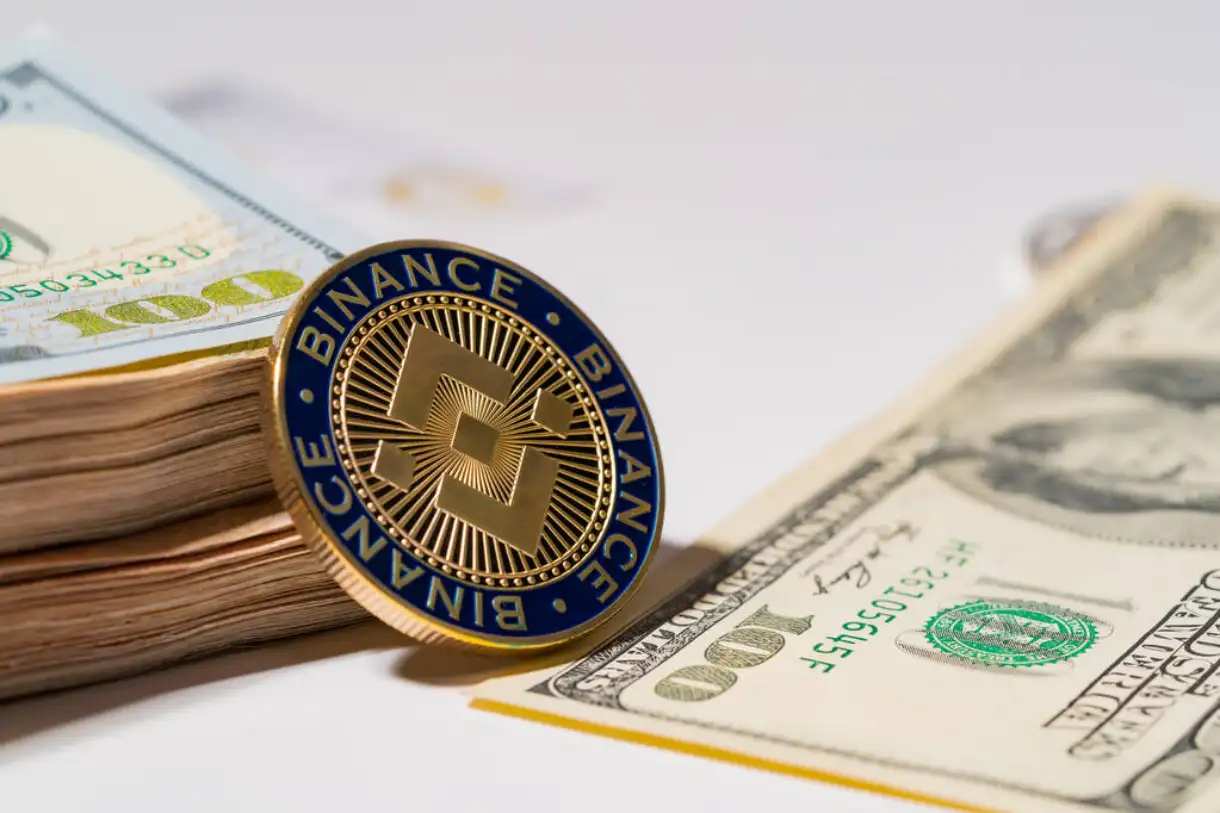
US dollar and Binance coin.
US dollar and Binance coin. Source: create.vista.com / cryptosignals

Atlas functions as an all-in-one custody infrastructure. It dynamically handles the collateral management, lending, and settlement behind the scenes. Binance sees the collateral is backed by a trusted, regulated third party, allowing the trade execution and settlement to happen seamlessly without the assets ever having to sit on the exchange’s balance sheet. It is a massive leap forward for capital efficiency, allowing firms to deploy capital rapidly without sacrificing their security protocols.

What This Means for Investors

For institutional investors, asset managers, and corporate treasuries, the implications of this shift are profound and threefold:

  • Mitigation of Systemic Risk: The “too big to fail” or “too risky to trust” hurdle for crypto exchanges is largely neutralized. Investors no longer have to trust the exchange’s internal solvency; they only need to trust a federally regulated custodian.
  • Unlocked Capital Efficiency: Because Atlas unifies settlement and lending from a single custody-based hub, large trading firms can optimize their margins. Capital that was previously locked up as static pre-funded collateral can now be utilized more dynamically.
  • The Blueprint for Mass Adoption: This sets a regulatory and operational benchmark. If this model succeeds, expect a domino effect where other major exchanges are forced to integrate with independent custodians to compete for institutional dollars.

The smart money should watch two key indicators moving forward: the speed at which major market makers adopt this Atlas-Binance pipeline, and whether Anchorage expands this network to include other global exchanges. For investors who have been waiting for the crypto market structure to mirror the safety nets of Wall Street, the infrastructure has finally arrived.

Note:
Cryptosignals.org is not a financial advisor. Do your research before investing your funds in any financial asset, product, or event. We are not responsible for your results.

Canton (CC) Bounces Off a Long-Standing Support as Its Network Gains Attention

Summary:

  • Canton rebounded on positive network developments.
  •  Bullish momentum is building below the 9-day EMA.
  • $0.1800 is the next key upside target.

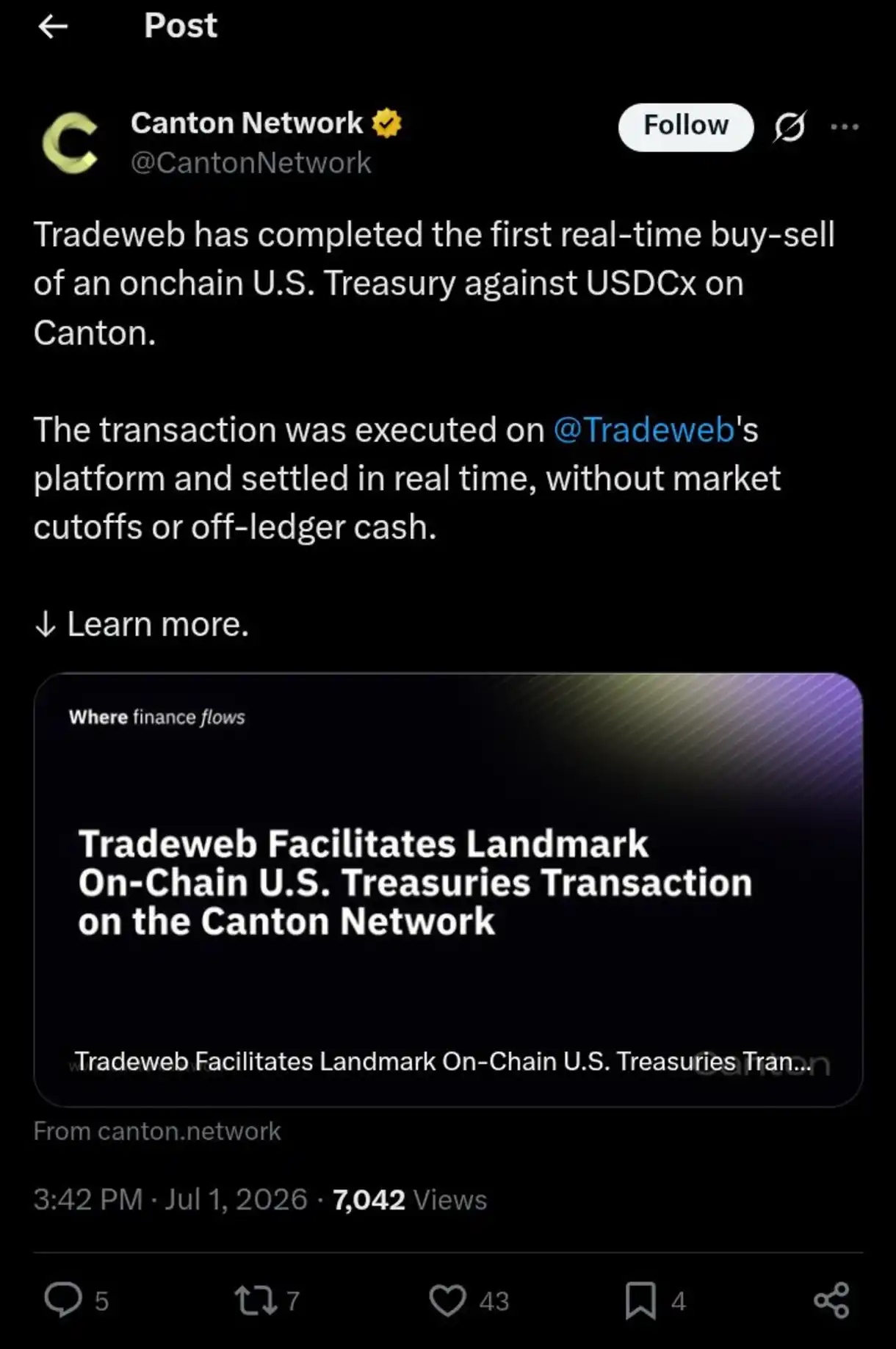
The Canton market witnessed a strong rebound today as the network attracted significant attention. Canton successfully executed its first on-chain U.S. Treasury transaction without any issues. This milestone has the potential to boost investor confidence and drive further growth for the project.

What Does Canton’s Daily Price Chart Show?

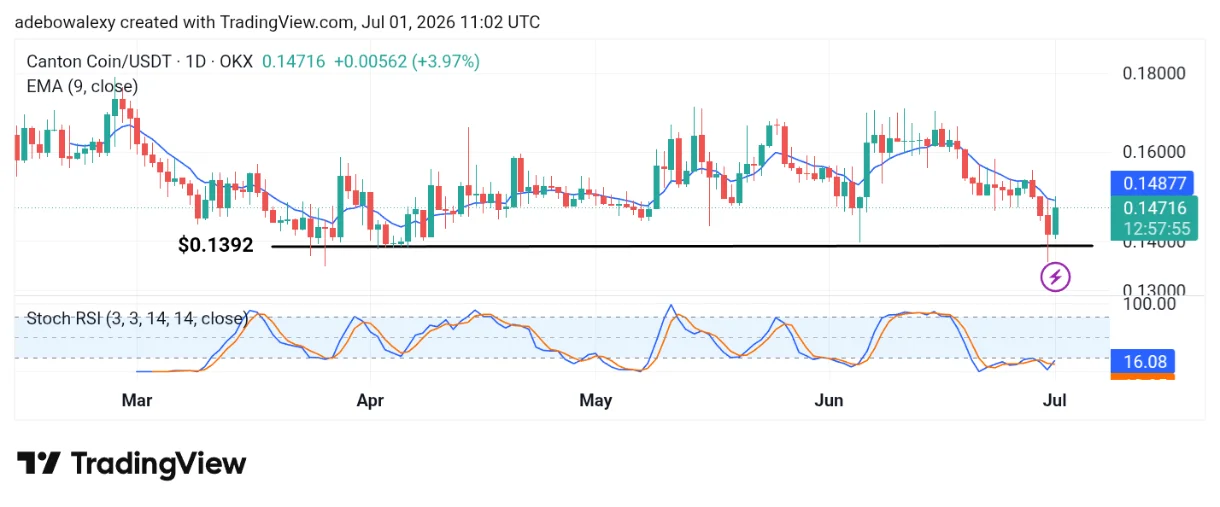
On the CC/USDT 24-hour chart, price action is holding above a key support level, highlighted by the horizontal trendline at approximately $0.1392. The current session has produced a strong bullish rebound, although the market continues to trade below the 9-day Exponential Moving Average (EMA).

Canton (CC) Bounces
Canton (CC) Bounces Off a Long-Standing Support as Its Network Gains Attention. Source / Cryptosignals : TradingView

Meanwhile, the Stochastic Relative Strength Index (SRSI) remains in the oversold region but has delivered a bullish crossover. The indicator lines are now trending upward, suggesting that bullish momentum may be building.

How the Current Move May Influence Price Action

Recent price action clearly indicates that buyers are regaining control. The latest candle reflects a notable bullish rebound, although the market remains capped below the 9-day EMA, which continues to act as short-term resistance.

At the same time, the SRSI’s bullish crossover in the oversold region supports the improving price action. From a technical standpoint, this combination suggests that the market could offer short-term bullish opportunities.

Canton (CC) Bounces
Canton (CC) Bounces Off a Long-Standing Support as Its Network Gains Attention. Source / Cryptosignals : X.com

What Can Traders Do?

At this stage, traders have two possible approaches. They can either enter the market immediately in anticipation of a continued rebound or wait for additional confirmation by allowing price action to break above the 9-day EMA.

Given the positive fundamental developments surrounding the Canton network and the market’s rebound from a strong support level, the bullish outlook appears encouraging. However, waiting for a confirmed move above the 9-day EMA would provide stronger technical confirmation. If bullish momentum continues, traders may target the $0.1800 price level.

Disclaimer:
Note: Cryptosignals.org is not a financial advisor. Do your research before investing your funds in any financial asset, product, or event. We are not responsible for your results.

Can XRP Become a Banking Infrastructure? Here Is Why Ripple Thinks So

  • Ripple proposes institutional lending on the XRP Ledger.
  • The initiative could expand XRPL beyond cross-border payments.
  • Investors are watching its long-term adoption potential.

For years, the XRP Ledger has been known primarily as a network for fast and low-cost cross-border payments. But that narrative may be about to expand. Ripple has proposed a new lending protocol for the XRP Ledger that could allow banks and payment providers to borrow against tokenized assets without leaving the blockchain. 

Although the proposal is yet to be approved and implemented, it reflects a growing trend in the crypto industry: blockchains are no longer competing only to move money faster—they are racing to become the financial infrastructure that powers lending, asset tokenization, and institutional finance.

Why This Matters

If approved, Ripple’s proposed XRPL Lending Protocol could transform the XRP Ledger from a payments-focused blockchain into a broader platform for institutional finance. Beyond enabling fast cross-border payments, the network could support on-chain lending backed by tokenized assets, creating new opportunities for banks, payment providers, and other regulated financial institutions.

The significance for investors goes beyond the lending feature itself. As the tokenization of real-world assets accelerates, demand is expected to grow for blockchain networks capable of supporting lending, borrowing, and settlement. By positioning the XRP Ledger to provide these services, Ripple is laying the foundation for greater institutional participation and expanding the network’s long-term utility.

A blockchain that combines payments, tokenization, decentralized trading, and institutional lending offers a more complete financial ecosystem, making it more attractive to developers, financial firms, and liquidity providers.

Can XRP Become a Banking Infrastructure? Ripple Thinks So.
XRP is pushing towards being accepted by banks for cross-border payments. Source: Cryptosignals

Still, investors should keep expectations in check. The lending protocol is only a proposal and must receive community approval before it can be deployed on the XRP Ledger mainnet. Even then, adoption by financial institutions will likely be gradual as banks assess regulatory, compliance, and operational requirements.

For now, the proposal is best viewed as a long-term strategic move rather than a short-term price catalyst. If approved and widely adopted, it could increase activity on the XRP Ledger, strengthen its utility, and reinforce Ripple’s vision of building a comprehensive blockchain infrastructure for institutional finance.

Why Banks Could Find the Proposal Attractive

If approved, the XRPL Lending Protocol could give banks and payment providers compelling reasons to adopt the XRP Ledger. By allowing tokenized assets to be used as collateral, financial institutions could unlock liquidity without selling their holdings. The protocol could also automate collateral management, interest calculations, repayments, and settlements, helping reduce costs, paperwork, and settlement times.

More importantly, the proposal positions the XRP Ledger to support the growing market for tokenized real-world assets. As more financial assets move on-chain, banks will need reliable infrastructure for lending, settlement, and liquidity management—an opportunity Ripple hopes the XRP Ledger can serve.

For investors, the long-term potential lies in greater institutional adoption. If banks and payment providers embrace the protocol, it could boost activity on the XRP Ledger, attract more developers and enterprise users, and strengthen the network’s overall utility. While this does not guarantee higher XRP prices, increased institutional participation could reinforce confidence in the ecosystem and Ripple’s vision of building a comprehensive blockchain platform for institutional finance.

That said, the protocol remains a proposal. Its success will depend on community approval, regulatory clarity, security, and whether financial institutions see enough value to integrate it into their operations.

Looking Ahead: Should Investors Pay Attention?

Although the XRPL Lending Protocol is still awaiting approval, it signals Ripple’s ambition to expand the XRP Ledger beyond payments into institutional finance. As the blockchain industry shifts toward tokenizing real-world assets such as real estate, bonds, stocks, and commodities, Ripple is positioning the XRP Ledger to compete in this growing market.

If successful, the XRP Ledger could evolve into a platform where institutions issue tokenized assets, access on-chain liquidity, settle transactions, and manage financial operations within a single ecosystem. This could attract more banks, fintech firms, payment providers, and developers, strengthening the network over time.

For investors, the proposal is a development worth watching. While there is no guarantee it will be approved or widely adopted, it reinforces Ripple’s long-term vision and could strengthen confidence in the XRP Ledger’s future as institutional blockchain adoption continues to grow.

Final Thought

Rather than reacting to headlines, investors should watch key milestones, including community approval, mainnet deployment, institutional partnerships, and real-world adoption. For long-term investors, the proposal underscores Ripple’s ambition to expand the XRP Ledger’s role in global finance. As always, investment decisions should be guided by thorough research, risk tolerance, and a long-term perspective—not market hype.

Zcash (ZEC) Maintains Its Upward Trajectory

Summary:

  • ZEC remains in a long-term uptrend, supported by positive ecosystem developments.
  • Bullish momentum is improving despite price trading below the 9-day EMA.
  • A breakout could target the $500–$600 range over the long term.

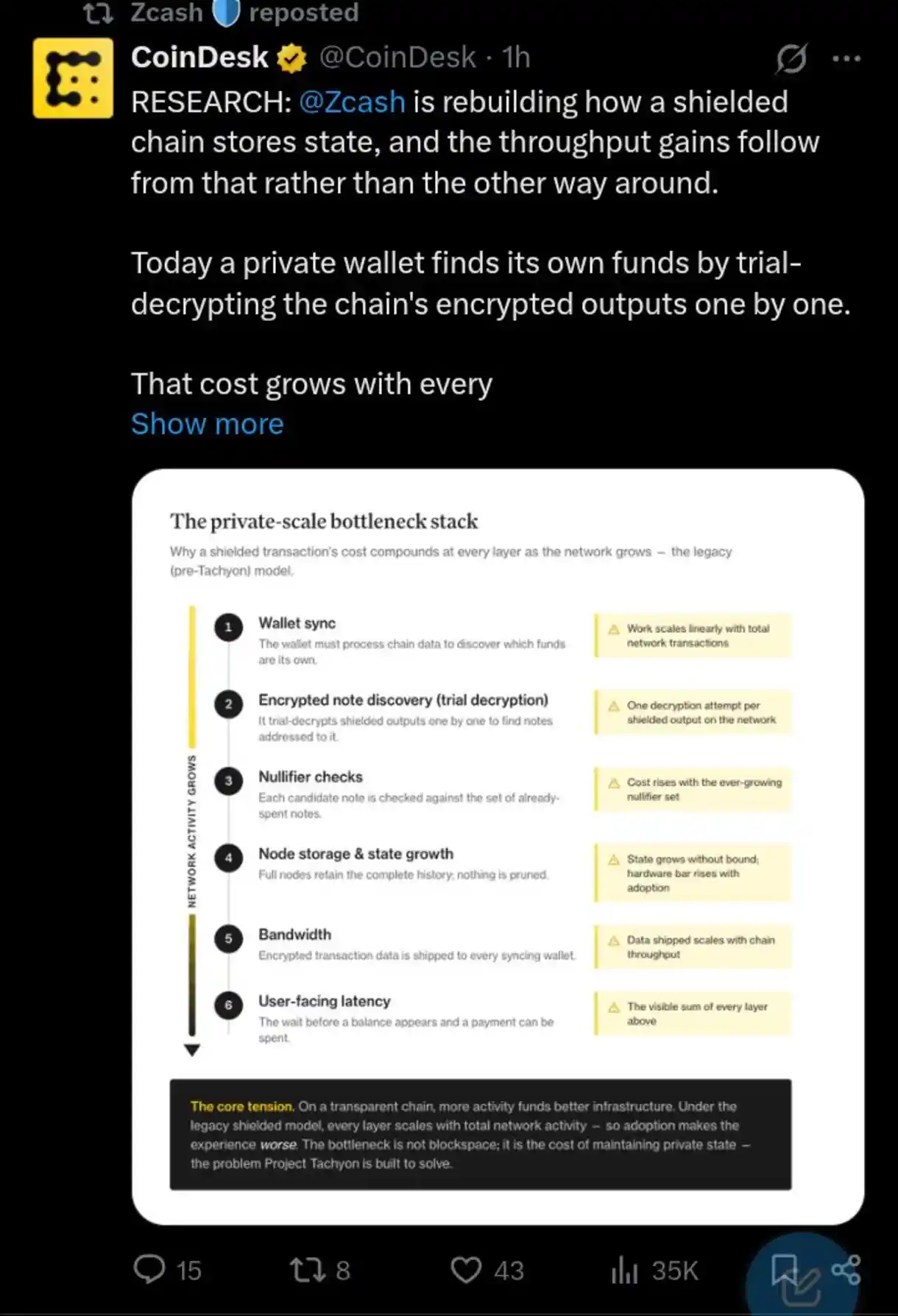
Zcash remains one of the better-performing cryptocurrencies today, with the token posting a gain of nearly 2.5%. In addition, ongoing developments within the Zcash ecosystem continue to strengthen its long-term outlook. These positive fundamentals could support further price appreciation in the coming sessions.

Examining the Zcash Market on the 24-Hour Chart

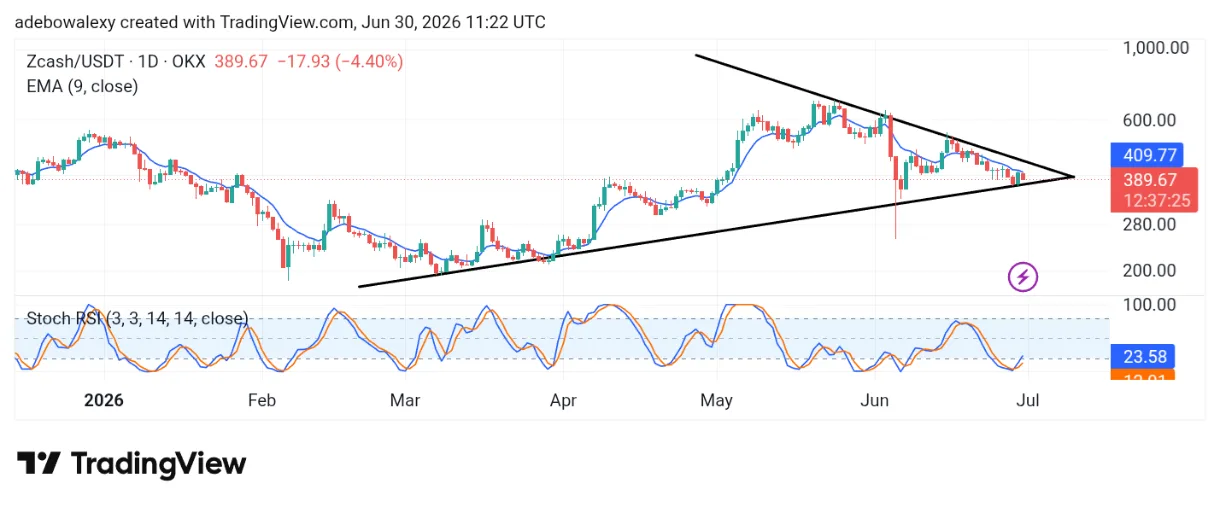
The daily chart shows that ZEC has maintained an upward trajectory since March. More recently, price action has formed a symmetrical triangle pattern, which typically signals that a breakout—either upward or downward—may be approaching.

Zcash (ZEC) Maintains Its Upward Trajectory
Zcash (ZEC) Maintains Its Upward Trajectory. Source / Cryptosignals : TradingView

A bearish candle represents the current session, with the price trading below the 9-day Exponential Moving Average (EMA). Despite these developments, the Stochastic Relative Strength Index (SRSI) is rising from the oversold region, indicating that bullish momentum may be starting to build.

The Market Implications of ZEC’s Price Movement

The broader trend remains bullish despite the current short-term weakness. Although ZEC is still trading below the 9-day EMA and today’s candle is bearish, the upward trajectory of the SRSI suggests that buying momentum is gradually improving.

Zcash (ZEC) Maintains Its Upward Trajectory
Zcash (ZEC) Maintains Its Upward Trajectory. Source / Cryptosignals : X.com

However, because the SRSI remains close to the oversold region, traders may want to exercise caution until stronger bullish confirmation emerges.

Zcash Still Has Upside Potential

The long-term structure of the ZEC market has remained positive since March, even though recent price action has formed a symmetrical triangle. While the token continues to trade below the 9-day EMA, the improving SRSI momentum suggests that buyers may soon regain control.

Combined with the positive developments surrounding the Zcash ecosystem, the market could be positioned for another leg higher. As a result, traders may consider the $500- $600 price range as a potential long-term upside target.

Disclaimer:
Note: Cryptosignals.org is not a financial advisor. Do your research before investing your funds in any financial asset, product, or event. We are not responsible for your results.

The Truth About Trading

One of the most fascinating aspects of the financial markets is that they are completely unbiased. The market does not care about your status, education, or reputation. At the same time, it does not reward laziness or indiscipline. Many aspiring traders are attracted by “get-rich-quick” schemes that promise wealth with just 15 minutes of effort each day. Unfortunately, many only realize they’ve fallen into a trap after discovering that consistent profitability requires far more dedication.

Anyone serious about trading should consider reading Jack Schwager’s classic book, Market Wizards. The book features interviews with some of the world’s most successful traders, exploring their strategies, mindsets, and experiences. One lesson stands out throughout the book: trading is not an easy pursuit. It demands hard work, continuous learning, patience, and resilience—qualities that no shortcut can replace.

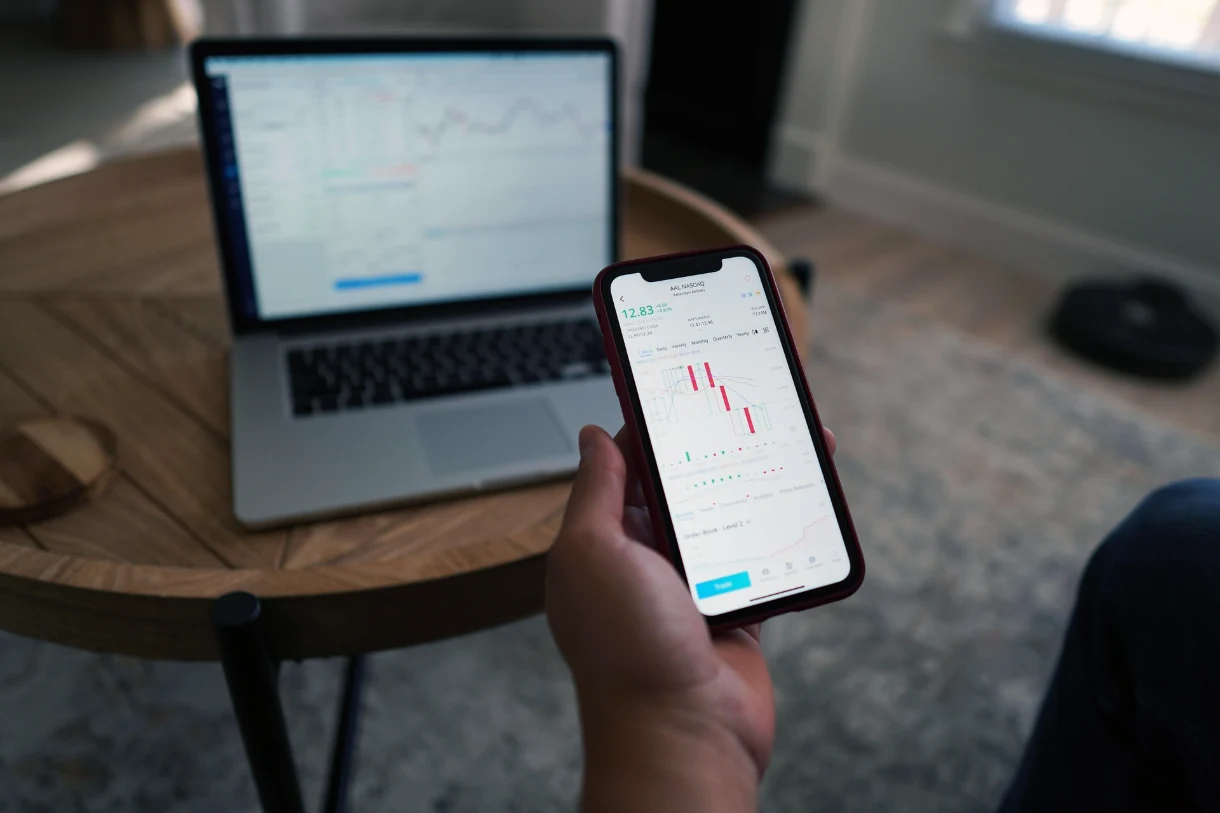
Truth About Trading
The Truth About Trading. Source / Cryptosignals : Pixabey

Trading Success Requires Real Effort

Achieving consistent success in trading doesn’t happen overnight. Like any highly skilled profession, it requires education, countless hours of practice, discipline, and a commitment to continuous improvement. Nearly every successful trader has a story of early losses, costly mistakes, and difficult lessons that ultimately shaped their success.

Trading is a profession built on discipline and continuous development. One thing I’ve consistently observed when discussing trading is that many people lose enthusiasm the moment they realize how much work is involved. Too often, people are drawn by the promise of quick profits, only to discover that lasting success comes through persistence, calculated risk-taking, and the willingness to learn from setbacks. Those who accept this reality are the ones most likely to succeed.

Truth About Trading
The Truth About Trading. Source / Cryptosignals : Pixabey

Accepting the Process

For those willing to put in the work, the rewards of trading extend far beyond financial gains. The journey develops discipline, resilience, emotional control, and a deeper understanding of risk and decision-making.

Although the path to becoming a successful trader is demanding, those who remain committed to learning, stay patient, and persevere through challenges often find the experience deeply rewarding.

Ultimately, the financial markets do not reward shortcuts or complacency. They reward discipline, preparation, consistency, and continuous improvement.

Disclaimer:
Note: Cryptosignals.org is not a financial advisor. Do your research before investing your funds in any financial asset, product, or event. We are not responsible for your results.

Why Taking Fewer Trades Can Make You a More Profitable Trader

  • Trading less can often lead to better long-term profits.
  • Low-quality trades quietly drain both capital and confidence.
  • Discipline and patience help traders avoid costly mistakes.

Many traders believe that the more trades they place, the more money they will make. It seems logical—the more opportunities you take, the greater your chances of profiting. But in reality, some of the most successful traders earn more by trading less. 

Their edge doesn’t come from constant activity but from waiting patiently for the highest-quality setups.

Why Account Blow Up

Many traders assume that a blown account is the result of one disastrous trade or an unexpected market crash. While those events can happen, they are rarely the real culprit. More often, trading accounts are drained by a series of small, avoidable mistakes—entering low-quality setups, breaking trading rules, risking too much on a position, or chasing the market out of fear of missing out.

Individually, these mistakes may seem insignificant, but over time they steadily erode both your capital and your confidence until recovering becomes increasingly difficult.

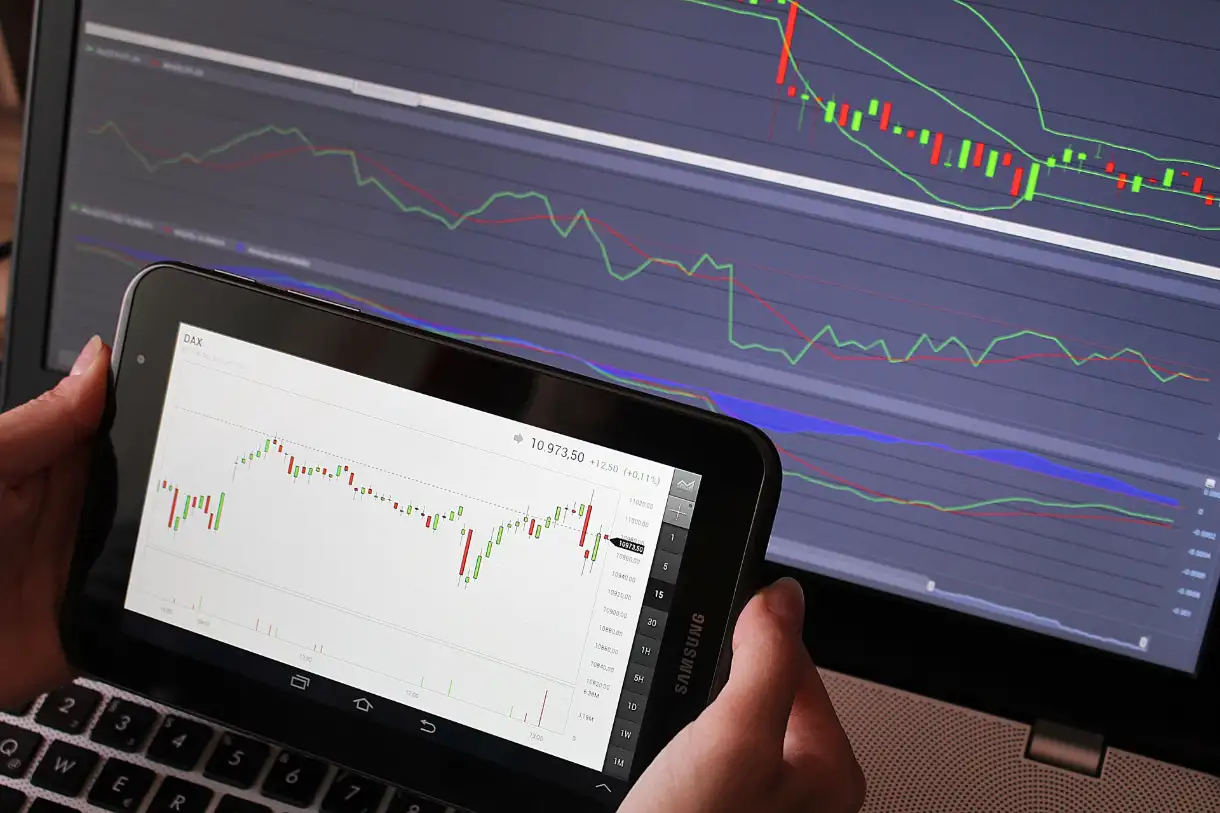
Series of price actions on the monitor screen.
Series of price actions on the monitor screen. Source: create.vista.com / cryptosignals

The Silent Account Killer: Low-Quality Trades

Not every losing trade is a bad one—even perfect setups fail. However, many losses are completely avoidable “suboptimal trades” entered without meeting your strategy’s strict criteria. While a single undisciplined trade seems harmless, repeatedly forcing these low-edge setups quietly drains your capital and erodes your confidence. 

Over time, this emotional and financial erosion creates a damaging cycle far worse than a single large, standard loss.

Why Traders Break Their Own Rules

Why do traders ignore their own rules? It usually comes down to three psychological traps: FOMO, which forces hasty entries out of fear of missing a market move; overconfidence, where a winning streak causes a trader to relax their criteria; and justifying “almost perfect” setups, accepting four out of five conditions when their strategy demands all five. 

Every exception weakens the system and exposes the trader to unnecessary risk. Professional traders understand that rules are not suggestions—they are the foundation of long-term profitability.

Why Less Trading Often Produces Better Results

Beginners often equate more trades with more profit, but success actually relies on quality over quantity. Professional traders patiently wait for high-probability setups that fully meet their criteria, naturally reducing trade volume while maximizing win rates and risk-to-reward opportunities. 

This selective approach preserves capital for the best setups and fosters emotional stability. By trading less, traders avoid the stress and impulsive revenge trading that constant exposure brings, allowing them to remain objective, disciplined, and focused on strategy over emotion.

Trade Like a Professional

Professional trading isn’t about finding more trades—it’s about consistently filtering out the wrong ones. Instead of hunting for reasons to enter the market, pros focus on eliminating poor opportunities using three key habits:

  • Deploy a Pre-Trade Checklist: Verify that every single condition in your trading plan is met before entering a position. If even one requirement is missing, walk away.
  • Avoid Obvious Obstacles: Skip trades facing immediate barriers, like strong overhead resistance. Waiting for “clean” setups with room to run ensures the profit potential actually justifies the risk.
  • Review Your Rejections: Analyze the trades you chose not to take. Reviewing discarded setups reinforces discipline, validates your patience, and sharpens your ability to distinguish high-quality opportunities from mediocre ones.

Conclusion

A major trading misconception is that success requires constant activity. In reality, profitable traders know every trade carries risk, so they only commit capital when the odds are heavily in their favor.

The market always generates new opportunities; missing a single trade rarely damages an account, but forcing a setup that violates your strategy will. Patience isn’t hesitation—it is discipline. By prioritizing quality over quantity, executing rules without compromise, and waiting for high-probability setups, you protect your capital and secure consistent, long-term success.

Note:
Cryptosignals.org is not a financial advisor. Do your research before investing your funds in any financial asset, product, or event. We are not responsible for your results.